Self-Working or Sleightless in Cards









Authors
Products
Fatidic
Raphaël Czaja
The performer predicts the color matches among randomly assembled pairs and the identity of the spectator's remaining card.
A prediction envelope has been placed in full view on the table.
The spectator cuts into a regular deck and deals a small packet of cards to the performer. After a genuine riffle shuffle and a couple of cuts, he deals a small packet of cards to himself as well.
Without looking at the faces, the performer removes two cards from different positions in his packet and tables them face down. The spectator takes the top two cards from his own packet and freely places...
The Two of Clubs Miracle
Dustin Marks
A borrowed deck. The spectator shuffles and cuts. An impossible outcome. And absolutely zero sleight of hand.
Imagine handing a normal, borrowed deck of cards to your spectator. They give it a genuine table riffle shuffle, cut the deck, and deal five random, face-down cards to themselves. You have had a single face-down prediction card sitting on the table from the very beginning.
- The Prediction Miracle: If they place the target card face up on the table as an "insignificant" card, there is no elimination process. They turn over your prediction card to find a perfect match: "You placed...
The Unforceable Force
Dustin Marks
Stop practicing your passes and palms for a moment. What if you could perform a miracle where the spectator shuffles the deck, cuts the cards, and simply thinks of one - all while you never touch the deck?
Two variations. Perform the one that best suits your style.
The Unforceable Force is not just an effect; it is a masterclass in psychological manipulation and deceptive procedure. This effect allows you to perform a clean, "hands-off" revelation that leaves your audience convinced they had a completely free choice.
The Power of Psychology Over Sleight of Hand
This effect is designed...
Searching for Twins in VR
Biagio Fasano
A card chosen at random along the path virtually manages to find the real way to meet its twin.
This is an original card magic effect in which the magician, after showing and shuffling a deck of cards, hands it to a spectator who, after cutting and completing it, one or more times as desired, is ready to follow the magician's instructions. The latter asks him to turn over the first card and place next to it as many cards as its value. He will turn over the last one and repeat the process a second time, again based on the value of the card he turned over. At that point, when the last card...
15 and 47 Sandwich
Miku W.
Two sandwich routines based on the same principle, each with a different handling and ending.
Completely self-working. No sleight of hand required. Performed with a regular deck. Fools magicians.
Miracle Count 15 & 47:
No complicated stack. The spectator freely cuts to a card and remembers it. The magician turns the 15th and 47th cards face up, then deals alternately into two tabled piles. The two face-up cards always remain in the same pile. In the end, they sandwich a single card—the spectator's selection. The other piles are then revealed to contain the four Kings.
15 & 47 Sandwich:...
Self-Revealing Mystery Card
Biagio Fasano
A card chosen "blindly" by the magician will inevitably be revealed by the spectator, inexplicably.
A brand-new card magic effect in which the magician, after showing and shuffling a deck of cards, hands it to a spectator who, after cutting and completing, one or more times as desired, returns it to the illusionist. The latter, without ever turning the deck face up, runs his fingers along the backs of the cards until he chooses a mysterious card, which he draws from the deck and places, face down, on the table.
Before choosing a card himself, the spectator is free to ask the magician...
Multiple Cuts ACAAN
Miku W.
A spectator freely selects a card, freely cuts the deck to determine a number, and divides the deck into four packets. After multiple rounds of reassembling and cutting, the selection still arrives at the exact corresponding number. A self-working, fooling card routine.
Performance transcript:
- This is a completely impromptu effect.
- You can even borrow a deck from a spectator.
- No setup or stack is required to begin.
- Have the spectator cut roughly half the deck.
- Ask them to secretly count how many cards they cut.
- 22 cards.
- Since I don't have a spectator here, I have to count...
The Path Leading to the Choice
Biagio Fasano & Roberto Tota
A card selected and then lost in a shuffled deck will inexplicably be found by the magician, following a precise path traced by the cards themselves.
The Path Leading to the Choice is a unique card magic trick in which the magician, after showing and shuffling a deck of cards, hands it to a spectator to cut and complete. At that point, he divides the deck in two and asks the spectator to choose one of the two halves, shuffling it as he pleases, while he does the same with his own half of the deck. The spectator then chooses any card from his half and lost it into his own bunch, placing...
Predictable and Unpredictable Poker
Biagio Fasano & Roberto Tota
A magical prediction that will not only turn out to be correct but will also hold a final surprise!
Predictable and Unpredictable Poker is a new card magic effect in which the magician, after showing and shuffling a deck of cards, hands it to a spectator who, after cutting it into three sections, keeps the last pack for himself and, once the rest of the deck has been reassembled, returns it to the magician. The magician then takes the cards behind his back and divides them again into three piles, placing them face down on the table.
Latter takes his cards behind his back and divides...
Three Pile Mystery
Biagio Fasano & Roberto Tota
A brand-new impromptu card magic effect in which two cards, chosen at random by the audience, are inexplicably captured!
This is an automatic card magic trick that can be improvised in any situation, even if you simply borrow a deck of cards (it could be also an incomplete one) and let the audience inspect it first.
The magician hands the deck to a pair of spectators so they can shuffle it as they please. Then the first spectator begins stacking a few cards face down on the table; he stops at one of them, discreetly notes it, and memorizes its value. He places it, face down, on top of...
A Series of Fortunate Events
Biagio Fasano & Roberto Tota
A quest to discover one's true purpose, traveling through time and space, undertaken with a simple deck of cards, in which each person's destiny will be revealed through four truly special cards.
A Series of Fortunate Events is an exciting quadruple coincidence magic trick in which the magician, using a simple deck of cards, helps the spectator with an important task that combines philosophy and mysticism: the journey through time and space in search of life's most meaningful goals.
After showing and shuffling the cards, he has a spectator cut the deck, and that is where his search begins,...
Alone and Deckless
Unknown Mentalist
You are asked to perform magic. But you are alone and deckless. Meaning you do not have anything on you. Except just one single card.
You take out this card, face down and propose to do an interesting experiment. You place this card on the palm of a participant or on a table, face down and start your experiment. You ask the participant to think of a card and a number in a very fair manner. After this you ask the participant to turn over that single card. On the other side of the card is a grid of cards with the positions numbered. You say that you had randomly shuffled a deck of playing...
Wild Chance
Raphaël Czaja
The spectator can create any card, yet the performer is still able to predict it.
A packet of thirteen playing cards, containing every value and every suit, is shown to the spectator. By combining the value of one card with the suit of another, any card can be created.
The spectator rolls two dice and obtains a total that serves as a starting number - for example, 9. The performer deals nine cards and arrives at a first card - for example, the 2 of Hearts - whose suit the spectator remembers. The performer then deals two cards (the value of the first card) and arrives at a second card...
ACCANN: Arbitrarily Chosen Card At No Number
Biagio Fasano
A new mentalism effect in which the spectator thinks of just one card, which will then be the only one not found in the deck, and the magician will prove to be the only one who knows its location, right from the start.
A.C.C.A.A.N." (Arbitrarily Chosen Card At No Number) is an amazing mentalism effect, in which the magician, after producing a deck of cards, asks a randomly selected spectator just to think of one card, creating it in his mind piece by piece: first he imagines its color, then its suit, and finally its value.
He will then invite the spectator, after revealing for the first...
Repeated Escape Attempt
Biagio Fasano & Roberto Tota
A brand new self-working card magic effect in which the magician will manage twice to capture a card freely chosen and scattered in the deck,
Repetead Escape Attempt is a new automatic card magic effect where the magician will always manage to find a card freely chosen by a spectator, representing an elusive thief, and hidden in the middle of the deck, using only a few clues provided by the deck itself.
After showing a deck of cards to the audience, he shuffles, cuts, and completes. He slides the cards in front of a spectator who, saying "Stop" at his discretion, will choose the card...
Mini Maxi Match
Raphaël Czaja
A highly visual coincidence effect with an unexpected, jaw-dropping finale!
The performer introduces a packet of eight half-jumbo playing cards and a small envelope to two spectators.
First, he shuffles the cards by dealing them into two piles and placing one pile on top of the other. He repeats the process as many times as spectator 1 wishes. He then forms two smaller piles and hands the remaining cards to spectator 1. Spectator 1 places this remainder on top of either pile, thereby eliminating it, and looks at the card on top of the other pile. The same procedure is repeated with spectator...
I Can Not
Biagio Fasano & Roberto Tota
Imaginary Card At Number Not Only Thought
A brand new and incredible (automatic) mentalism effect where the illusionist will manage to get a spectator to find a card that he has only thought of at the same own number!
After showing a deck of cards to the audience, he shuffles and cuts and completes. He then hands it to a spectator, who sits on the opposite side of the table, asking him to take it under the table so that no one can see it, and to cut it again, at any point, and complete. After that, once he has the deck back from under the table, the magician does the same thing, without...
Time Travel Double Prediction
Biagio Fasano & Roberto Tota
A fascinating automatic effect in which the illusionist manages to accurately predict the two cards on which the spectator will end his imaginary journey through time.
A brand new amazing (self-working) card magic effect where the mentalist will be able to predict the outcome of an imaginary journey through time, between the past and the future, which he will undertake with a spectator, using a simple deck of cards.
After showing it to the audience, he shuffles and has the deck cut, then extracts a first and a second prediction cards and, after cutting it himself, hands it to the spectator...
Magic Square Digital Prediction
Biagio Fasano & Roberto Tota
An incredible self-working effect in which the illusionist will have predicted exactly the sum of three cards chosen at random by a spectator from within a 3x3 square.
A new amazing automatic card magic effect where the mentalist will be able to predict what will happen shortly with a deck shuffled and cut by a spectator, having already written down on a blank card, sealed in an envelope, the exact sum of the values of three cards chosen from the nine that will ultimately be arranged to form a square!
The illusionist shows a deck of cards, shuffles it quickly and hands it to a spectator...
Unstoppable Twin Pairs
Biagio Fasano & Roberto Tota
An impressive (self-working) effect in which the illusionist will manage to find an incredible series of twin pairs starting from a card chosen by the spectator.
You will learn an astonishing automatic card magic effect based on the theme of couples and, in particular, twin pairs, consisting of any card and the one other card that shares both its color and its value.
A spectator receives the deck shuffled by the magician, cuts it at any point and, once completed, begins to turn the cards over from the top until they find the first card of even value (therefore composed of the sum of...
Shinjitsu: Bringing Out the Truth
Biagio Fasano
An incredibly automatic mentalism effect in which the illusionist will be able to discover both the card chosen by the spectator and the role of knight or villain that he has secretly assumed!
A mentalism effect in which a spectator freely chooses any card from a deck shuffled by the audience and places it among a dozen or so other cards that he has taken himself, turning them randomly face up and face down, and shuffling them together. After a further series of shuffles and a few questions, which the spectator is free to answer either truthfully or untruthfully, the mentalist discovers...
Sibylline Prediction on Card and Number
Biagio Fasano
An A.C.A.A.N. in which everything was already planned!
An amazing prediction trick in which a spectator freely chooses a card from which an experiment will begin, guided by the deck itself to lead to a predetermined outcome. Based on the "A.C.A.A.N." theme, made self-working thanks to a new stack: "Tricolor".
After introducing a deck of cards and shuffling it, the illusionist hands it to a spectator to cut and complete as he wishes. Meanwhile, he places a blank card on the table and announces that the back of the card contains a Prediction of what will happen shortly.
The spectator...
How 2 Catch 1 Card
Biagio Fasano
An impromptu location effect, incredibly self-working.
The title, which could also be read, thanks to a play on words, as "How to catch one card," indicates an easy but amazing effect, performable in any context and incredibly self-working, of finding a chosen card lost in the deck, thanks to two other cards that the magician himself will choose, inside two piles shuffled by the spectator, in order to capture it in a way that is as simple as it is unexpected...
Strengths:
- The effect is completely automatic and impromptu.
- The magician does not necessarily need to know any card manipulation...
The Polygraph of Twin Truths
Biagio Fasano
Two cards are chosen and revealed by the deck itself in an amazing automatic effect.
This is an amazing self-working effect revealing a pair of cards chosen by two spectators, made possible thanks to a special arrangement of the deck: a variation, unknown to most, of one of the most famous mathematical stacks... After learning a practical method for easily sequencing the deck according to this secret stack, starting with a factory-new deck, here you will find an explanation of the effect, automatic and themed "Truth Machine," which can involve two spectators.
Each of them will choose...
Take a Card
unknown
These tricks were taught to US soldiers in military hospitals to keep up their spirits. They do not require any sleight of hand. Originally published by the Association of American Playing Card Manufacturers.
- Foreword
- Three Deep
- Spellbinder
- Dead Duck
- Club Sandwich
- On Tap
- Topsy-Turvy
- Plus Ten
- Two-By-Two
- Seven-Eleven
- Frying Pan
1st edition ~1950s, 21 pages; PDF 23 pages.
Royal Prophecy
Miku W.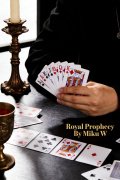
A completely self-working effect requiring no sleight of hand. The magician introduces a prediction card and has the spectator freely cut a small packet. The deck is then divided into three piles, and cards are dealt down according to a freely chosen number. The four Aces are cleanly located. In addition, the spectator's cut card, the prediction card, and the bottom cards of the three piles combine to form a Royal Flush. For the full procedure, please refer to the video demonstration.
Performance transcript:
- For this routine, I begin by taking out a prediction card.
- I place the prediction...