Cards in Magic & Mentalism





Products
The Six-Hour Memorized Deck
Martin Joyal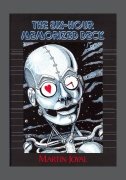
"But even if there were no tricks at all in this volume, it would be a must-have for anyone possessed of even a passing interest in the memorized deck. When I first heard the claim intrinsic in the title of this book, I found it too incredible to believe. But in the time it took simply to read the few instructional chapters, I was convinced that the impossible is now true: You can learn a functional memorized stack in four 90-minute sessions." - Jamy Ian Swiss
In The Six-Hour Memorized Deck, Martin Joyal shows step by step how you can memorize the Joyal Stack in six hours or less!...
The Joyal Six-Hour Memorized Stack
Martin Joyal
"If you are curious about memorized deck work, and would like to dabble for awhile in the shallows before taking the plunge, then the Six-Hour Stack is the way to go. You will be able to do many memorized deck tricks, including in fact much of Mr. Aronson's excellent and varied material." - Jamy Ian Swiss
The Joyal Six-Hour Memorized Stack is a subset of the original work, The Six-Hour Memorized Deck, and is intended for those who just want to learn the stack in six hours or less! At the end of that time, most readers will be able to name the card that lies at any...
Anytime ... with a deck of cards
Aldo Colombini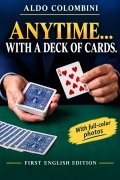
A five-phase card routine.
What if someone hands you an ordinary deck of cards and says, "Show me something"? No special cards. No elaborate setup. Just a deck, a few spectators, and five increasingly impossible effects.
Anytime... with a Deck of Cards is a practical, entertaining routine by Aldo Colombini, designed for those situations when you want to perform strong card magic without any prior setup. The routine consists of five effects that can be performed in sequence or used individually. The spectators do much of the work themselves - shuffling, cutting, dealing and making decisions...
Eight Free Choices ACAAN
Miku W.
A very fooling self-working card routine.
The spectator shuffles the deck and takes 8 cards. They freely choose 3 of them and add up their values. The magician shows the cards one at a time, and the spectator remembers the card at the position corresponding to the total. The magician then shuffles the cards and removes the remaining 5 cards. Their values add up to the exact position of the spectator's selection.
1st edition 2026, video 6:53.
Performance transcript:
- First, shuffle the deck.
- You can let the spectator shuffle the deck.
- Split the deck into two packets and have the...
Subwich Change
Miku W.
A fooling sandwich routine with a simple, fast effect.
The magician takes out two Jokers and places them on the table, then has the spectator select a card and place it into the middle of the deck, outjogged. The magician then transfers the selection between the two Jokers. But here's the question: if the selection has traveled between the Jokers, what is the outjogged card in the middle of the deck? The magician turns over the card in the middle of the deck, revealing the other card of the same value and suit as the selection. At the same time, the two Jokers instantly change into the other...
Total Prediction
Raphaël Czaja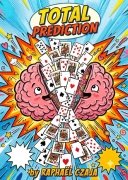
In an escalating sequence, the performer reveals predictions of matching colors, numbers, and ultimately a playing card.
EFFECT:
Twelve cards are removed from a regular deck. Four are used as prediction cards. The spectator cuts the remaining eight, mixes them three times, and divides them into two equal piles.
He places the top card of each pile in front of the first prediction and repeats the procedure, placing each pair in front of the next prediction. The pairs are turned face up. Only two of them match in color—one is a red pair and the other a black pair. (The mismatched pairs,...
The Eight Kings Stack: the complete guide
Laurent Kubaski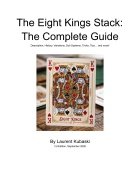
Description, history, variations, suit systems, tricks, tips ... and more.
Excerpt from the foreword by Dr. Hans-Christian Solka:
Warning! This book is addictive! ... Even with Laurent Kubaski limiting his scope to the English-language variants of the Eight Kings stack, the sheer number of variations is staggering. This book tells the story of a classic card system over two centuries old—one that younger performers may have only heard whispered about, yet remains vibrantly alive today.
This is the definitive guide to the Eight Kings Stack, featuring a full description...
Hidden Agenda
Peter Duffie
Note that Peter Duffie released two entirely different publications with the title "Hidden Agenda". The first one was released in 1992. This is the one offered here. Then in 2001 he released an ebook with the same title but entirely different content. We have changed the title of this later ebook to Hidden Agenda 2.
Table of Contents
- Two Packs But With A Single Thought
- Alternative Update
- Divisory Capacity
- Return Journey
- Quick - Serve Aces
- The Graveyard Shift
- No Chance
- It Is Written
- Rooms For Manoeuvre
- The Beast With Five Fingers
- Straight From The Bottom
- Straight From...
Razor Blade
Brick Tilley
A selected card is returned to the deck; the deck is boxed. A razor blade is inserted into the box. After shaking the box in an attempt to locate the selected card, the box is opened. The cards are poured onto the table. Surprise. The cards are all cut into pieces except for the selected card. A perfect finish for any card sequence.
1st edition 2026, video 3:54.
New Three-Cut ACAAN
Miku W.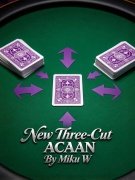
A fooling card trick designed to fool magician friends. A Self-Working effect.
The spectator freely cuts off a packet, remembers the bottom card, and returns it to the middle of the deck. The magician then cuts to the middle of the deck and claims that three cuts will locate the spectator’s selection. After three consecutive cuts, none of the cards is the selection. However, the values of the three cards cut to add up to the exact position of the selection.
1st edition 2026, video 5:16.
Performance transcript:
- Place the deck on the table and have the spectator cut off one-third...
Pelli Switch
Peter Pellikaan
You will learn Peter Pellikaan's switch of four cards for another four cards. As a bonus, he also teaches you the Pelli Spread, a move that allows you to fan 4 cards while hiding a 5th card.
1st edition 2026, video 3:43.
Inside Tracks
Jon Racherbaumer
Excerpt from the introduction:
The original title for this lecture was RECYCLE. The effects in this collection have been previously published in various books and magazines. This is a common practice nowadays as anthologies and theme-trick books are more frequently published. Magicians continually recycle ideas, fixing this and that, adding touches and finesses... This is a collection of favorites. New students and readers will discover new things. Veterans will be reminded of old things. My goal is to provide something for everyone.
Table of Contents
- Paris Slant
- Crux Deluxe
- Freeze! ...
Five Vernon Gems
Ian Baxter
A fresh look at five card classics from Dai Vernon.
Straight from the pages of Lewis Ganson's sensational four-part series, Dai Vernon's Inner Secrets of Card Magic, five brand new entries, carefully revised variations highlighting the genius of 'The Professor' himself.
These renovated approaches are from Ian Baxter, Australian card man and author.
Colour Separation, Pinch Colour Change, Out Of Sight - Out Of Mind, Switching A Card In An Envelope and A Spectator Finds His Own Card are all carefully examined, with twists and turns that give each of them a totally fresh...
The Magic 12
Miku W.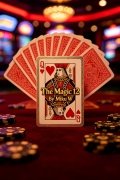
A very special way to locate a card—guaranteed to fool you.
The spectator freely cuts the deck and remembers the bottom card. The magician then claims that the trick has something to do with the number 12, and counts twelve indifferent cards from the top to the bottom twice. The magician then deals through the cards, attempting to locate the spectator's selection, but ultimately deals to a Queen. Counting twelve cards down from the top reveals the spectator's selection. Not only that, but the spectator's random cut position and the two packets of twelve cards also come into play. Turn...
The Next Effect
Dustin Marks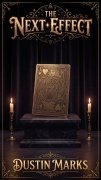
- A full-circle mentalism plot: a card apparently reserved for a later trick becomes an impossible foretelling in the current effect.
- The spectator searches a packet, shuffles both packets, participates in reassembling the deck, cuts the deck, and makes the final choice.
- The final choice is genuinely clean: no equivoque.
- The prediction is apparently placed aside before the spectator begins the shuffling and decision-making.
- The written message creates a two-stage climax: first, the unexpected prophecy; then, the spectator’s impossible card revelation.
- The final card remains face down...
Seconds, Centers, Bottoms: Revolutionary Card Technique No. 8, 9, 10
Edward Marlo
This booklet explains techniques and effects for second, center, and bottom deals. It describes Marlo's fantastic Master Grip technique, which allows for false dealing from the same grip. Apart from this, the booklet also contains weird and wild techniques for various deals, the No Touch theory, the incredibly clean The Over Deal, deals invented by Marlo's peers, and a ton of other ideas, techniques, and effects.
Table of Contents
- Foreword
- "Seconds, Centers, Bottoms"
- The Master Grip And Deal
- The Bottom Deal
- The Over Count
- The Second Deal
- The Havana Deal
- The Sail
- One Hand Bottom...
Think Ace 3
Edward Marlo & Jon Racherbaumer
A retrospective.
Table of Contents
- Introduction
- BEGINNINGS
- Touch Turn
- Named Reverse
- Think Ace
- Gaffed Think Ace
- TRIBUTARIES
- Swindle Think Ace
- Technicolor Think Ace
- Four-Card Technicolor Thought - Number One
- Four-Card Technicolor Thought - Number Two
- More Four-Card Technicolor Thoughts
- Cased-In Technicolor Thought
- Tabled Think Ace
- Spread Think Ace
- Contingency Aces / Robert Walker & Jon Racherbaumer
- Pumping B'Wave / Jon Racherbaumer
3rd edition 2002, PDF 28 pages.
Any Biddle Trick ACAAN
Miku W.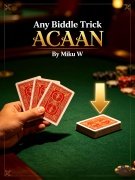
A Biddle trick that can fool magicians.
The magician has the spectator freely select a card and shuffle it into the deck. The spectator then freely cuts the deck into four packets, with the selection ending up on top of one of the four packets. The selection then vanishes, and the values of the remaining three cards add up to the selection’s position in the deck.
1st edition 2026, video 9:18
Unexplicable Random Twins
Biagio Fasano & Roberto Tota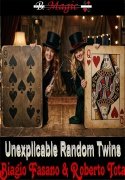
A spectator, having chosen two cards from a deck she has cut herself, says 'Stop' and then randomly selects two different points where to place her two cards, which, inexplicably, will end up right next to their respective twins!
Unexplicable Random Twins is a new card magic trick in which the magician, after showing and shuffling a pack of cards, hands it to a female spectator, who cuts it and rearranges it as she pleases. She then takes it behind her back and, after cutting it one last time, draws the top two cards face down. The magician and the spectator divide all the remaining cards...
Backs no Aces
Peter Pellikaan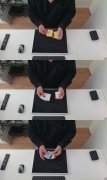
Four cards with the same backs change their design every time they are turned over. Eventually, they change into four aces with different backs.
1st edition 2026, video 2:29
The Secrets of Marked Cards
Dustin Marks
The Secret Weapons at the Card Table: A Real Look at Marked Cards
Hand the same deck to a magician and a cheat, and they will see two completely different opportunities. A magician sees a tool to create wonder; a cheat sees a weapon to make money. This ebook explores the real world of "paper"—not the movie version, but the actual techniques that survive under fire.
If you want to elevate your card work, you need to understand how to actually mark playing cards and use them under fire.
Magicians vs. Card Cheats: The Real Difference
Most magicians think they know marked cards, but...
Visionary
Raphaël Czaja
A value and a suit are combined to form a playing card, which the performer has accurately predicted.
The performer introduces a packet of ten cards numbered 0 through 9. One spectator freely shuffles them. The other spectator takes as many cards as he wishes and gives the rest to the first spectator. They each add up the digits on their cards to arrive at two different totals.
Next, each spectator deals cards from a regular deck, turning them face up as they are dealt, and remembers the card at the position corresponding to their number. The value of one card is then combined with the...
Most Impressive Card Discovery
Ian Baxter
Title tells all! Make room for an astonishing card mystery that will jolt them. Author Ian Baxter has been using this stunner for many years and is still using it today. It is an absolute gem and never fails to impress onlookers.
Cards are thoroughly shuffled by a spectator, a card chosen then lost. Deck is now cut exactly where spectator instructs then the performer starts a slow deal of cards to the table, face down and one at a time.
On impulse, the performer suddenly stops at one. Turning the card face up, it is the selection! Nothing new here? Well, not exactly. The very stringent...
Invisible Transfer Collector
Miku W.
A simple but very direct Collector routine.
The magician displays four Aces and has the spectator freely select a card and shuffle it into the deck. The selection is then transferred to the middle of the four Aces. Remove the selection, and three additional cards matching its value appear between the four Aces.
Performance transcript:
- For the next effect, we'll need the four Aces.
- Next, have a spectator freely select a card.
- The spectator selects the Nine of Hearts.
- Place the selected card into the center of the deck.
- Imagine that at this moment the selection travels to the center...
The 5s
Peter Pellikaan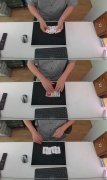
Four 5s change color multiple times. First, they magically turn around one by one. Then they become double-faced cards. And then their faces and their backs change into completely new designs.
1st edition 2026, video 4:01.
Subtle Secrets 2
Thibault Ternon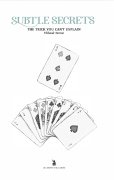
What if we told you that you could use luck to perform real miracles? Would you believe us?
- Borrow a shuffled deck of cards, and be ready for any impromptu situation
- A 100% reliable method
- Endless possibilities with this unique method
Table of Contents
- Introduction
- It all starts with a mixed deck: The predicted card
- A value rather than a card
- Let's tweak this a bit
- Conclusion
1st edition 2025, PDF 27 pages.
Miraculous Card Magic Made Easy with Secretly Stacked Decks
Biagio Fasano & Roberto Tota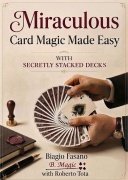
This book focuses specifically on the topic of cyclic mathematical stacks, presenting six different types, for each of which it provides a detailed description of the creation process and accompanies each with a whole series of miraculous automatic (self-working) effects made possible by these secret prearrangements.
In conclusion, the book presents several striking effects, each of which requires only a simple preparation of the deck of cards. In total, you'll find 25 different effects described here, divided into 7 different categories of stacks:
- Stebbins 4
- Snibbets 4
- Stebbins 5 ...
Russian Roulette 2: pull the pin
Vincent Gagnieux
Did you enjoy Russian roulette with a revolver? What if you tried it with grenades?
4 defused grenades, 1 armed. 4 red spot cards, 1 Queen of Spades.
The objective is simple: pull the pins on 4 grenades without blowing yourself up.
A spectator shuffles the cards and hands them to you at random, one at a time. You delicately take each card between two fingers and gently shake it, turning your head to the side as if listening carefully. You are able to determine by sound whether the grenade is armed or not. If the grenade is armed, you place the card face down on the table. Otherwise,...
Gun Card Location
Miku W.
A completely impromptu card routine.
The magician takes out the Ace of Spades, framing it as a bullet, then assembles the deck into the shape of a gun. The spectator freely inserts the Ace of Spades anywhere in the "gun," representing the bullet being loaded into the chamber.
The magician then has the spectator freely cut the deck and remember a card. Finally, the deck is reassembled into the gun and bullet. The spectator's selection shoots out of the deck like a fired bullet.
Performance transcript:
- This trick requires a little imagination
- Here I have the Ace of Spades —...
Subtle Secrets 1
Thibault Ternon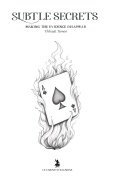
The first book in the Subtle Secrets series, which details a completely new concept in magic: the disappearance of evidence...
- A completely innovative and original principle
- Numerous avenues to explore
- A totally crazy concept
Table of Contents
- Introduction
- Getting rid of compromising evidence for good
- Effect #1: The Reconstituted Torn Card
- Effect #2: The "truly" Bitten Card
- Effect #3: Origami
- Last sweet trail
1st edition 2025, PDF 21 pages.
Fatidic
Raphaël Czaja
The performer predicts the color matches among randomly assembled pairs and the identity of the spectator's remaining card.
A prediction envelope has been placed in full view on the table.
The spectator cuts into a regular deck and deals a small packet of cards to the performer. After a genuine riffle shuffle and a couple of cuts, he deals a small packet of cards to himself as well.
Without looking at the faces, the performer removes two cards from different positions in his packet and tables them face down. The spectator takes the top two cards from his own packet and freely places...
The Two of Clubs Miracle
Dustin Marks
A borrowed deck. The spectator shuffles and cuts. An impossible outcome. And absolutely zero sleight of hand.
Imagine handing a normal, borrowed deck of cards to your spectator. They give it a genuine table riffle shuffle, cut the deck, and deal five random, face-down cards to themselves. You have had a single face-down prediction card sitting on the table from the very beginning.
- The Prediction Miracle: If they place the target card face up on the table as an "insignificant" card, there is no elimination process. They turn over your prediction card to find a perfect match: "You placed...
Forklift Match
Miku W.
Absolutely a card technique you've never seen before.
This is an original card technique I developed that lets the spectator decide where two packets are interlaced, followed by a push-through handling to complete the cut. It can be used to cut to all four Aces or other target cards. Here are two routines using this technique:
Forklift Match: The spectator freely selects two cards. The magician splits the deck in two and lets the spectator decide where the two packets are interlaced. The magician then cuts the deck into three packets, with the top and bottom cards of the three packets...
Sniff Crosses
Peter Pellikaan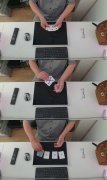
A bewildering number of color changes. You first show four five-of-diamonds. They suddenly have large crosses drawn on their faces. The crosses also appear on the backs. Then they change to the four aces, and on top of that, each ace has a different back design.
1st edition 2026, video 2:59.
The Unforceable Force
Dustin Marks
Stop practicing your passes and palms for a moment. What if you could perform a miracle where the spectator shuffles the deck, cuts the cards, and simply thinks of one - all while you never touch the deck?
Two variations. Perform the one that best suits your style.
The Unforceable Force is not just an effect; it is a masterclass in psychological manipulation and deceptive procedure. This effect allows you to perform a clean, "hands-off" revelation that leaves your audience convinced they had a completely free choice.
The Power of Psychology Over Sleight of Hand
This effect is designed...
Different Paths, Same Destination
Miku W.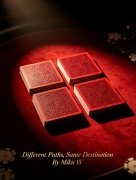
A foolproof card routine for fooling your magician friends.
The magician has the spectator cut a packet into three piles, just as he does, and remembers the cards they cut to. The magician turns his cut-to card face up and exchanges it with the spectator's card, placing them at their freely chosen cut positions. The spectator then shuffles the cards. The magician splits the deck into two packets and deals from both simultaneously. When he stops at the face-up card, the corresponding card in the other packet is the spectator's selection. Not only that, the cards stop at exactly the positions...
Sniff 8
Peter Pellikaan
You start with four blue double-backers. They turn into four red double-backers. And then they change into four of a kind, for example, the four eights, and each one has a different back.
1st edition 2026, video 1:53.
The Converter
Miku W.
A new handling of a classic plot.
A spectator freely selects a card. The magician claims he will cut to the other three cards of the same value. He cuts three cards and leaves each face up in the deck. At the end, they are revealed to be the wrong value. But when the deck is spread, the three face-up cards have impossibly changed into the other three mates of the spectator's selection.
Performance transcript:
- First, shuffle the deck.
- Have the spectator freely select a card.
- Let's say they select this card.
- Remember your card.
- As a magician,
- I'll try to cut to the other three...