From the introduction:
Charles Goren was right. As early as the mid-1950s he was urging bridge players to avoid getting caught up in all the trendy new bidding systems with their myriad confounding conventions. Eventually, even the great Goren was dragged screaming and kicking into the new age of scientific bidding, allowing that things like the Blackwood ace-asking convention and the artificial 2C Stayman bid to check for a 4-4 major suit fit after a 1NT opening bid could be useful at times. But in fighting against complications to our great game of contract bridge, Charles Goren was right.
As I write this introduction in the later half of 2008, contract bridge is dying in America, despite feverish attempts to revive it with Easybridge, Mini Bridge, the School Bridge League, "Bridge Is Cool", collegiate tournaments, targeting of AARP members, creation of new masterpoint categories to stimulate continued play, Internet play, etc. Membership in the bellwether American Contract Bridge League (ACBL) is static, with only about a 1% growth rate at present. Bridge playing in the general population (non-duplicate players) is static to negative as well. Something drastic must be done if contract bridge is to survive as a popular, dynamic game.
This ebook is a step in that direction.
In its present form bridge is just too hard to learn. It takes years to develop the ability to confidently play the game with experienced players. For that reason, the ACBL has flighted, stratified, and segregated players by masterpoint category, and the vast majority of players think such an abomination is a wonderful thing for the game, because it keeps them "competitive" within their comfort zone. They would rather win than improve, continually beating up on the minnows and avoiding the shark tank. Me, I'm a minnow with an attitude - I swim with the sharks, baby, and if they chew me up I don't let them swallow me. But I realize I'm in a very small minority of hard heads. Most folks give up and find some other leisure activity. We can't have that.
A new approach to learning and playing bridge is necessary. Simplicity Bridge combines simple bidding with simple defense, and emphasizes the 4-Deal "Chicago-style" rubber bridge play and scoring. Defensive carding methods are limited and simple, and the emphasis is on really grasping the elements of declarer play rather than learning a bunch of systems and conventions found mostly in duplicate clubs and tournaments. (We save that stuff for the end of the book when we upgrade to "Super Simplicity" which isn't all that simple and begins to add a lot of the elements of modern standard bidding.)
Does our approach preclude playing in club and tournament games? No. But if the Simplicity Bridge system is used by Simplicity System players, they should run circles around the non-Life Master category folks who constantly get in bidding trouble and mis-defend due to having signals crossed. It is recommended, however, that Simplicity players initially concentrate in International Match Point (IMP) events rather than matchpoints. Once familiar with opposing systems and conventions (which we describe in Chapter 8), and with a lesson or two on matchpoint strategy vs. rubber bridge oriented scoring then this system should be competitive at matchpoints as well.
This ebook teaches the basic elements of contract bridge in a fun, safe, and easy way. It is designed for play in college student unions, coffee shops, bars, kitchens, dens, break rooms, and any other place where folks gather and have a half hour or so to get in a rubber. It is best played for money, even if very low stakes like a tenth of a cent a point. Playing with money at stake (yours and a partner’s!) tends to increase concentration.
I close this with a request for your indulgence. I have a personal prejudice against using suit symbols for spades, hearts, diamonds and clubs in hand diagrams. I find them distracting. If that bothers you, feel free to draw them in.
1st edition 2009; 165 pages.
Table of Contents
- Contents
- Acknowledgements
- Introduction
- Chapter 1: Overview
- - History
- - Mechanics
- - Playing with a Trump Suit
- - The Auction
- - Scoring
- - Conclusion
- Chapter 2: In Your Dreams: Bidding Without Opposition
- - Prologue
- - Bidding Basics
- - Hand Evaluation
- - Opening the Bidding
- - Suit Selection for an Opening One Bid
- - Responding to Partner’s Opening Bid
- - Rebids
- Chapter 3: Hey, They're Fighting Back, No Fair!
- - Defensive Bidding (Overcalls, The Takeout Double, Notrump Overcalls, Two Suited Overcalls)
- - Competitive Bidding on Offense (Handling Overcalls, Handling Doubles, Handling the Other Stuff)
- Chapter 4: Landing the Big Ones
- - General
- - Controls
- - Asking for Controls: Blackwood and Gerber
- - Monster Mash
- - When Responder Has a Big Hand
- - Preemptive Hands
- Chapter 5: Play Like a Pro
- - The Bad News
- - Basic Declarer Play
- - Cool Stuff - Advanced Declarer Plays
- - Books for Further Study
- Chapter 6: Defense, Defense!
- - Defending During the Auction
- - Opening Leads
- - Third Hand Play
- - Second Hand Play
- - More Cool Stuff - Advanced Defender Plays
- - Books for Further Study
- Chapter 7: Rubber Bridge Shuffle Up and Deal
- Chapter 8: Overview of Other Bidding Systems
- - Goren ("1950 Charlie")
- - Modern Standard American and Standard American Yellow Card (SAYC)
- - Two Over One Game Force (2/1 GF)
- - Acol
- - Big Club Systems
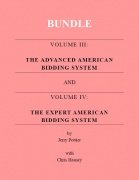
- - The Expert American Bidding System and its prerequisite The Advanced American Bidding System
- - Other Systems
- Chapter 9: Add Ons (Super Simplicity)
- - Improve Your Notrump Bidding Skills
- - Splinter Bids
- - Weak and Preemptive Jump Overcalls
- - Western Cue Bids
- - Special Doubles
- - Two Suited Bids
- Chapter 10: Tidbits
- - Balancing Blues
- - Competing
- - The Forcing Pass Concept
- - Bidding Over Their Big Preempts
- - Winning Bridge Intangibles
- - Bridge Ethics and Traditions
- - Expand Your Game
- Appendix A Simplicity System Overview
- About the Author
word count: 56284 which is equivalent to 225 standard pages of text