Lybrary.com: ebooks and download videos
Home / Author /

Irv Weiner

Portrait of Irv Weiner

(Boston, Massachusetts: 4th October 1923 - 14th December 1999)

Aka "John Avery" and "Mr. Fingers". Son of deaf-mute parents. Taught first trick by mother in 1930, then self-taught from library books. Inspired to become a pro by seeing Blackstone at age 14. Attended Chavez School in 1947 on GI Bill, graduating to become an instructor there. Owner of "Irv Weiner's Studio of Magic" in Boston 1949-55. Pro close-up, specializing in college 2-hour one-man shows. Pet effects: Vernon's Travellers, Thumb Tie.

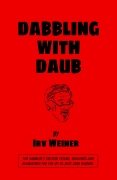
Wrote Dabbling with Daub (1951, 7pp). Invented over 200 original effects published as "Manu-Secrets", including Soft Dice (1952), Flabbergasting! (1952), Red Tape Thumb Tie (1953), No Nest Cups & Balls (1953), Soft Dice (1954), The Travelling Salesman (1954), Just Imagination (1954), Alphabet Soup Card Trick (1955), Beyond Belief (1955), Red Tape (1955), Guillo Card (1956), and The Prophet’s Beard (1957, with Ray Hyman). Tricks in Genii, New Jinx, MUM, Linking Ring, etc.
set alert for this author

Products

Displaying 2 to 1 (of 2)

$7

PDF

Irv Weiner
Read more about Dabbling with Daub by Irv Weiner

Add to your arsenal of magic and card sharper's knowledge with this hard-to-find manuscript from a recognized master of deception. Daub or "shade work" is a special treatment that the card cheat adds to one or more cards during play. It's most always done when playing with someone else's deck.

Savvy magicians and card workers decided that card cheats shouldn't be the only ones to make use of this technique. Thus, Irv Weiner devoted this booklet to the topic.

The book gives 12 practical methods of securing daub in a natural manner. Five suggestions for applying the daub are given, as...

★★★★★ $6

PDF

Irv Weiner
Read more about Irv's Triple Transposition by Irv Weiner

Add to your arsenal of outstanding close-up effects with this hard-to-find manuscript from a recognized master of deception. The effect is simple and direct: Four Aces change places with four Kings, which are later found face-up in the deck.

Meanwhile, in the pile formerly occupied by the Kings, are cards that match one previously selected by a spectator.

Or, as Canadian reviewer Sid Lorraine says:

"Aces in one pile, Kings in another. The Aces and Kings change places; then the Kings jump into the deck face up and the four remaining cards on the table turn out to be the four Queens."

Let...

Displaying 2 to 1 (of 2)