Reviews: Read What Others Are Saying
224 ★★★★★ reviews
156 ★★★★★ reviews
99 ★★★★★ reviews
140 ★★★★★ reviews
Impromptu Pin Reveal
Overall customer rating: ★★★★★reviewed by Ryan Higgins (confirmed purchase)
Rating: ★★★★★ (Date Added: Saturday 10 October, 2026)
 This is brilliant. I've been building an arsenal of impromptu pin reveals, and I will definitely use this.
Magigram Volume 2 (Sep 1968 - Aug 1970)
Overall customer rating: ★★★★★reviewed by Christopher M. Reynolds (confirmed purchase)
Rating: ★★★★★ (Date Added: Thursday 08 October, 2026)
 I recently binge-watched the entire seven seasons of the TV show Mad Men. If you're not familiar, Mad Men is an award-winning period drama set in the glamorous world of New York’s Madison Avenue advertising agencies during the 1960s and early 1970s. After finishing the series, I became curious about what magic-trick advertisements looked like during that era. So I plunked down $3.00 and downloaded Magigram Volume 2 (Sep 1968 - Aug 1970).
Much to my surprise, the 800+pages of Magigram were filled with as much drinking, sexism, racism, and homophobia as there was an entire season of the TV show. Don't get me wrong. I’m no namby-pamby, bra-burning male feminist, or an uber-sensitive college soy boy who’s here to whine about the sins of our spiritual fathers' pasts. Far from it.
I always felt that magic and illusion were mostly disconnected from the outside world—focused solely on secrets and sleights while turning a blind eye to the cultural and political trends of the time. The art seemed content to endlessly draw from its rich historic past, never progressing much beyond the Houdini or Blackstone eras, willfully tucked away in a charming fantasy Neverland.
But now I stand corrected.
One advertisement that jumped out at me on page 543 was for a product called the Sex Cards. Here’s the ad copy verbatim:
Here’s a great gag from Tom Fitzgerald. We had a sell-out of these some time ago at a convention, but we are now pleased that they’re back in stock again. The specialty printed card says: “If you are in the mood for sex, keep this card and smile. If you’re not in the mood, tear this card up.” You hand the card to any attractive female. The gag comes if they try to tear the card up … because they can’t! These cards happen to look like flimsy paper ones but are in fact printed on a special material which is completely untearable. What a gag! What a laugh! What can you lose! What can you gain!?!
Oh my, how times have changed! There was even an ad for a product called “Nudist Cards For Children.” WTF! Much of the humor here has aged like fine milk, and after a while the women-bashing jokes left a sour taste in my mouth. I’m guessing now that failed Andy Warhol assassin Valerie Solanas wrote her 1967 SCUM manifesto after witnessing a bad magic act.
If you're looking for new tricks, I don’t have much to offer—the magazine was filled with advertisements and presentations for apparatus-style magic, which isn’t really my thing. I find props like dove pans to be “strictly for the birds” (pun intended). Honestly, the pages of Magigram were overflowing with ads for dove pans, as well as books and encyclopedias dedicated to them. After a while, I wasn’t sure if I was reading a magic magazine or a small game cookbook. By the end, I had the sudden urge to go into the kitchen and roast a squab.
While much of the material in Magigram felt stale and past its prime—like discount meat at Walmart—it still had a few valuable gems, some wheat hidden amongst the chaff.
What caught my attention most were the hand-drawn pen-and-ink illustrations, especially the small, standalone spot illustrations scattered throughout the magazine’s pages. Many were rough and crude, with a raw, naïve style I found utterly charming—so different from the cold, soulless AI-generated graphics seen today in online publications like VANISH or Magicseen. Unfortunately, there were no credits, so I have no idea who these artists were—which is a real shame.
A series of articles by a young Billy McComb, “At Homb With McComb,” also offered advice on becoming a professional magician. As someone who still struggles as a semi-unprofessional ‘ham & egger,’ I found much of his advice a bit over my head. Still, Billy McComb is on my short list of favorite magicians, and I found his articles a welcome addition.
All in all, reading these old issues of Magigram was a treat. For just $3.00, I was able to step back in time—like an episode of Mad Men—to a bygone era of suave, tuxedo-clad nightclub magicians like Channing Pollock, as well as socially awkward tricksters intent on sexually harassing their female audience members.
That said, I don’t believe we need to “cancel” this material or erase it from history. As magicians, amateur or professional, we’re part of a lineage that stretches back to prehistoric times, and it would be a shame to dismiss this material as insignificant or “problematic” simply because it’s tacky or cringe-inducing.
The Eight Kings Stack: the complete guide
Overall customer rating: ★★★★★reviewed by Michael Lyth (confirmed purchase)
Rating: ★★★★★ (Date Added: Thursday 08 October, 2026)
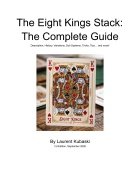 First, I must thank Laurent Kubaski for compiling this recommended reference work on The Eight King Stack, long overdue for such a complete work for new and old ( Me ) reading and learning pleasure. And see the unknown mentalist has his deserved work amongst the content. Magic card system by Abbots, which became a Supreme magic publication, along with the one I use the most by George Blake, 'A Set-up Reset', also a Supreme magic publication, plus the original Si Stebbins booklets where all I had and have in book form. I have since added the unknown mentalist work into my working lybrary too. Recently I learnt a routine that has four decks set up in Si Stebbins, each in a different pocket. Anyway, back to this new work! It's fantastic. So thanks to Author and Chris for catching my attention.
New Three-Cut ACAAN
Overall customer rating: ★★★★★reviewed by András Liszkai (confirmed purchase)
Rating: ★★★★★ (Date Added: Saturday 03 October, 2026)
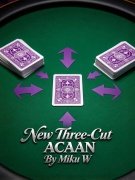 Great end result and very easy to do. The tutorial is short and to the point. This is the type of card magic I like, so for me this is an absolute winner. Highly recommended.
Anatomic Stack 2
Overall customer rating: ★★★★★reviewed by laurent kubaski (confirmed purchase)
Rating: ★★★★★ (Date Added: Thursday 01 October, 2026)
 In “Anatomic Stack 2”, the unknown mentalist provides a clever alternative to using a mnemonic sentence like in the Eight Kings stack: instead, you use a memory palace (a classic mnemonic method to remember a list of things) that goes through various elements of the human body.
For example, the 3rd, 4th and 5th cards of the stack are 2-4-8: - The “2” represents the 2 eyebrows. - The “4” represents the 2 eyes and the 2 ears that are on the same horizontal line. - The “8” represents the nostrils, which look like a horizontal 8.
As I'm writing this, this ebook is a free download so don't hesitate!
Take Your Tricks
Overall customer rating: ★★★★★reviewed by John Heimsch (confirmed purchase)
Rating: ★★★★★ (Date Added: Monday 28 September, 2026)
 Good fast download.
Magic Menu volume 5, number 27 (Jan - Feb 1995)
Overall customer rating: ★★★★★reviewed by Paul Budd (confirmed purchase)
Rating: ★★★★★ (Date Added: Saturday 26 September, 2026)
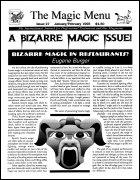 Considering the staggering volume of issues spanning The Magic Menu (and overall weight within the canon of magic literature), reviewing a single episode of this publication seems borderline silly. I chose to do so for a few reasons:
- I think this is roughly the 6th issue of 'The Magic Menu' that I've read front-to-back (maybe not quite that many even). I believe I have spared the world my comments on this publication, but felt inclined to offer them now (Fall 2026 -- eons after Jim stopped publishing this series). I have a smattering of electronic versions AND paper versions of this publication.
- Overall: I just think magicians alive today need to know what an important thing this publication was. It was good. It was talked about because it was popular.
- I am moderately certain (within the scope of bar/restaurant magic) this very well might be the absolute first published issue (up to early 1995) in the western hemisphere devoted largely to bizarre magic in a restaurant setting. Yes, that is niche -- but it was special for its time. I am a magic magazine/serial nerd and I've read a lot of written stuff about our art.
Nostradum Wallet
Overall customer rating: ★★★★★reviewed by Michael Lyth
Rating: ★★★★★ (Date Added: Saturday 26 September, 2026)
 With such a well-made wallet, you know you have something that is going to serve you well. Recommended for any mentalist, new or old. I love mine. Well done to the Unknown Mentalist for this creation.
The Frog Prince
Overall customer rating: ★★★★★reviewed by CARLO ALBERTO MENONCIN (confirmed purchase)
Rating: ★★★★★ (Date Added: Monday 21 September, 2026)
 Excellent results, highly recommended.
Unbelievable
Overall customer rating: ★★★★★reviewed by Gregg Webb (confirmed purchase)
Rating: ★★★★★ (Date Added: Sunday 20 September, 2026)
 I love this kind of thinking. I think I came across this many years ago, when I was only interested in 4 Ace tricks. Now that I've gotten somewhat into mentalism, I see this trick as a classic to be studied.
Choice of Mortals
Overall customer rating: ★★★★★reviewed by Marc Rehula (confirmed purchase)
Rating: ★★★★★ (Date Added: Wednesday 16 September, 2026)
 You can't beat how direct the effect is! You do end up dirty, but the method is so seamless there's no reason to check the cards. And it's not difficult! Easy to recommend.
At Home With Aldo Colombini
Overall customer rating: ★★★★★reviewed by Jim Saylor (confirmed purchase)
Rating: ★★★★★ (Date Added: Tuesday 15 September, 2026)
 I rarely, if ever, write reviews, but perhaps after 36 years of performing my opinion might mean something to someone.
I just watched this video. An interview, a song (in Italian), a magic trick ("Name It"), and some spaghetti. A great video about a great person. Gone too soon.
I never had the opportunity to meet Aldo, just some emails back and forth. I always admired and respected him and his way of performing. Everything he did was entertaining, professional, and commercial (to me this means solid and worth doing for everyone). His methods were simple but not simplistic.
If you want to know more about Aldo, if you want to hear from the man's own lips the whys and wherefores of what made him who he was, BUY THIS VIDEO!
I rarely, if ever, write reviews, but perhaps after 36 years of performing my opinion might mean something to someone.
I just watched this video. An interview, a song (in Italian), a magic trick ("Name It"), and some spaghetti. A great video about a great person. Gone too soon.
I never had the opportunity to meet Aldo, just some emails back and forth. I always admired and respected him and his way of performing. Everything he did was entertaining, professional, and commercial (to me this means solid and worth doing for everyone). His methods were simple but not simplistic.
If you want to know more about Aldo, if you want to hear from the man's own lips the whys and wherefores of what made him who he was, BUY THIS VIDEO!
Mentalism and Magick
Overall customer rating:reviewed by Craig Daniel (confirmed purchase)
Rating: ★★★★★ (Date Added: Saturday 12 September, 2026)
 It's Bob Cassidy ... and a new version of his "Three Envelope Test" ... what more can I say? Bob is ALWAYS worth it.
I don't know I agree totally with his new version of the envelope test, but his change does make a couple handling changes that make it better.
Miraculous Card Magic Made Easy with Secretly Stacked Decks
Overall customer rating: ★★★★★reviewed by Duncan Miller (confirmed purchase)
Rating: ★★★★★ (Date Added: Sunday 06 September, 2026)
 Great book. Excellent illustrations. The original is in Italian, but the English translation is quite good, except that a couple of paragraphs and chapter headings didn't get translated. Hopefully an update will clean this up. I like their variations on the Si Stebbins stack, which most magicians (and no muggles) will recognize. Only the simplest sleights are required for any of their effects, and sometimes none at all. For my taste, however, some of the effects are overly elaborate. I like my audience to be able to remember clearly what I did, but conclude that it was impossible. I want them to be mystified, but not confused.
The Book of Thirty-One
Overall customer rating: ★★★★★reviewed by James Davis (confirmed purchase)
Rating: ★★★★★ (Date Added: Saturday 05 September, 2026)
 Great book! Well-organized info on this game and even a version with a die at the end as a bonus.
Streetwise Tarot
Overall customer rating: ★★★★★reviewed by Christopher M. Reynolds (confirmed purchase)
Rating: ★★★★★ (Date Added: Friday 04 September, 2026)
 I want to start this review with a heartfelt apology. Mark Lewis has been a faint blip on my radar for years, but I never paid him much attention. I saw him in his YouTube videos, wearing his oversized glasses and frumpy wardrobe, and I unfairly dismissed him as just another irritating magic nerd. I judged someone’s worth based only on their looks, and I’m ashamed of myself for being so shallow.
Tarot cards are a fascinating art form, from the illustrations to the occult symbolism. Over the years, I’ve read plenty of books on the subject, and they all had one thing in common: they put me fast to sleep. Their dull and plodding writing always sent me into a narcoleptic trance.
Then I read Streetwise Tarot, cover to cover, without yawning once. Mark is a gifted writer, an entertaining raconteur, and a witty, self-deprecating imp. In the first part of the book, he speaks openly about his shady past, telling some wildly funny stories about his early days as a two-bit hustler in the psychic trade, fleecing the public without remorse.
And it was this first chapter that got me hooked. I soon realized Mark was no nerd—he’s a kindred spirit, a charming rogue. In my opinion, he’s magic’s answer to Snoop Dogg or Ice-T. Whether it's doing psychic readings, performing hypnotism, doing card magic at trade shows, or pitching Svengali decks at county fairs, Mark is a stone-cold hustler out for the big score, looking to line his pockets fat with dead presidents while still being true to his art.
Consequently, it's this sly, shifty, “Streetwise” approach that separates him from every other garden-variety tarot reader. His unorthodox memory system gives readers a more practical and realistic view of Tarot, rather than the usual confusing hippie-dippy nonsense found in other, more serious books.
With this versatile method, you'll find yourself giving full-length readings sooner rather than later. You’ll have the meanings of all 78 cards memorized in just a matter of weeks, instead of giving up in frustration after months or years of intense, confusing occult study.
The book also dedicates entire chapters to the ethics of Tarot reading—a topic seldom explored in other works. Mark Lewis emphasizes the importance of sympathy and compassion, two qualities he believes are essential for every Tarot reader. He also shares practical advice on making money as a Tarot reader in various settings, such as psychic fairs, flea markets, and private practice. Once you’ve learned the basics and developed your skills, you’ll be ready to put them to profitable use.
What truly sets this book apart is not only the information Mark shares, but the engaging way he presents it. His personality shines through every page. I found the book light, breezy, and thoroughly enjoyable—a rare treat in this genre. For anyone picking up their first Tarot deck, Mark’s book offers far more than most others on the market.
There are literally hundreds, if not thousands, of books written about the Tarot cards. But if you want to become a successful Tarot reader, this one is essential reading.
Gun Card Location
Overall customer rating: ★★★★★reviewed by Simon Bate (confirmed purchase)
Rating: ★★★★★ (Date Added: Thursday 03 September, 2026)
 It's not you. It's me… I am no good at Faro shuffles, but the actual trick looks good.
Bob Cassidy's Mentalism
Overall customer rating: ★★★★★reviewed by Ryan Higgins (confirmed purchase)
Rating: ★★★★★ (Date Added: Tuesday 01 September, 2026)
 Bob Cassidy has some of the strongest mentalism, and this book gives you everything you need to really master the art.
Encyclopedia of One-liners for Magicians
Overall customer rating: ★★★★★reviewed by Dr David T Williamson (confirmed purchase)
Rating: ★★★★★ (Date Added: Tuesday 25 August, 2026)
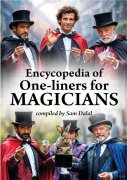 You'll find something you can use, but don't count on being overwhelmed with a myriad of new material. Most of what I read in the first few pages contained slightly off-color, or better yet, derogatory remarks where so-called humor is delivered at someone's character. Other one-liners fall in the category of "no laughs because you'd have to explain the punchline." Is it worth $6? Absolutely. Will you gain new material? Yes. But when you come across the one-liners that do not fit your personality, style, or audience, allow those line items to be used to spark your ingenuity and creative thinking so you can adapt them to your style. I'm reminded of Carl Ballentine and Don Rickles.
103 Tips and Resources for Magicians
Overall customer rating: ★★★★★reviewed by Dr David T Williamson (confirmed purchase)
Rating: ★★★★★ (Date Added: Tuesday 25 August, 2026)
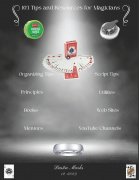 There are a lot of great tips in Dustin's book, and a few not-so-great. For instance, #4 says to "Carry a deck of cards, coins etc. in your car. At red lights, practice the move. Do NOT practice while driving!!!" I would argue that you cannot get into the proper rhythm of practice and rehearsal while sitting at a red light. If you are picking up your wife from work and she is running late, sitting in the parking lot is a better time to practice. I have not tried the hyperlinks yet. I am hoping that they all still work. These tips and resources can help you move your performance level to higher heights. I've been around the field of magic since 1972 ... and I still need a mentor. In an indirect way, Dustin's tips fill that need. And at $4.95 - this is a steal (side steal?). ;-)
Linking Ring Manipulation
Overall customer rating: ★★★★★reviewed by Dr David T Williamson (confirmed purchase)
Rating: ★★★★★ (Date Added: Tuesday 25 August, 2026)
 Although Dariel starts this book with a reference to his rope magic book and Tarbell - and ends this book with a shameless plug to some of his other works, I was a bit surprised at how well this is written. It is fairly easy to follow, and even with "faint drawings", they are beneficial. I have no reservations in saying that this book is worth the $7. Combined with several other books on the market that focus on this ancient effect, you will find some overlap, but that is to be expected. I'm taking one star off because of the old-style drawings (someone should rewrite this book, and others like it, with better visuals!).
Tops Treasury of Ball Manipulation
Overall customer rating: ★★★★★reviewed by Dr David T Williamson (confirmed purchase)
Rating: ★★★★★ (Date Added: Tuesday 25 August, 2026)
 Although there is a wide variety of sleights, maneuvers, and routines, the majority of the content toward the back (using balls with props) requires other apparatus that the magi may not have lying around, thus making that content null. The hand-drawn illustrations are terrible. Not only should those be redrawn by someone other than a 3rd grader, there should be a lot more of them! If you are a visual learner you might have a difficult time following the narrative. But, all said, for $7 it's worth the purchase. You might have to look long and hard, but you'll get your money's worth.
A serious rewrite is warranted.
The Magic of ESP
Overall customer rating: ★★★★★reviewed by David Anderson (confirmed purchase)
Rating: ★★★★★ (Date Added: Tuesday 25 August, 2026)
 Some really nice effects in here.
Fatidic
Overall customer rating: ★★★★★reviewed by hal barlow (confirmed purchase)
Rating: ★★★★★ (Date Added: Sunday 23 August, 2026)
 Not for me. Too much dealing.
The Unforceable Force
Overall customer rating: ★★★★★reviewed by Mark Millen (confirmed purchase)
Rating: ★★★★★ (Date Added: Friday 21 August, 2026)
 There are much better self-working forces in the literature, imo. I find the equivoque to be lazy and unmotivated.
3 Disk Monte
Overall customer rating: ★★★★★reviewed by Anthony Dacey (confirmed purchase)
Rating: ★★★★★ (Date Added: Friday 21 August, 2026)
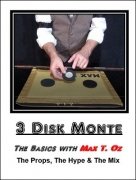 If you want to know everything about the 3-disk Monte, then this is for you. The PDF is excellent, and the video is not bad at all. You get a link to where you can buy the physical game; not cheap, but as they say, all the good things in life are not free.
What I Learned From Making Way Over 250,000 Fun Balloon Creations
Overall customer rating: ★★★★★reviewed by David Martin (confirmed purchase)
Rating: ★★★★★ (Date Added: Wednesday 19 August, 2026)
 You can't beat this price. I've been a student of magic for 40 years, but three months ago the "latex bug" bit me something fierce and out of the blue. I seem to have a knack for it. Right now, I am practicing and studying all I can on this subject but I do aspire to one day in the very near future to do this for money. I knew absolutely nothing about how to run a small business like this, but with the insight I gained from this, I am no longer filled with questions. In fact, I have more answers than I do questions at the moment. I know with this insight that I can make this a success in my local area.
Even if I don't reach the status that Carl reached in his career, I know it will be a journey with experiencing and an extremely fun, rewarding one also. Everything Carl shares in here is worth your time and attention and his enthusiasm has hyped me up to the point where I'm slowly but surely building a small humble walkaround business. It's great that if I ever have the opportunity to expand to the point Carl did, that I have access to his expert advice in this area also. His experiences he shares in this work are pure gold. The photographs are inspiring. It is my hope that the student gets inspired by this knowledge in a similar vein to me. It's no longer a question of if I will go down this commercial path with balloon twisting. It's just a matter of when. I just want to give this study a little time that it deserves before considering getting paid for it. Right now it's all about trying to add my personality to my existing future menu and building confidence, speed and consistency. I do look forward to the future work and experiences though and that is a blessing. Reading through this book is super quick but it's utterly amazing what you can learn from here and how much it could possibly affect the reader the same it did me.
Also, there's solid advice in here outside of balloon twisting regarding sound equipment and business sense. That alone makes this small investment on here a no brainer.
No designs are taught but you will learn from a true professional how you can turn this passion into revenue. I'm still utterly shocked by the price of this book. Super fun, informative, inspiring and quick read. Highly recommended!
One Balloon Zoo
Overall customer rating:reviewed by David Martin (confirmed purchase)
Rating: ★★★★★ (Date Added: Wednesday 19 August, 2026)
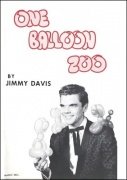 I've been into balloon twisting for around three months now and seem to have a knack for it. Like with my magic study, I started gravitating towards media that can help me hone my skills in this area. Out of all the books I've read thus far, One Balloon Zoo by Jimmy Davis, checked all the boxes for me. The only downside I could say is that the ways of pumps are not covered, since this is a book from an older time, Jim Davis teaches you techniques via mouth inflation. Not a deal breaker by any means. In fact, it's a great skill to learn for a "just in case" situation. It's just a personal choice I've made in my balloon work early on, to not inflate by mouth if I can help it. With Jim's teaching though, I can and might if one of these days I need too.
Jim is a great teacher and I wish this author had more published work to digest. The ad copy says that Jim adds personality to his work and that is absolutely true. Even the basic animal (dog) that you'll learn at the beginning of this book has a special touch in regards to how the finished product looks. In my opinion all the designs are still worthwhile to learn to this day and although I'm not a big fan of the Monkey design in this book, I've found that if you make the body with smaller bubbles, to leave yourself with a big tail that you can curl up, it will satisfy a future request for a monkey. It's a very easy design also.
I think the most difficult thing I learned in this book is the technique to thin your balloon. This technique would actually be more expedient with mouth inflation, but it does translate well with a simple hand pump as well. It can be a pain with a hand pump though, but worth the effort to try and master. The two designs in this book that use this are the Elephant and Aardvark/Anteater. I haven't read another book thus far that teaches this technique and in my opinion this old school knowledge is worth the price of admission. The Elephant presented here has a striking semblance to Disney's Dumbo. It's also got a rustic, charming quality to it (like the other designs presented here). I love the fact that with the thinning technique, I can have a long thin trunk and a big head for my elephant, with ONE bubble. It adds to the design and is just one example of how Jim Davis's personality is evident.
The text is clear and easy to understand. The photographs are excellent and make me wish I could've seen Jim in his prime. The interview at the end of the book is also fascinating. With the exception of the thinning technique, everything in this book is beginner accessible. Basic designs that ooze Jim's personality and showcase his thoughtful expertise are on full display for the passionate student. I had fun making all 12 of these designs and it started my mind racing and thinking about how I could go about personalizing my own work in the future. The big value of this book is learning directly from Jim. It truly is a blessing to learn from him and if you think that these basic designs are below you...you're missing out on valuable knowledge that you can carry over into more complex designs in the future.
I just found out also, through a little research that this is book one of a trilogy! I have the other parts of the trilogy coming in direct from Magic Inc. and I'm excited to continue expanding my One Balloon Zoo toolbox! Unfortunately, this is the only Jim Davis book in the trilogy. I would recommend this to anyone with an interest in balloon twisting regardless of skill level. I'm so happy to have discovered Jim Davis and this series. I hope if this review inspires future students to take a gamble on this, that they see what I do in this thin but potent volume. Another quality Magic Inc. publication and there are many!
Tarot Magic
Overall customer rating: ★★★★★reviewed by Rick Kirkes
Rating: ★★★★★ (Date Added: Sunday 16 August, 2026)
 This eBook was given to me as a gift by another mystery performer.
This eBook is aimed at doing mentalism, readings & bizarre magick with tarot cards. To be honest with you, I've had this eBook for a while now. I think I got it right around the time I purchased Scott Creasey's book on tarot effects "22". So, I was still working through the effects in that book but in the last few weeks, I remembered that I have this eBook in my files.
First, I really like that the tarot effects in this PDF are for the most part very easy to do. If you have a basic working knowledge of playing card magic, some of these effects will be familiar to you.
So, let me go over some of the effects that I really like here. BTW, all of the effects in the eBook are performed with the 22 major arcana cards (if you don't know what those are he talks about that in the eBook too).
Gemini Reading based on Karl Fulves Gemini Twins but done with tarot cards & 2 business cards and using two spectators / I'll give this 4 stars.
Prophesy - This is a very cool prediction effect done with a business card and the 22 majors. This is a one-on-one effect that I really like / 5 stars.
There are two pendulum effects in the PDF one uses marked tarot cards and the other doesn't.
The effect "The Magic of the Pendulum" uses two spectators and is based on a Juan Tamariz effect is going to be my favorite tarot & pendulum routine - it's easy to do so you can focus on your presentation. I've only done this twice over the last few weeks, but I can tell it's something I am going to use a lot. The method is bulletproof and very clever. 5 stars. It doesn't require marked tarots.
Another effect I really like is "Incredible Clairvoyance" is a three-phase effect that can be performed on stage or on a platform. It does require some memory work but, in my opinion, this can be the hit of your show. You can even do it blindfolded (see 13 Steps). 5 stars.
These four effects in my opinion are worth the price of the eBook - there are other effects in there as well. Mr. Filippini's eBook does contain a few errors like spelling, but this is really no big deal.
I'd recommend the eBook to any mentalist or bizarre magician or even someone who wants to add a little spice to their readings. Overall, this eBook delivered exactly what I am looking for.
Curtis Foster's Panacea
Overall customer rating: ★★★★★reviewed by NIKOS VASILEIADIS (confirmed purchase)
Rating: ★★★★★ (Date Added: Friday 14 August, 2026)
 This effect has very easy handling with no gimmicks. That's the very good part. If you are dealing with a very hard-boiled spectator, you need to take a different path (the case of the spectator wanting to open both envelopes right after the effect). The PDF discusses what to do. All in all, it's a good effect, but overpriced for what this is.
JH ACAAN
Overall customer rating: ★★★★★reviewed by Sitaru Florin (confirmed purchase)
Rating: ★★★★★ (Date Added: Thursday 13 August, 2026)
 WOW, if you ever come across this, please buy it. Not only is it easy, but really fooling, and Joseph teaches 3 techniques in there that can be put in any trick that are really genius. If someone asks me to do a trick, this is the one I will do first (I know hundreds of tricks). Joseph is a genius. Thank you for providing so much.
Spirited Pasteboards
Overall customer rating: ★★★★★reviewed by Kenneth Johansson
Rating: ★★★★★ (Date Added: Tuesday 11 August, 2026)
 This is an *excellent* book. The material and principles you find in here are relatively unknown, as far as I have seen, and the effects you can accomplish with the principles Leo explores are jaw-dropping.
For the mentalists who believe that playing cards have no place in mentalism, this book will prove you wrong. It contains, among many other things, two of the most powerful impromptu effects I have ever seen, and as someone who has as many books on magic and mentalism as I do, that's saying a lot. But I'll let the effects speak for themselves:
"White Noise": A spectator shuffles their *own* deck, as many times as they wish. They deal several cards face down onto a table. They look at one, showing no one else, and place it back. They gather the cards up and mix the cards to lose their card in the deck. They deal out all 52 cards face down onto the table. The performer never touches the cards. This is not hyperbole; this is not a matter of touching the cards so discreetly that no one notices or remembers. It is an actual incontrovertible fact. Someone could record the entire thing on video and see nothing, as there is nothing to see.
Despite this, you know exactly which card the spectator selected. Another variation, "Multi-Card Locator", is essentially the same effect, but with *multiple* spectators each selecting their cards. You find them all.
For the hip performers, note that both of these effects will work with common TCG cards such as Pokemon and Magic the Gathering.
Even if you perform nothing else, I'd argue these two effects alone are worth well more than the price. Certainly, there are lots of effects released nowadays which cost more and are far weaker than either of the two I mentioned above.
As an additional note, for those who use marked and/or marked+stacked decks, this book provides a method of determining your place in the stack or the deck that is far more visible from a distance than almost all reader decks that I've seen, yet there are absolutely no marks to be found. Considering that some of the most lauded reader decks such as the "Ultimate Marked Deck" will set you back $40, that increases the value of the book even more.
Hoodoo Brew
Overall customer rating:reviewed by Ryan Higgins (confirmed purchase)
Rating: ★★★★★ (Date Added: Tuesday 11 August, 2026)
 I've already created my own effect using a voodoo doll and some of the ideas that he presented in this book. I love the Hoodoo deck that he developed.
How to Develop a Perfect Memory
Overall customer rating: ★★★★★reviewed by Ryan Higgins (confirmed purchase)
Rating: ★★★★★ (Date Added: Tuesday 11 August, 2026)
 Excellent book. I've already memorized a deck of cards using the methods, and I've greatly improved my capacity to remember long numbers.
Invisible Diary
Overall customer rating: ★★★★★reviewed by Mats Kjellstrom (confirmed purchase)
Rating: ★★★★★ (Date Added: Sunday 09 August, 2026)
 Great idea, clever thinking. I will use this effect. A worker.
Magician's DIY Tips and Tricks
Overall customer rating: ★★★★★reviewed by John Smithman (confirmed purchase)
Rating: ★★★★★ (Date Added: Friday 07 August, 2026)
 I really like the variety, prices and ease of getting what I purchase here. Moreover, Chris actually stores my purchases accessibly online. I'm a happy camper!
Invisible Diary
Overall customer rating: ★★★★★reviewed by Kevin Needham (confirmed purchase)
Rating: ★★★★★ (Date Added: Friday 07 August, 2026)
Another great effect from the mind of the Unknown Mentalist! Very easy to perform. The FREE gift included is a special bonus. Highly recommended!
Minimal Colossal
Overall customer rating:reviewed by Brian Reaves (confirmed purchase)
Rating: ★★★★★ (Date Added: Thursday 06 August, 2026)
 This is a good effect, but it does not hit like the description says ("One card, completely correct"). If you don't know what the OBO principle is, you're going to be disappointed with this. Truthfully, 40% of the time it will hit completely correct, while 60% of the time you will technically get it right but nowhere near as impressively. There is a simple fix for this that makes the trick hit 80% of the time (I have put it on the secret forum of the trick available after purchase so as to not give away any secrets). It's not a bad trick by any means, but it's not as strong as it reads. You are using a combination of E with MO to create a miracle moment of sorts, and when it hits perfectly, it's great. When it doesn't, it's a little weak to me.
Coloring (Blow) Book
Overall customer rating: ★★★★★reviewed by robert mendel
Rating: ★★★★★ (Date Added: Sunday 02 August, 2026)
 This is a worthwhile polish on a centuries-old favorite, which enables an effortless way to engage the audience with smooth and clueless transitions. An illusion this old must have something going for it to have been around since 1542! Mr. Tilley respects it with a sweet and humble slickness.
Nu Way Out Of This World
Overall customer rating: ★★★★★reviewed by Sitaru Florin (confirmed purchase)
Rating: ★★★★★ (Date Added: Thursday 30 July, 2026)
 Genius, and guys, for the pass (I know I'm not supposed to reveal, but from doing this trick tens of times, I do have experience, and I'll tell you what's best), use a Herman pass (get a pinky break when taking it), and yeah, overall this is probably the best out of this world. I know it's also beginner-friendly.
Cannibal Cards
Overall customer rating: ★★★★★reviewed by george woo (confirmed purchase)
Rating: ★★★★★ (Date Added: Tuesday 28 July, 2026)
 One of the best and quick version of this commercial plot.