Mark Leveridge products: page 7
Inside Job
Mark Leveridge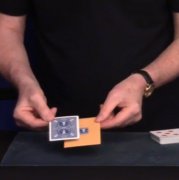
A small envelope with a hole cut from its address side is examined. A deck of blank-faced cards is then freely displayed and one blank card is openly slid into the envelope which is left in view.
From a regular deck, a spectator touches the back of any card. Let's say it is the 6C. This card is waved over the envelope and when the previously blank card is slid out it is seen to have now printed itself to match the selected 6C.
1st edition 2023, video 8:38.
Casino Cash
Mark Leveridge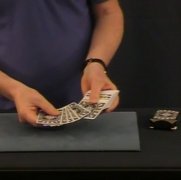
A deck of cards is spread and freely displayed back and front. Four cards are selected at random by a spectator and then placed in a fan on the table. A snap of the fingers and when the fan is lifted, four coins are seen to have instantly appeared underneath.
As a lead in to a four coin matrix routine this is ideal as it creates an unexpected and sleight free intro. You just need a regular deck, which you need to prepare once (takes about 15 minutes), and four small coins (10ps or US quarters).
Remember – no palming or sleight of hand is required.
1st edition 2021; PDF 4 pages,...
Four-midable Mental Mysteries
Mark Leveridge
Psychic Selection - a parlour routine in which a spectator cuts to a card that he has in his mind
A pack of cards is shuffled by a spectator, replaced in its box to prevent it from being tampered with, and then handed back to the spectator for safekeeping.
An important member of the audience is then invited on stage. This person could be a principal guest at a party, the function organiser, or a CEO/owner/director at a business event.
The performer explains that before the show he approached this spectator and invited him to decide on a card, any one of the 52. He asks the volunteer...
Paper Money
Mark Leveridge
You show a piece of white paper on both sides and fold it into a neat package. Instantly and visibly the paper turns into a banknote which can be unfolded, displayed on both sides, and importantly, can be immediately handed out for examination or be spent. Devised in the early 1980s, this version of instant money printing is totally practical and very magical. The fact that the printed note can be examined is a huge plus and helps to increase the effectiveness of the illusion.
1st edition 2017, PDF 2 pages.
Safety Catch
Mark Leveridge
This is ideal for walkabout performance or a set close-up or parlour show. A length of rope is handed out for examination and the ends are then tied to form a rope loop. A spectator's watch is borrowed and the strap done up so that the watch is also in a loop. The watch is then threaded onto the double strands of the rope loop which is held between the two hands. By moving his hands up and down, the performer shows how the watch can slide up and down the rope, but provided he does not let go with either of his hands, the watch is safe on the rope.
Then the magician says he will demonstrate...
The Tube of Wonder
Mark Leveridge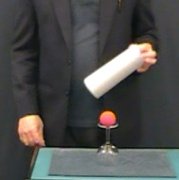
This is a disarmingly simple yet baffling effect suitable for a close-up or parlor show. A simple cardboard tube is placed on the table and lifted to reveal that inside it is an inverted wine glass with a large red ball on top of it. The tube is freely displayed and can be examined by a spectator. The performer's hands are otherwise empty.
The tube is placed on the table and the inverted wine glass is dropped down inside. Finally, the ball is dropped into the tube so that it rests again on the base of the glass. A snap of the fingers and the tube is immediately lifted off again to reveal...
Slo-Mo
Mark Leveridge
The idea for this routine came after I read Derek Dingle's Silver Quick routine in Apocalypse (Sept. 1978) which was a sort of coins across into a spectator's hand. I played around with the Dingle routine for a while but I felt I would not be able to use it commercially, although I liked the idea of something happening with the coins in a spectator's hands. After much experimentation and change, Slo-Mo was put together and is the routine I have been using with lay people ever since. I hope you like it.
1st edition 2003, PDF 8 pages.
Perfect Intuition
Mark Leveridge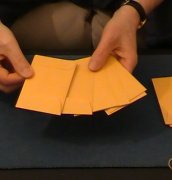
The performer selects a lady with the object of discovering whether she has female intuition or not. Spreading a pile of envelopes, each one of which contains a double blank card, he invites her to select any one and to remove the card from inside.
The lady helper now nominates and names any person around the table who she is emotionally close to or with whom she feels she has some empathy. It could be a relative, a close friend or maybe even her husband! Let's say she selects a close friend called Sophie.
She writes the name of her chosen person, Sophie, on the back of her chosen blank...
Imagination
Mark Leveridge
A spectator is handed an invisible deck and is asked to spread the cards and note that all the red cards are bunched together and all the black cards are assembled together. Splitting the deck so that he holds all the invisible red cards in one hand and all the blacks in the other, he hands over one half which is placed by a second spectator into the invisible cards box.
Now the cards are spread again and the spectator is asked to note that all the court cards are together, and all the spot cards are together. Splitting them into their two groups he is invited to hand either section over...
Masterclass Years 9-12
Mark Leveridge & Graham Hey & Phil Shaw
Every four years we like to publish a collection of all the great magic that has appeared during the period in Magicseen's Masterclass section, and from the issues which appeared in volumes 9-12 we offer you 51 effects and ideas from such well known and respected performers as Andy Nyman, David Regal, Chris Rawlins, Boris Wild, Mel Mellers, Pit Hartling, John Bannon, Vincent Hedan, Thomas Fraps, Dan Garrett, Anthony Owen and many others.
Contents:
- Trapped Prediction - Alexander Erohin
- Roll and Slide Vanish - Radek Makar
- The Great Escape - John Breeds
- More ESP - Arun Bonerjee
- Moneyball - Fritz...
Pure Cards Across
Mark Leveridge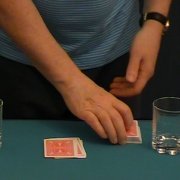
Two sets of 10 cards are counted out fairly and openly onto a spectator's hand before being dropped into two glass tumblers where they can be clearly seen. One at a time three cards are invisibly moved from one glass to the other, and when the piles are counted back onto the spectator's hand again, the first glass only contains 7 cards and the other 13.
This is the classic cards across effect using a method that is completely move and sleight free. Everything happens at fingertips and there is no palming required, nor any special counts. Designed for a close-up or intimate parlour show,...
Learning from Experience Audio Book
Mark Leveridge
The Professional Worker Series - Volume 6
Sit back and relax as I read the complete contents of this fascinating e-book to you. It's a great way to absorb and enjoy the contents whether you are at home, in the garden, driving the car or exercising in the gym.
In this Learning From Experience Audio Book I look back over my 40 years of full-time professional experience and identify 20 key things about performing commercially for lay people that I wish I had known when I started.
Organising these into 20 key facts, I explain the lessons that I have learned in this rich period of experience...
The Ring Competition
Mark Leveridge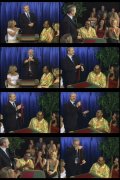
There are many ring and rope routines in print and there are a whole host of ingenious moves which a performer can use. But if we are honest with ourselves, how many of these routines can really be said to be entertaining to a lay audience? Often the presentation is all but forgotten and so the routine becomes simply an exhibition of clever handling and little more.
I wanted to find a way of involving an audience in a ring and rope routine so that it would leave them entertained as well as fooled, and The Ring Competition is the answer I came up with. One of the great assets of this presentation...
Impossible
Mark Leveridge
A spectator freely names a card (e.g. 5D) which is cut into the centre of a blue deck. The performer cuts a card of his choice (e.g. AS) into the centre of a red deck. The spectator and performer are now going to attempt to make their chosen cards reverse themselves while the packs are still inside their boxes.
Having mimed the removal and turning over of cards, the performer fans the spectator's blue deck only to discover that there is one card face up, but it's the AS! The magician then fans his red backed deck - and to everyone's surprise, the only face-up card in that pack is the one...
Going Walkabout Audio Book 1
Mark Leveridge
Learn about mix and mingle magic the easy way.
This 55-minute audiobook is perfect for listening to in the car or while jogging or at the gym. It contains a reading of the contents of the hugely useful information ebook entitled Going Walkabout, in which I explain exactly how I go about performing at informal mix and mingle events and how to make a success of working close-up magic at reception style events where the spectators are all standing or where there is, at best, only a very informal arrangement of seats, but no tables.
The 7 chapters included are as follows:
- Chapter 1 - Defining Going Walkabout ...
Simplex Hopping Halves
Mark Leveridge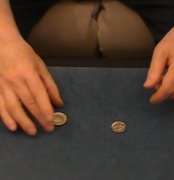
If you enjoy simple to do magic that never requires a re-set and which you can do anytime, anywhere, you will love this two-stage routine using a 10p and a £2 coin. (Any two coins of different sizes can be used for this effect.)
Both coins are borrowed from spectators and placed into your fist. The 10p is openly removed, shown freely and genuinely placed away in your pocket. Instantly it jumps back to your hand to join the £2.
Then the £2 is removed, but instead of both coins reappearing in the hand, they both vanish and are produced from the pocket. Very clean handling, easy to do,...
Hanky Juggling
Mark Leveridge
This is a wonderful participation routine for children's entertainers using the simplest of props - a wand, a silk, and an unprepared bag. Two children come up to assist. A silk is made invisible and handed to one child, while the second helper examines and then holds onto a bag. The invisible silk is 'blown' up into the air, caught on the end of the magic wand, which is then used to flick it over to the child holding the bag. The silk is supposed to now be inside the bag, but the child holding the bag seems to be unable to find it inside. Realising that the silk must still be invisible, the...
Beating the Odds
Mark Leveridge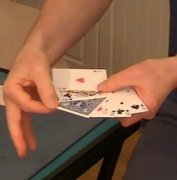
A deck of cards becomes a stable of 52 horses. The horses are shuffled by a spectator and the deck is placed down. The performer then writes down the name of one of the horses on a pad and places it sight unseen in view on the table. This is a prediction of a horse that he believes will win an imaginary race in a few moments time.
Spreading the deck, a spectator is invited to touch one at a time completely at random seven horses. These are removed and held in a pile. He then selects any number from one to seven. Using the chosen number, horses are eliminated in the pile one by one until...
Devil's Island
Mark Leveridge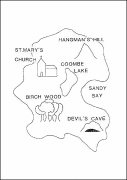
This lightweight mental effect is suitable for close up, parlor or even stage and is very simple to do. A map is shown which has six named locations marked on it. A spectator mentally selects one and records his choice on a small card which is concealed in an envelope. Cards bearing the names of the six locations are shuffled by a spectator and placed by him entirely at random into six envelopes which are then given out to audience members. Despite all this, a prediction shown at the start leads to the correct person holding the envelope which contains the spectator's chosen island location. ...
Mark's Monthly Message Audio Collection 2
Mark Leveridge
The general theme with these audio messages is helping you to perform commercially more effectively.
- Approaching A Table
- Deciding How Long To Perform For
- Expecting The Unexpected
- Getting Great Table Reactions
- Using Patter Lines Sensitively
- Working Close Up Outside
MP3 audio 55:51
Mark's Monthly Message Audio Collection 1
Mark Leveridge
Listen to a lot of practical advice from a pro who has learned from experience.
- Checking Up On Technique
- Coping With Nerves
- Dealing With Mistakes
- Developing A Performing Personality
- Magical Self Awareness
- Making The Most Of Practice
MP3 audio 43:41
Commercial Sponge Ball Routine
Mark Leveridge
This is the exact routine as used by Mark Leveridge in his commercial close-up work and also to open all his children's shows. No new concepts, no 'flashy' moves, just a thoroughly professional and entertaining routine that has proved its value over countless performances.
There are few more popular routines with lay people than the sponge balls, and Mark Leveridge's fast-paced sequence will provide you with a practical version that you will quickly learn and use.
1st edition 1984, PDF 11 pages.
Four-midable Card Magic
Mark Leveridge
The Four-midable Magic Series comprises of specialist ebooks, each of which supplies four effects of a specific type.
This first volume in the series teaches four card routines that require little or no sleight of hand, and are well structured to produce clear magical card effects. They are clearly described in easy-to-follow numbered sections, supplemented by a total of 39 colour photo illustrations.
- Introduction
- Royal Flush: the magician uses magic to produce a Royal Flush from a shuffled deck of cards.
- Big Deal: a spectator shuffles a deck and cards are dealt face up onto the table...
Magicseen No. 107 (November 2022)
Mark Leveridge & Graham Hey & Phil Shaw Vol. 18, No. 5, November 2022; 60 pages
Cover: Vegas & Lopez
Vol. 18, No. 5, November 2022; 60 pages
Cover: Vegas & Lopez
- Welcome to Issue #107 - Editor's comments
- The Team
- What's Inside
- The Magic of F1 - Nigel Mansell
- Vwgas & Lopez - A Magical Chainsaw Massacre Cabinet - cover article by Thomas L. Swieciak
- Reader's Letters
- The View from Behind the Stand - comedy re: convention dealers - Mark Leveridge
- Masterclass
- ACAAN - The Rubik's Cube of Magic - Peter Turner
- Aces in Glass - Wolfgang Riebe
- Magik Balay Announces Opening of New Magic Shop in NYC
- Pro Tips - Part #4 Getting and Keeping Attention - Mark Leveridge
- The Magic CRB - Magical Satire from Mark...