Miku W. products: page 1
Five Roads Together
Miku W.
The spectator selects a card and returns it to the deck. The spectator cuts off a packet, then the performer deals left and right. Four consecutive times the dealt cards are not the selection, yet each one precisely names an attribute of the chosen card, and after the elimination, the final remaining card is the original selection. Even more, when the four piles are turned face up, together with the selection they form a Royal Flush.
During the spectator's cut, there is no crimp and no extra handling, yet the selection and the key cards can still be located with precision.
Performance...
Secret Flip
Miku W.
This project introduces three of my secret single-card reversal techniques. You can present them as a sleight demonstration or apply them within other card routines to achieve greater impact and utility. These three techniques have not been named yet.
1st edition 2026, video 7:43
Triple Cut ACAAN
Miku W.
The spectator selects a card and replaces it in the deck. The magician has the spectator cut the deck into three piles and turn over the top card of each pile. None of them is the selection, but the values of the three top cards add up to the exact position of the selected card.
No Crimp - the position is found purely by adding the values of the three cards the spectator cuts to. There is no secret cut involved.
Performance transcript:
- Start by having the spectator freely select a card.
- Have the spectator remember the selected card.
- The spectator may choose any card in the deck. ...
Revolving Cut Four Aces Four Kings
Miku W.
A very simple way to cut to the desired cards, ideal as an opening effect. A detailed application of a classic principle, ending with an unexpected kicker.
1st edition 2026, video 4:10.
Three Palm Ideas
Miku W.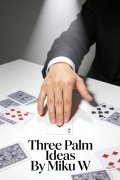
This tutorial teaches three of my palming techniques. Because my hands are relatively small, palming has always been challenging for me, which is why I developed several simpler palming methods.
Crescent Palm: a technique for palming a card quickly during the squaring of the deck.
Pinched Palm: a fast and simple bottom-card palm.
Stealing Palm: my take on the Diagonal Palm Shift, designed to move a center card directly into Classic Palm.
1st edition 2026, video 6:20.
Choice of Mortals
Miku W.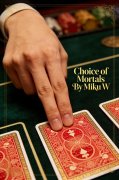
The spectator freely cuts the deck. The performer spreads the cards and claims to mentally influence the spectator to choose a specific card. The spectator then freely selects a card - no force. After the selection, the performer splits the deck at the point of selection and reveals that the cards are in suit-and-value order, except for the one card the performer named at the beginning. The finale reveals the spectator's selection, which turns out to be exactly the card predicted at the start.
- No force
- No gimmick
- Only a regular deck
Performance transcript:
- To begin, the spectator...
Reversal of Change
Miku W.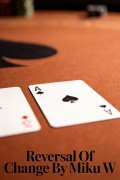
A variation of a classic routine: the four Aces are turned face down one by one. The performer openly changes the orientation of all the cards, and after the audience confirms the backs are the same color, all four cards change to different colors.
1st edition 2025, video 7:39.
Royal Prophecy
Miku W.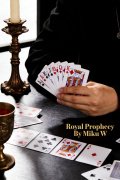
A completely self-working effect requiring no sleight of hand. The magician introduces a prediction card and has the spectator freely cut a small packet. The deck is then divided into three piles, and cards are dealt down according to a freely chosen number. The four Aces are cleanly located. In addition, the spectator's cut card, the prediction card, and the bottom cards of the three piles combine to form a Royal Flush. For the full procedure, please refer to the video demonstration.
Performance transcript:
- For this routine, I begin by taking out a prediction card.
- I place the prediction...
Matrix Triple Digit ACAAN
Miku W.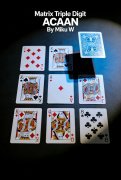
The magician begins by taking out 9 cards. A spectator then freely cuts off a packet, counts the cards, and remembers the card at that corresponding number. After that, the spectator freely selects 3 cards from the 9, and the sum of those values not only locates the original selection but also reveals the other three cards of the same value.
A classic principle reworked with a special setup turns this into a much stronger ACAAN-style routine.
Full effect shown in the performance video.
Performance transcript:
- Here I have nine prediction cards.
- I won't need them yet, so I'll...
Mark Triumph
Miku W.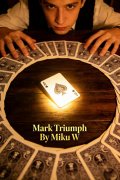
A spectator freely selects a card and returns it to the middle of the deck. The cards are split into two packets and interlaced face-up into face-down. In an instant, every card turns face-up except the selection - still face-down. And it's not over. Why can the magician locate the selection so cleanly? Because it's the only card in the deck that's different from all the others.
Bottom Fan Control: This routine also teaches my bottom control: the spectator's card is openly placed into the middle of the deck, the magician squares the pack, and the selection is controlled straight to the...
Fourfold Indication ACAAN
Miku W.
A multi-phase ACAAN routine with a completely unexpected ending.
A very unusual selection-finding sequence: after a freely chosen card is returned to the deck, the performer claims to give the spectator four chances to locate it. The spectator cuts the deck into four piles, but none of the top cards are the selection. Just as it seems the magician has failed, the plot turns - each of the four cards not only indicates the exact position of the selection, but also reveals the mates of the chosen value. See the full routine in the performance video.
Performance transcript:
- I riffle down...
Split Prediction
Miku W.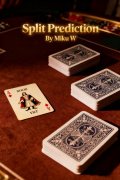
A near-impromptu routine with surprisingly strong impact. The spectator shuffles, and the magician removes a prediction card and sets it aside. The spectator freely cuts the deck into three piles, shuffles, remembers any card, and gives the deck a random cut. The magician says the spectator will help locate the selection, then has them lift a small packet and perform a faro shuffle with the rest, which naturally re-forms the deck into three packets. Taking the third packet, the magician deals pairs from the top and bottom, and the last card remaining in the hand is the selection. But it's...
Impromptu Cut Four Aces
Miku W.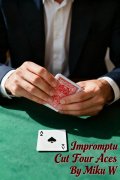
A fully impromptu performance: you borrow a deck, let the spectator give it a thorough shuffle, no cull, no crimp, then claim you'll memorize the positions of the four Aces. You riffle down the deck and ultimately cut cleanly to all four Aces. A full performance is shown in the demo video.
Before you purchase this tutorial, here are a few things to help you decide whether it suits you.
1. Effects of this nature require a lot of practice. My handling strips away unnecessary difficulty and simplifies moves that are normally quite demanding, but it still requires solid work. This is definitely...
A Number For Fast Cut
Miku W.
This is my adaptation of Marlo's A Number for Fast Company. I've reworked it to be completely impromptu, finishing with a clean, accurate cut to the spectator's selection.
The spectator shuffles the deck freely, chooses any card, and returns it before shuffling again. The performer then names the exact position of the selection and says, "If I know the position of your card, I should be able to cut straight to it." He then lifts off a packet - matching the number just named - and the final card of that packet is the spectator's selection. Full performance in the demo video. ...
Flash Aces Sandwich
Miku W.
Two Jokers produce two Aces in the middle, and finally, the Jokers transform into the remaining two Aces. A classic effect with a unique and visual handling. Complete performance in the video.
Performance transcript:
- For this next trick you need two cards.
- Between two cards there's nothing there.
- 3 2 1 discover
- There is an extra ace in the middle of the two ghost cards.
- Two ghost cards.
- OK.
- Continue 3 2 1
- Converted the second a
- These two cards, shake them a little bit.
- You will find these two ghost cards.
- It automatically becomes the other two A's.
1st edition 2025,...
Swing Cut Four AK
Miku W.
This is my direct cut to the four Aces and four Kings routine. It's simple and easy to learn, using only basic card handling techniques. No crimp, no estimation needed. Full performance in the video.
1st edition 2025, video 4:29
Double Double ACAAN
Miku W.
This is a location-based stack that allows you to determine the position of two freely cut cards, even after the spectator shuffles. No sleights, no force, no gimmicks. Full performance is in the video.
1st edition 2025, video 5:53
Quadruple Elevator
Miku W.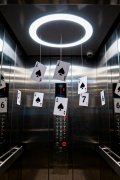
An adaptation of a classic card routine - the Spades 1, 2, 3, and 4 travel between the top and bottom of the deck, finally gathering together on top. Just when you think it's over - no, the magic has only begun. The Spades 5, 6, 7, and 8 appear on top of the deck, the Spades 9, 10, J, and Q appear on the bottom, and the final Spade King rises to the very top of the deck. For full details, see the performance video.
Performance transcript:
- Imagine the deck as a building, with each card representing a floor.
- The Ace of Spades travels from the bottom to the top.
- The Two of Spades goes...
Sandwiches and Collectors
Miku W.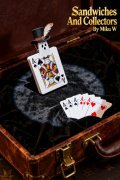
Sandwich and Collectors are two of my favorite card effects and the ones I've studied the most. This is my original routine combining both effects.
The spectator selects a card, returns it to the deck, and the deck is shuffled. The magician cuts the two Jokers and four Aces into the center. When the deck is spread again, the two Jokers are found sandwiching the spectator's selection, while the four Aces have collected the other three cards of the same value. A pure sleight-of-hand routine with no difficult moves.
Performance transcript:
- Four Aces.
- The spectator selects a card. ...
Quick Rise Improvisation Card
Miku W.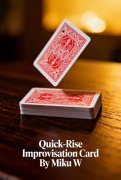
Impromptu rising card trick.
No setup is required, no gimmicks, and no difficult sleights. With just a regular deck, the spectator's selection rises from the pack. The effect is direct and fast. For the full effect, see the performance video.
1st edition 2025, video 3:32
Friction Control System
Miku W.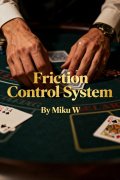
This is my control system, which allows you to cleanly push the card into the deck with no visible break, and still maintain control.
The system can control the card to four common positions: the top, the bottom, the second from the top, and the second from the bottom. It can be applied flexibly in many card routines, taking your sleight of hand to the next level. For the detailed controls, please watch the performance video.
1st edition 2025, video 4:11
Tracking Four Cards
Miku W.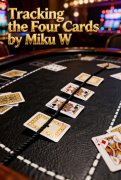
This is a trick for quickly locating four selections.
During an overhand shuffle, four cards are freely chosen, with no control involved. The spectators clearly see the cards lost in four different positions. Yet in the end, the magician can still locate all four selections with precision. For the full routine and effect, see the video demonstration.
- No force
- No gimmick
- No memory work
- No peeking
Performance transcript:
- This is a trick for finding four selections.
- Shuffle.
- Have the spectator call stop at any point.
- Remember the stop at card.
- Continue.
- Call stop again anywhere. ...
Double Serch
Miku W.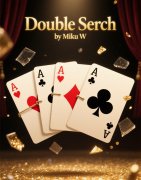
The magician begins by taking out four Aces. The spectator selects one red card and one black card, which are then returned to the deck and shuffled. The spectator is asked to cut the deck randomly into four packets. The four Aces are placed on top of each packet. The packets are reassembled. When the deck is spread, the four Aces not only gather together, but the red Aces sandwich the spectator’s red selection, and the black Aces sandwich the spectator’s black selection.
- No force
- No gimmick
- Impromptu performance
Performance transcript:
- Four Aces.
- Spectator picks a black...
Back and Forth Aces
Miku W.
A classic routine for producing the four Aces: the magician shuffles the deck and has the spectator cut the cards. The cards at the cut are shown to be indifferent, but with just a few throws of the two packets in the magician's hands, the four Aces are easily found.
1st edition 2025, video 1:57.