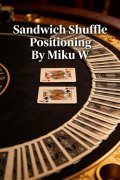
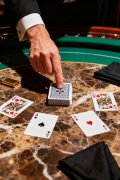
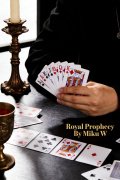
A completely open prediction effect. The spectator freely selects a card from 12 cards, then moves the same number of spaces in any direction according to the card's value. The final card matches the value of the original prediction.
Next, the spectator again moves freely according to that value and selects another card with a completely different value - also matching the magician's original prediction.
Performance transcript:
- This next effect uses 12 cards.
- I dribble the cards and have the spectator call stop anywhere.
- Let's assume the spectator stops here.
- From that point, deal 12 cards.
- In addition, we also need a prediction card.
- This is where I cut, and the first card becomes the prediction.
- I place it here. Here are the 12 cards.
- I'll have the spectator freely choose one.
- Since I don't have a spectator, I'll use dice to simulate the choice.
- 3+4=7, so let's say the spectator chooses this card. Its value is 11.
- The spectator now uses this card as the starting point and moves 11 spaces in any direction.
- They may walk 11 steps in any direction.
- Let's assume they end up here.
- In performance, the spectator freely decides the path.
- The final card reached is a 6.
- This is the prediction card I placed earlier, and it happens to be another 6.
- The values match exactly.
- I place the prediction card here.
- At this point, I ask the spectator if they think the selection was completely random.
- But actually it isn't.
- Because with the cards face down, you have no idea what you'll land on.
- So now I turn the other cards face up.
- Starting from the 6, move another 6 spaces in any direction.
- The spectator may walk however they like.
- Let's assume they move like this.
- They arrive at 10.
- In performance, the spectator can freely walk the 6 spaces.
- At the beginning, my prediction card showed a 6.
- But if you end up on 10, the value of the prediction changes to 10.
1st edition 2026, video 9:54.