with Demo Video in Magic & Mentalism












Products
Symphony
Patricio Terán
After years of studying matrix routines, Patricio created Symphony, a wonderful sequence of coins inexplicably vanishing from one place and reappearing at another. Everything is explained in detail from two viewing angles. The four effects are:
- Explosive Impact
- Bunch
- Chink to Chink Plus
- Side Explosion
1st edition 2026, video 16:29
Subwich Change
Miku W.
A fooling sandwich routine with a simple, fast effect.
The magician takes out two Jokers and places them on the table, then has the spectator select a card and place it into the middle of the deck, outjogged. The magician then transfers the selection between the two Jokers. But here's the question: if the selection has traveled between the Jokers, what is the outjogged card in the middle of the deck? The magician turns over the card in the middle of the deck, revealing the other card of the same value and suit as the selection. At the same time, the two Jokers instantly change into the other...
Total Prediction
Raphaël Czaja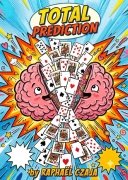
In an escalating sequence, the performer reveals predictions of matching colors, numbers, and ultimately a playing card.
EFFECT:
Twelve cards are removed from a regular deck. Four are used as prediction cards. The spectator cuts the remaining eight, mixes them three times, and divides them into two equal piles.
He places the top card of each pile in front of the first prediction and repeats the procedure, placing each pair in front of the next prediction. The pairs are turned face up. Only two of them match in color—one is a red pair and the other a black pair. (The mismatched pairs,...
Razor Blade
Brick Tilley
A selected card is returned to the deck; the deck is boxed. A razor blade is inserted into the box. After shaking the box in an attempt to locate the selected card, the box is opened. The cards are poured onto the table. Surprise. The cards are all cut into pieces except for the selected card. A perfect finish for any card sequence.
1st edition 2026, video 3:54.
New Three-Cut ACAAN
Miku W.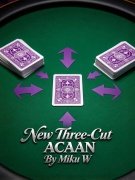
A fooling card trick designed to fool magician friends. A Self-Working effect.
The spectator freely cuts off a packet, remembers the bottom card, and returns it to the middle of the deck. The magician then cuts to the middle of the deck and claims that three cuts will locate the spectator’s selection. After three consecutive cuts, none of the cards is the selection. However, the values of the three cards cut to add up to the exact position of the selection.
1st edition 2026, video 5:16.
Performance transcript:
- Place the deck on the table and have the spectator cut off one-third...
Pelli Switch
Peter Pellikaan
You will learn Peter Pellikaan's switch of four cards for another four cards. As a bonus, he also teaches you the Pelli Spread, a move that allows you to fan 4 cards while hiding a 5th card.
1st edition 2026, video 3:43.
ESP SAN
Raphaël Czaja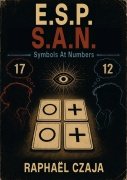
Two chosen symbols perfectly match a prediction that was in full view from the very beginning.
EFFECT:
The performer introduces a 50-card ESP deck (two regular 25-card decks combined) to two spectators. He divides the deck into two piles, explaining that he is going to explore the connection between the three of them.
For this, he asks each spectator to think of a different number between 1 and 20. He deals down to each spectator’s chosen number, one card from each pile at a time, and sets aside the two selected cards for each spectator. The four cards are then arranged in a square...
The Magic 12
Miku W.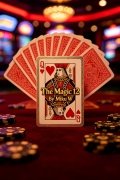
A very special way to locate a card—guaranteed to fool you.
The spectator freely cuts the deck and remembers the bottom card. The magician then claims that the trick has something to do with the number 12, and counts twelve indifferent cards from the top to the bottom twice. The magician then deals through the cards, attempting to locate the spectator's selection, but ultimately deals to a Queen. Counting twelve cards down from the top reveals the spectator's selection. Not only that, but the spectator's random cut position and the two packets of twelve cards also come into play. Turn...
New Spellbound
Giacomo Bertini
I am very happy to present this new Spellbound routine! The main feature of this method is that it allows you to repeat the transformation again and again, creating a continuous and highly visual sequence of changes.
The method is very easy to perform and is based on one of the approaches explained in my book Giacomo Bertini's System for Amazement. I developed this handling to make the transformations practical, direct, and suitable for real close-up performances.
The result is a highly visual Spellbound sequence that can be repeated several times in succession, while keeping the handling...
Backs no Aces
Peter Pellikaan
Four cards with the same backs change their design every time they are turned over. Eventually, they change into four aces with different backs.
1st edition 2026, video 2:29
Invisible Transfer Collector
Miku W.
A simple but very direct Collector routine.
The magician displays four Aces and has the spectator freely select a card and shuffle it into the deck. The selection is then transferred to the middle of the four Aces. Remove the selection, and three additional cards matching its value appear between the four Aces.
Performance transcript:
- For the next effect, we'll need the four Aces.
- Next, have a spectator freely select a card.
- The spectator selects the Nine of Hearts.
- Place the selected card into the center of the deck.
- Imagine that at this moment the selection travels to the center...
The 5s
Peter Pellikaan
Four 5s change color multiple times. First, they magically turn around one by one. Then they become double-faced cards. And then their faces and their backs change into completely new designs.
1st edition 2026, video 4:01.
Gun Card Location
Miku W.
A completely impromptu card routine.
The magician takes out the Ace of Spades, framing it as a bullet, then assembles the deck into the shape of a gun. The spectator freely inserts the Ace of Spades anywhere in the "gun," representing the bullet being loaded into the chamber.
The magician then has the spectator freely cut the deck and remember a card. Finally, the deck is reassembled into the gun and bullet. The spectator's selection shoots out of the deck like a fired bullet.
Performance transcript:
- This trick requires a little imagination
- Here I have the Ace of Spades —...
Ace of Spade
Peter Pellikaan
An ace of spades transforms with the help of two cards with a hole to paper money.
1st edition 2026, video 2:02
Forklift Match
Miku W.
Absolutely a card technique you've never seen before.
This is an original card technique I developed that lets the spectator decide where two packets are interlaced, followed by a push-through handling to complete the cut. It can be used to cut to all four Aces or other target cards. Here are two routines using this technique:
Forklift Match: The spectator freely selects two cards. The magician splits the deck in two and lets the spectator decide where the two packets are interlaced. The magician then cuts the deck into three packets, with the top and bottom cards of the three packets...
Sniff Crosses
Peter Pellikaan
A bewildering number of color changes. You first show four five-of-diamonds. They suddenly have large crosses drawn on their faces. The crosses also appear on the backs. Then they change to the four aces, and on top of that, each ace has a different back design.
1st edition 2026, video 2:59.
Hot Potato
Brick Tilley
One of the finest examples of pure sleight of hand ever created. Period. Learn this and have something unique.
1st edition 2026, video 2:09.
Different Paths, Same Destination
Miku W.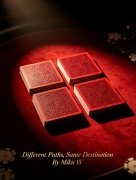
A foolproof card routine for fooling your magician friends.
The magician has the spectator cut a packet into three piles, just as he does, and remembers the cards they cut to. The magician turns his cut-to card face up and exchanges it with the spectator's card, placing them at their freely chosen cut positions. The spectator then shuffles the cards. The magician splits the deck into two packets and deals from both simultaneously. When he stops at the face-up card, the corresponding card in the other packet is the spectator's selection. Not only that, the cards stop at exactly the positions...
Sniff 8
Peter Pellikaan
You start with four blue double-backers. They turn into four red double-backers. And then they change into four of a kind, for example, the four eights, and each one has a different back.
1st edition 2026, video 1:53.
The Converter
Miku W.
A new handling of a classic plot.
A spectator freely selects a card. The magician claims he will cut to the other three cards of the same value. He cuts three cards and leaves each face up in the deck. At the end, they are revealed to be the wrong value. But when the deck is spread, the three face-up cards have impossibly changed into the other three mates of the spectator's selection.
Performance transcript:
- First, shuffle the deck.
- Have the spectator freely select a card.
- Let's say they select this card.
- Remember your card.
- As a magician,
- I'll try to cut to the other three...
Extreem Money
Peter Pellikaan
Four blank cards suddenly show credit cards and then turn into paper money bills.
1st edition 2026, video 4:03.
New Triple Cut ACAAN
Miku W.
My card routines Triple Cut ACAAN and Three Chances ACAAN have received a great response on Lybrary, and ACAAN routines where the spectator cuts three cards and their values add up to the final position of the selection are one of my favorite types to explore. Today, I'd like to share two more ACAAN routines along the same lines.
Like the previous routines, both are very fooling to magicians, with very direct effects. Both routines also use unconventional methods, resulting in even more unique and powerful effects!
Composite ACAAN:
The spectator freely selects...
Colour Back Aces
Peter Pellikaan
You show four cards with yellow backs. On the other side they all have green backs, meaning they are double-backer cards. Then where there were yellow backs, there are now blue backs. Then the cards turn into the four aces. Then the backs change to red backs. Eventually, each ace has a different coloured back.
1st edition 2026, video 2:14.
Shuffle Location and Prediction
Miku W.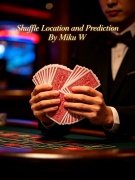
A shuffle principle designed to fool magicians.
The magician begins by removing a prediction card. The spectator freely selects a card and returns it to the deck. The magician performs a riffle shuffle, which mysteriously stops halfway through. The shuffle stops exactly at the spectator's selection. The three resulting packets are then turned over, and their values match the prediction card from the beginning.
Two different handling methods are included.
Riffle Location and Prediction: An almost self-working card trick that relies on a simple gimmick to achieve the final effect.
...
Dual Pointer ACAAN
Miku W.
A completely impromptu ACAAN routine in which a single card points in two directions.
The spectator freely selects two cards and they are returned to the deck and shuffled. The magician then has the spectator freely name another card, which is openly placed into the center of the deck. After being controlled to the middle, the value of the indicator card points left and right to reveal the spectator's two original selections.
Performance transcript:
- Give the deck a shuffle.
- Have the spectator freely name two cards.
- The 3 of Spades and the Jack of Diamonds.
- Insert the two cards...
Exclusion Instructions
Miku W.
An almost self-working card location effect with an ACAAN feel.
Fool your magician friends. A powerful routine that can be performed with a single deck.
The spectator selects a card, returns it to the center of the deck, and cuts the cards. The magician then has the spectator cut off another packet. Using that packet, cards are dealt one to the table and one to the bottom of the packet repeatedly until only a single card remains. That final card reveals the exact location of the selection. As a bonus, the spectator also discovers the other three cards matching the selection's value. ...
15 and 47 Sandwich
Miku W.
Two sandwich routines based on the same principle, each with a different handling and ending.
Completely self-working. No sleight of hand required. Performed with a regular deck. Fools magicians.
Miracle Count 15 & 47:
No complicated stack. The spectator freely cuts to a card and remembers it. The magician turns the 15th and 47th cards face up, then deals alternately into two tabled piles. The two face-up cards always remain in the same pile. In the end, they sandwich a single card—the spectator's selection. The other piles are then revealed to contain the four Kings.
15 & 47 Sandwich:...
Table Coins Across
Mark Leveridge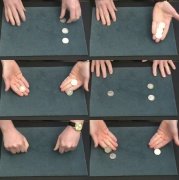
In the cleanest of manners, three coins quickly and magically jump from one of the performer's hands to the other.
No gimmicks required, this just uses regular coins combined with some sleight of hand. Not a routine for the beginner, this magical-looking effect needs to be performed on a close-up pad.
video 8:37
Mental Math ACAAN
Miku W.
This is a completely impromptu ACAAN. The spectator names any number and freely remembers a random card. In the end, the remembered card appears exactly at the named position.
However, I prefer to think of it as a card control system - a method for controlling a merely remembered card to any desired position with no setup whatsoever. Without question, this concept can take your card magic to the next level.
Performance transcript:
- This is an impromptu ACAAN routine.
- The deck can be thoroughly shuffled at the start. No setup required.
- Have the spectator freely name a number. ...
Straight Through
Mark Leveridge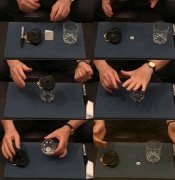
A small coin (10p/US quarter) is tipped from a purse and marked with a sticker bearing a spectator's initials. It is then taken into the performer's closed fist, the other hand being shown otherwise empty.
The purse is then laid flat across the top of an examinable glass tumbler so that the top of the container is completely covered.
The hand is then brought down with a slap onto the top of the purse, opening as it does so and instantly a coin is seen and heard to penetrate the purse and fall into the tumbler.
With both hands clearly empty, the purse is lifted away to reveal that...
Power Gemini Twins
Miku W.
Using the classic Gemini Twins principle, these are two expanded routines with much stronger climaxes. The spectator may call stop at any time, and face-up cards are placed at those stopping points, leading to effects far beyond the original plot.
Performed with a regular deck. Easy handling, powerful impact.
Triple-Path Gemini Twins:
A spectator freely selects a card. The performer then deals three piles, and the spectator calls stop three times at any moment during the deal. A face-up card is placed on top of each pile at the stopping points. The cards are squared, and the deck...
Star
Mark Leveridge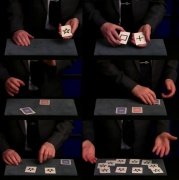
Two sets of five ESP cards are displayed, one with red backs, the other blue. A spectator takes the blue set and mixes the cards under the table while the magician does the same with the red set.
The two piles are placed on the table, and when the top two cards of the randomly mixed piles are turned over, they prove to be the same symbol e.g., the Star!
That's a surprise, but what's even more amazing is that when all the other ESP cards are turned face up, each and every one has also magically turned into a matching Star symbol!
1st edition 2026, video 9:49
Predicted Number ACAAN
Miku W.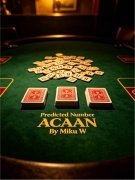
A simple and direct effect with an unexpected ending.
A card-and-number routine that I particularly enjoy performing. This project collects two of my most frequently used routines. Three cards are used to locate a spectator's selection, and in the finale, those same three cards lead to every matching mate of the selection.
Predicted Number ACAAN: A card is selected, returned to the deck, shuffled, cut, and the deck is divided into three packets. The top cards of the three packets not only predict the exact number of cards cut by the spectator, but also locate the selection. Just when...
Automatic Prediction Extended
Abhinav Bothra
21st century playing card prediction.
The performer caught without props, grabs a piece of paper and writes down a prediction, which is entrusted to and kept safe by a member for safekeeping.
He explains that he was prepared for this, a few weeks ago, he shuffled a deck of cards, dealt them one by one on a table, and recorded it.
He proceeds to play the recorded video, demonstrating how it can be paused and resumed. He holds his cellphone with the screen facing down. A participant pauses the video at any point, flips the phone over to reveal a playing card on the screen.
This can...
Silk on Rope
Mark Leveridge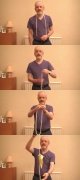
A length of rope is displayed and can be examined if required. Taking the cord in his two hands, the magician ties a knot in the rope's centre, and instantly, as the knot is formed, a silk appears threaded through the knot!
No gimmicks required, this is a streamlined method for a classic Pavel effect.
1st edition 2026, video 8:22.
Three Chances ACAAN
Miku W.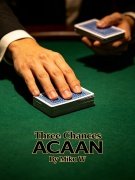
A spectator freely selects a card and loses it into the middle of the deck. The magician claims he only needs three chances to cut to the selection, but all three cards cut to are misses. In the end, the combined values of those three cards reveal the exact position of the spectator’s selection.
Performance transcript:
- Shuffle the deck.
- Then place the deck on the table and have the spectator cut off about one-third.
- Remember the bottom card of the cut packet.
- Then cut another packet and bury the card into the deck.
- Just to be clear, there's no force and no crimp involved.
- The...
Pro Ring on Glasses
Mark Leveridge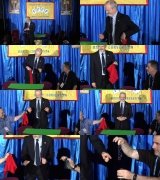
A finger ring is borrowed from a spectator and placed under a handkerchief, where it is held by a second onlooker.
The performer removes a reading glasses case from his pocket and extracts his glasses from inside, the case itself being examined. The glasses are then dropped back inside, and the spectator holds the case up in view.
Reaching across to the handkerchief, the magician suddenly pulls it from the helper's hands, and instantly the borrowed ring disappears.
The assistant holding the glasses case now reaches inside and slides the spectacles out to reveal the ring hanging on...
Leadership Invisible
Miku W.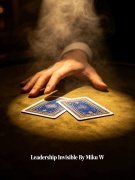
A variation on the classic Invisible Palm plot. A powerful visual effect performed with just a few playing cards.
Performance transcript:
- This trick uses six cards: two Aces and four Kings.
- But the King of Spades is the important one.
- Because Spades are the leader of the suits.
- This King of Spades will guide the other Kings to its location.
- First, I table the King of Spades.
- The other Kings stay aside.
- Here are two Aces.
- First, I take a King and place it between the two Aces.
- Now imagine that at this moment the King becomes invisible.
- You can't see it in my palm.
- So I can...
Predictive Switch
Mark Leveridge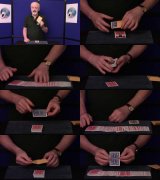
The performer offers to demonstrate an effect that is part mentalism and part magic. For the mentalism part, he slides a blue-backed prediction card from a pay envelope, displaying that the envelope is otherwise empty before returning the card and leaving the envelope in view.
A red-backed deck is shown to be well mixed, and a spectator genuinely freely (no force) touches the back of any face-down card. This selection is left reversed in the centre of the deck.
The blue-backed prediction card is now removed from the envelope and its face displayed - let's say it is the QC. When the red...
Multiple Cuts ACAAN
Miku W.
A spectator freely selects a card, freely cuts the deck to determine a number, and divides the deck into four packets. After multiple rounds of reassembling and cutting, the selection still arrives at the exact corresponding number. A self-working, fooling card routine.
Performance transcript:
- This is a completely impromptu effect.
- You can even borrow a deck from a spectator.
- No setup or stack is required to begin.
- Have the spectator cut roughly half the deck.
- Ask them to secretly count how many cards they cut.
- 22 cards.
- Since I don't have a spectator here, I have to count...
Chameleon
Brick Tilley
Jules DeBarros was, according to Jon Racherbaumer, perhaps the finest coin worker of his, or any, era. His timing and execution were flawless and angle-proof. Here is a fine example of his approach.
1st edition 2026, video 1:14.
Magnetic Attraction
Mark Leveridge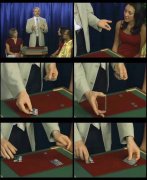
How would you like to perform a Matrix assembly without any sleight of hand and using some ungimmicked coins and two borrowed credit cards as covers? Well, Magnetic Attraction allows you to do just that.
Four small coins (US Quarters or any other small coins can be used) are placed out in a square, and when two borrowed credit cards are lowered over them, they start to instantly jump until all four are collected under one card. Very easy to do, you'll marvel at the simplicity of the method!
1st edition 2017, PDF 4 pages.
Joker Impossible Location
Miku W.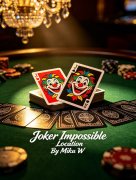
The spectator shuffles the deck at the start. The magician removes a prediction card, then the spectator freely selects a card and loses it back into the deck.
Next, the magician has the spectator freely cut the deck, placing Jokers at the cut points. At first, the Jokers isolate a large section containing the selection, and eventually they sandwich the exact selection itself.
The deck is split at the selection, and behind all the apparent randomness, everything leads to the final outcome. There are three packets on the table, and the bottom card of each packet perfectly matches the...
Lightning Coin Matchbox Revised
Mark Leveridge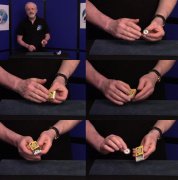
Coin into matchbox.
A coin is borrowed and a spectator's initials are written on a sticker which is stuck to the money. Holding the coin at fingertips, the magician passes his hand over the coin and instantly it transforms into a matchbox! That is already totally unexpected, but a second surprise comes when the box is pushed open to reveal the signed coin sitting inside.
video 5:51.
Four Packet Location ACAAN
Miku W.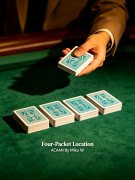
A very fooling card location and ACAAN effect.
Two spectators each cut a packet and remember the bottom card, then replace them into the deck. The performer has a spectator cut a large packet, then deals left and right on the table, eliminating the left pile each time, until only one card remains on the right. That card is spectator two's selection. Not only that, the top cards of the four dealt piles are turned over - their values add up to reveal the final position of spectator one's card.
- No force
- No gimmick
- No crimp
Performance transcript
- Next is a very fooling ACAAN...