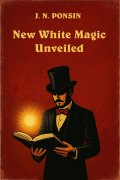
The year is 1584. The printing press is barely a century old. And a Frenchman named Jean Prevost is about to publish the oldest printed magic book in the world. Four centuries later, you can read it in English.
In 1584, while the rest of Europe was burning women at the stake for witchcraft, Jean Prevost did something far better: he told the truth about many of the magic tricks of his era. Subtle and Pleasant Inventions is the first book ever printed that pulls back the curtain on the conjurer's trade — not in vague riddles, but in exacting, hands-on detail. Rigged books. Gimmicked blades. Hidden springs, secret compartments, sleights of hand refined over generations of street performers who never expected their methods to survive them. This isn't a modern author's guesswork about how Renaissance magic might have worked. It's the original manual, written by a man standing in the crowd, watching the tricks happen, and deciding the world deserved to know how.
What makes this book extraordinary isn't just its age — it's how alive it still is. Flip through these pages and you'll find the direct ancestors of tricks still performed on stages today: the vanishing coin, the cut-and-restored string, the changing book, the knife that seems to pierce flesh without harm, and the first known ancestor of the Egg Bag. You are not reading a historical curiosity. You are reading the root of an art form that never stopped growing from even before Prevost's time. Whether you're a magician hunting for the origins of your own repertoire, a historian tracing how ideas traveled before the printing press made them permanent, or simply someone who is curious about what tricks were performed by street magicians in that far away time — this book was written for you, four centuries in advance.
Copies of the original 1584 edition are almost impossible to find outside of national archives. This English translation puts that lost knowledge back in your hands — complete, faithful, and ready to read tonight. Don't wait for the second part Prevost promised and never delivered. Buy now the oldest-known book of magic, now translated into English.
Table of Contents
- CATEGORY 1: MAGIC TRICKS PROPER (USING SLEIGHT OF HAND, SUBTERFUGE, OR TRICKED APPARATUS)
- TO MAKE A KNIFE JUMP OUT OF A POT WITHOUT TOUCHING IT: A steel spring is held under tension by a piece of dry bread at the bottom of a pot; as the bread softens in water, the spring releases and launches the knives.
- THAT IT WILL SEEM THAT YOU HAVE SWALLOWED A KNIFE, AND THAT YOU RETURN IT AFTERWARD FROM BELOW: The performer uses dexterity to let the knife fall onto their knees while pretending to drive it into their mouth, later retrieving it from between their legs.
- TO MAKE THREE SMALL SCRAPS OF PAPER, PLACED UPON A KNIFE, APPEAR AND BE LOST AT THE SAME TIME: By subtly turning the handle of a knife with the fingers, the performer tricks the audience into thinking they are seeing both sides of the blade while only showing one.
- HOW TO MAKE A COIN JUMP OUT OF A BASIN WITHOUT TOUCHING IT: Similar to the knife trick, a small spring is cocked with a grain of salt that dissolves in water to release the coin.
- HOW TO MAKE A RING JUMP INTO A CUP BY A SLEIGHT OF HAND: A ring is secretly sewn into a handkerchief to let the audience "feel" it, while the real ring is palmed and slid under a cup.
- HOW TO MAKE A RING LEAP ABOUT IN A GLASS AT YOUR PLEASURE, BEATING A DANCE RHYTHM WITH YOUR HANDS ON THE EDGE OF A TABLE: A woman’s hair is attached to the ring and the performer's finger with wax, allowing the ring to move in response to hand movements on the table.
- HOW TO MAKE A RING PASS FROM A HANDKERCHIEF ONTO A STICK BY A CLEVER SLEIGHT OF HAND: A duplicate ring is sewn into a handkerchief; the real ring is palmed and slid onto a stick held by spectators.
- HOW TO MAKE AN IRON RING ESCAPE FROM THE LAPEL OF A COAT: The performer uses a broken iron ring hidden in their sleeve to substitute for a solid one, allowing it to pass through the coat flap.
- HOW YOU WILL REMOVE A RING OR KEY FROM A DOUBLED CORD TIED AT BOTH ENDS: A topological maneuver involving a secret loop and finger positioning that allows the object to come free from a cord held by another's thumbs.
- HOW, HAVING DRAWN A CIRCLE WITH A PAIR OF COMPASSES, YOU CAN PLACE ITS POINTS PRECISELY BACK FROM THE CENTER ONTO THE SAME CIRCLE: The performer uses a specific joint on their index finger as a physical gauge to remember the exact opening of the compass.
- HOW A STRING SEEN AS WHITE WILL SUDDENLY SEEM TO CHANGE INTO A BLACK ONE: Two different colored strings are threaded crosswise through a sheep-foot bone; sliding the bone reveals the hidden color path.
- HOW TO CUT A STRING THAT WILL AFTERWARDS BE FOUND COMPLETELY WHOLE: A secret fold of the string is hidden under the thumb, and a knot is later slid off to make the string appear restored.
- HOW TO CUT A PIECE OF STRING INTO SEVERAL PIECES, THEN MAKE IT APPEAR AS THOUGH YOU HAVE RESTORED IT WHOLE: The performer rolls the cut pieces into a ball while secretly switching them for an intact string hidden in the hand.
- HOW TO MAKE A STRING APPEAR COMPLETELY WHOLE AFTER BURNING IT IN A CANDLE: A small stick has strings at both ends; the performer burns one and then slides their fingers to reveal the unburned one.
- HOW TO FIND OUT, AS A BIT OF FUN, WHO IS THE MOST HONEST MAN IN THE GROUP: The performer writes the word GOOD on their hand with urine beforehand; when they rub ashes on everyone’s hands, the word is revealed.
- HOW TO VERY SUBTLY RELIGHT AN EXTINGUISHED CANDLE: A tiny piece of lit paper is hidden between the fingers and used to touch the smoldering wick as the hands pass over the candle.
- HOW YOU CAN CLEVERLY MAKE AN EGG, PLACED UNDER A NIGHTCAP, APPEAR WHOLE AFTER STRIKING IT: A nightcap features a secret internal pouch that holds the egg while the performer strikes the center of the cap.
- HOW TO DANCE OR WALK WHILE CARRYING AN EGG UPRIGHT ON THE BACK OF YOUR HAND: A hollowed-out egg is moistened and pressed against the skin, creating enough suction to make it stick.
- HOW TO MAKE AN EGG LEAP AND DANCE INSIDE A POT, AND MAKE IT PERFORM SEVERAL ACROBATICS: A complex mechanical apparatus involving a horsehair, lead counterweights, and a wooden peg inside the egg is controlled by the performer's leg.
- HOW TO MAKE MOVING LIGHTS SEEN WANDERING THROUGH A ROOM AT NIGHT: Small candles are attached to the shells of tortoises, which move slowly across the floor in the dark.
- HOW TO MAKE A SILVER COIN DISAPPEAR, REAPPEAR, AND SEEM MELTED IN A BOX: A system of nested boxes where an inner box hides the coin or contains a tin-andmercury amalgam.
- HOW FLIPPING THROUGH A SINGLE BOOK CAN SHOW IT TO BE BLANK, WRITTEN ON, OR PAINTED: The edges of the pages are notched in different positions, allowing the performer to show different content based on where their thumb grips the book.
- HOW TO MAKE TWO DOLLS DANCE AND SPIN ON A TABLE: The dolls have stiff bristles on their bases; drumming on the table causes them to move and spin via vibration.
- HOW TO MAKE LITTLE FIGURES DANCE GRACEFULLY ON A SIEVE SKIN TO THE SOUND OF BELLS: Figures made of light elder pith have rounded lead bases, causing them to jump and self-right when the sieve is tapped.
- VERY NEAT TABLETS FITTED WITH THREADS OF DIFFERENT COLORS AND A ROD: A "jacob's ladder" style device that opens from both sides, making a parchment rod appear to jump between different sets of threads.
- HOW TO MAKE WHEAT PASS WITH GREAT CLEVERNESS FROM A SMALL BUSHEL MEASURE UNDER A BELL CUP: A bell cup with a hidden leather disc holds wheat, while a bushel measure with glued wheat on one side mimics being full or empty.
- HOW TO MAKE IT LOOK AS THOUGH YOU HAVE BRIDLED SOMEONE THROUGH THE EAR, CHEEK, OR LIPS WITH A CORD: A set of wooden pieces with internal channels and glued cord-ends allows a string to appear as if it is passing through flesh.
- ANOTHER METHOD FOR BRIDLING SOMEONE USING A BRASS RING OR BUCKLE: A substitution of a solid ring for one with a gap that pinches the skin to appear as if it pierces through.
- HOW TO MAKE IT LOOK AS THOUGH YOU PASS TWO CORDS THROUGH YOUR NECK: Two cords are interlocked in the hand so they pull free despite being wrapped around the neck.
- HOW TO MAKE IT APPEAR AS THOUGH YOU PIERCE YOUR TONGUE THROUGH AND THROUGH WITH AN AWL: A fake awl with a curved gap allows the tongue to pass through the middle of the tool.
- HOW TO MAKE IT LOOK AS THOUGH YOUR ARM OR NECK IS PIERCED THROUGH AND THROUGH WITH A KNIFE: A knife with a curved metal bridge in the middle fits around the limb, appearing to go through it.
- HOW TO MAKE IT APPEAR AS THOUGH YOU PIERCE SOMEONE'S FOREHEAD AND EXTRACT THE WINE THEY JUST DRANK USING A SMALL TRICK FUNNEL: A double-walled funnel with a secret air hole allows liquid to be released at the performer's command.
- HOW TO PASS A KNIFE THROUGH BEADS ON A STRING, LEAVING THE BEADS FALLEN TO THE GROUND WHILE THE STRING REMAINS UNCUT: Two doubled strings are bound by a thin thread that is cut, allowing beads to fall while the main cords remain intact.
- HOW TO PLACE ONE BELL IN EACH HAND AND MAKE BOTH END UP IN THE SAME HAND: A third bell is hidden in the sleeve, and the performer uses palming and substitution to trick the audience.
- HOW TO CUT AN APPLE INTO MULTIPLE PIECES WITHOUT DAMAGING ITS SKIN: A needle and silk thread are used to sew around the core under the skin; pulling the thread slices the flesh internally.
- HOW TO PLACE TWO SILVER COINS INTO TWO HANDKERCHIEFS AND MAKE BOTH END UP IN THE SAME HANDKERCHIEF: A coin is sewn into the handkerchief; the performer palms a loose coin to add it to the second handkerchief.
- CATEGORY 2: SCIENTIFIC DIVERSIONS (PHYSIQUE AMUSANTE)
- TO KNOW WHAT HOUR IT IS BY THE SUN USING THE HAND, FOR SIX MONTHS OF THE YEAR: A straw acts as a gnomon, casting a shadow on the joints of the hand to tell time.
- TO PLACE THREE KNIVES UPON A TABLE, INTERLACED IN SUCH A WAY THAT NOONE WILLKNOWHOWTO IMITATE IT: The knives are positioned in a triangular interlock that uses their own weight to remain suspended.
- TO MAKE A KNIFE TURN UPON THE POINT OF A NEEDLE: A knife is balanced at its center of gravity on a needle, allowing it to rotate when blown upon.
- TO MAKE IT SO THAT BY PUSHING THE PLATE WITH A BLOW OF THE HAND, THE COIN WILL FALL IN THE HOLE OF THE CANDLESTICK: Demonstrating inertia, a sharp blow to a plate causes it to slide away while the coin on top falls straight down.
- TO MAKE NINE EQUAL PIECES FROM THREE STRAWS, WITH ONLY THREE STROKES OF A KNIFE: A geometric arrangement of straws in a triangle allows nine equal segments to be created with three cuts.
- HOW YOU CAN MAKE AN OIL LAMP BALANCE ON THE TIP OF A BONE ON THE EDGE OF A TABLE, WITHOUT FALLING: Uses the center of gravity of a hen's tailbone to support a heavy lamp on the edge of a table.
- HOW TO MAKE A PEWTER POT BALANCE ON THE END OF A SMALL STICK, SUPPORTED AGAINST THE EDGE OF A TABLE: A stick configuration uses the pot's weight as a counterbalance to keep it suspended.
- HOW TO LIFT UP A LARGE GLASS JAR OR PHIAL FULL OF WATER USING A STRAW: A straw is folded into a triangular wedge that expands inside the jar's neck to provide a mechanical grip.
- HOW TO MAKE A CUP FROM WHICH, WHEN FULL OF WINE, ONE CAN DRINK; BUT IF WATER IS MIXED IN, EVERYTHING WILL SPILL OUT: A Tantalus cup utilizing a siphon hidden in a central tube that drains the liquid.
- HOW A GLASS FULL OF WATER WILL NOT SPILL, EVEN WHEN THROWING SEVERAL TOKENS INSIDE: Demonstrates surface tension as water swells above the rim without overflowing.
- HOW TO CREATE A MOVEMENT THAT WILL LAST A VERY LONG TIME: A knife stuck in a board is balanced on a glass, creating a pendulum-like rocking motion.
- HOW TO WRITE ON GLASS WHEN NEEDED, WITHOUT A DIAMOND: Utilizing the hardness of sharp pebble splinters to engrave glass.
- HOW TO BREAK A STICK RESTING ACROSS TWO GLASSES WITHOUT BREAKING OR DISTURBING THEM: A demonstration of inertia and rapid force; a quick strike breaks the stick before energy transfers to the glasses.
- HOW TO MAKE A SMALL STICK BALANCE ON THE RIM OF A GLASS: Two knives act as counterweights, shifting the center of gravity to the point where the stick touches the rim.
- A TYPE OF GLASS SPECTACLES THAT WILL DECEIVE THE SIGHT, SHOWING MULTIPLE OBJECTS WHERE THERE IS ONLY ONE: Faceted glass lenses use refraction to multiply a single object into several images.
- HOW TO MAKE A SWORD, STUCK BY ITS POINT INTO THE TOP OF A CEILING, FALL AND STRIKE DIRECTLY WITH ITS POMMEL A WALNUT: Using a water droplet's vertical fall to determine the exact spot to place the nut.
- HOW YOU CAN BREAK A PEBBLE WITH A SINGLE BLOW OF YOUR FIST: Uses a straw as a fulcrum so that the force of the blow slams the pebble against another stone.
- HOW TO CREATE A MOVEMENT THAT WILL LAST A VERY LONG TIME (PERPETUAL MOTION): References to Archimedes and mechanical engines that produce incredible effects through geometry.
- HOW TO MAKE WATER RISE UP INTO A FLASK OR A GLASS: Heat expands air in a flask; as it cools and creates a vacuum, it draws water up the neck.
- HOW YOU CAN PROJECT THE COLORS AND PATTERNS OF A RAINBOW ONTO A WALL: Light refraction through a round water bottle acting as a prism.
- CONSTRUCTION OF A COPPER OR BRASS GLOBE THAT WILL SERVE AS A BELLOWS TO LIGHT A FIRE: Water inside a heated metal globe turns to steam and is forced out a small hole, creating a steady blow.
- HOW TO MAKE SHAPES OF CITIES, MOUNTAINS, AND OTHER THINGS APPEAR INSIDE A FLASK FULL OF WATER: Egg whites beaten and poured into water form filaments that look like landscapes.
- HOW A THREAD TIED AROUND AN EGG WILL REMAIN IN A FIRE WITHOUT BURNING: The egg's moisture conducts heat away from the thread, preventing it from reaching its ignition point.
- HOW TO COOK AN EGG WITHOUT FIRE: Using the chemical heat generated by slaking quicklime with water.
- HOW TO MAKE AN EGG CLIMB UP ALONG A STICK: Spinning a split stick creates centripetal force that drives the egg upward.
- HOW TO PLACE AN EGG INSIDE A GLASS VIAL OR BOTTLE WITHOUT BREAKING THE EGG OR THE BOTTLE: Soaking an egg in vinegar softens the calcium in the shell, allowing it to be deformed.
- HOW TO MAKE A CANDLE THAT WILL FRIGHTEN THOSE SITTING AT THE TABLE: A candle with gunpowder sections that crack and pop as the flame reaches them.
- A LIGHT THAT MAKES PEOPLE LOOK PALE, TRANSFORMED AS IF DEAD: Burning alcohol mixed with salt creates a monochromatic yellow light that makes skin look ghastly.
- HOW TO MAKE A LANTERN SHOWING KNIGHTS AND SOLDIERS COMING AND GOING: A convection-driven heat wheel turns a frame of cutout figures by the light of a candle.
- HOW TO MAKE A PAPER FLEUR-DE-LIS TURN ALL BY ITSELF: The uncoiling of a wild oat awn due to moisture causes the paper flower to rotate.
- HOW TO MAKE A WATCH NEEDLE TURN ON ITS OWN WITHOUT TOUCHING IT: Demonstrating the magnetic attraction of a loadstone through non-magnetic surfaces.
- HOW TO MAKE A KNIFE SPIN AND MOVE WITHOUT TOUCHING IT: Using a large loadstone under a table to move a balanced iron knife.
- HOW TO MAKE A NEEDLE FOLLOW ALONG A TABLE WITHOUT TOUCHING IT: Magnetic sympathy between a loadstone and a steel needle.
- HOW TO COOK A FISH INSIDE A SHEET OF OILED PAPER OVER GLOWING COALS: The boiling oil protects the paper from burning by conducting heat directly to the fish.
- HOW TO SHOW A BURNING COAL BENEATH WATER, AND RETRIEVE IT ALIVE AND LIT: Air pressure in an inverted glass keeps water from touching a lit coal floating in a walnut shell.
- HOW TO LOCK TWO PIECES OF WOOD TOGETHER WITH LEATHER STRAPS: A topological puzzle involving specific loops and slits in leather straps.
- ANOTHER WAY TO ENTANGLE TWO PIECES OF WOOD WITH THEIR FASTENER (GREATER DIFFICULTY): A more complex version of the topological strap puzzle.
- HOW TO MAKE ALL THE PEAS JUMP OUT OF A POT: The rapid expansion and agitation of mercury when heated drives the peas out.
- HOW TO ROAST A BIRD AND HAVE IT TURN ON THE SPIT ALL BY ITSELF: Using a dogwood stick that naturally twists and turns when exposed to fire's heat.
- CATEGORY 3: MATHEMATICAL TRICKS
- HOW TO DETERMINE A NUMBER SOMEONE IS THINKING OF: A multi-step arithmetic algorithm involving halving and rounding that reveals the original number.
- ANOTHER EASIER AND SHORTER WAY TO FIND A THOUGHT-OF NUMBER: Tripling a number and tracking how many times 6 and 3 can be subtracted to find the original.
- HOW TO TELL, AMONG A GROUP OF PEOPLE, WHO HOLDS A RING, ON WHICH FINGER, AND ON WHICH JOINT: An algebraic formula based on doubling and multiplying that yields a result revealing the details after subtracting 250.
- HOW TO TELL THE TOTAL POINTS SOMEONE ROLLED USING THREE DICE: A trick based on the mathematical constant that opposite sides of a die always equal 7; adding 14 to the visible faces reveals the secret.
- HOW TO GUESS THREE DIFFERENT ITEMS TAKEN AND HIDDEN BY THREE PEOPLE: A logic puzzle based on a base-2 system (1, 2, 4) and 24 counters that leaves a unique remainder.
- HOW TO TELL THE NUMBER OF COUNTERS HELD BY THREE PEOPLE IN THEIR HANDS: A variation of the binary logic system using 30 counters and specific multipliers.
- HOW TO TELL HOW MANY COUNTERS OR COINS SOMEONE IS HOLDING IN THEIR HANDS: An algebraic invariant: moving a set amount between hands always leaves a double remainder of the original transfer.
- HOW TO ARRANGE 20 COUNTERS IN PAIRS IN A CIRCLE, COUNT BY FIVES, REMOVE THE TOP COUNTER EACH TIME, AND LIFT ALL 10 TOP COUNTERS: A Josephus-style counting problem where the performer uses a secret skip at the sixth count.
- HOW TO TELL WHICH OF 16 COUNTERS SOMEONE TOUCHED: A mathematical elimination process through binary-like sorting of two columns across three passes.
1st french edition 1584, english translation 2026; PDF 79 pages.
word count: 31595 which is equivalent to 126 standard pages of text