Lybrary.com: ebooks and download videos
Home / Magic & Mentalism / Cards /

Moves & Techniques in Cards

This section focuses entirely on card moves and techniques - from the basic cuts and shuffles to the bastard hard ones. We also include techniques that do not use sleight-of-hand exclusively but can include spectator management.

Literally hundreds if not thousands of card moves have been developed over time. You won't need to learn all of them, but any card man of name has in each basic move category (palm, control, false shuffle, false cut, false deal, glimpse, flourish, force, ...) one or two strong moves ready to use.

Once you have a solid grounding in the basic moves pretty much any card trick is accessible to you.

Practicing moves can have a zen-like quality to it. Some achieve a naturalness similar to a musician, dancer, or juggler. It looks effortless, but it can take thousands of hours of practice.

set alert for this category

Authors
Loading…

Products

Displaying 480 to 457 (of 480)
20 19 18 17 16 15 14 13 12 11 ...1 >

$13.95
Edward Marlo
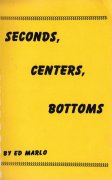
Read more about Seconds, Centers, Bottoms: Revolutionary Card Technique No. 8, 9, 10 by Edward Marlo

This booklet explains techniques and effects for second, center, and bottom deals. It describes Marlo's fantastic Master Grip technique, which allows for false dealing from the same grip. Apart from this, the booklet also contains weird and wild techniques for various deals, the No Touch theory, the incredibly clean The Over Deal, deals invented by Marlo's peers, and a ton of other ideas, techniques, and effects.

Table of Contents

  • Foreword
  • "Seconds, Centers, Bottoms"
  • The Master Grip And Deal
  • The Bottom Deal
  • The Over Count
  • The Second Deal
  • The Havana Deal
  • The Sail
  • One Hand Bottom...
$9
Miku W.
Read more about Forklift Match by Miku W.

Absolutely a card technique you've never seen before.

This is an original card technique I developed that lets the spectator decide where two packets are interlaced, followed by a push-through handling to complete the cut. It can be used to cut to all four Aces or other target cards. Here are two routines using this technique:

Forklift Match: The spectator freely selects two cards. The magician splits the deck in two and lets the spectator decide where the two packets are interlaced. The magician then cuts the deck into three packets, with the top and bottom cards of the three packets...

$11.95
Dustin Marks
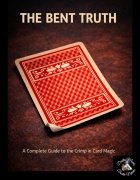
Read more about The Bent Truth by Dustin Marks

A complete guide to the crimp in card magic.

Tired of spectators catching your pinky break? The Bent Truth: A Complete Guide to the Crimp is your essential guide to mastering one of the most reliable tools in card magic.

Why the crimp is your new best friend:

  • It's Set-and-Forget: Unlike a pinky break, a crimp requires zero muscular effort to maintain. Once it's set, you can do anything with your hands-or even hand the deck to a spectator.
  • It Survives the Shuffle: Whether it's a riffle, overhand, or Hindu shuffle, a properly applied crimp stays intact. Your spectator can genuinely shuffle...
$9.95
Dustin Marks
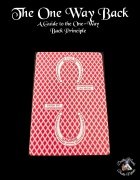
Read more about The One Way Back by Dustin Marks

Stop ignoring the back of your cards.

There is a secret hiding in plain sight on almost every deck of cards you own. It's been there for decades, but most of us overlook it because we're too busy practicing our passes and bottom deals. It's called the one-way back principle, and it is arguably the most undervalued tool in card magic.

Why should you care? Because the one-way back principle allows for genuine miracles that require zero sleight of hand. We're talking about effects where the spectator shuffles the deck themselves, yet you can still find their card instantly. It survives genuine...

$9.95
Dustin Marks
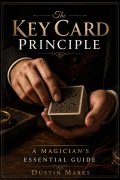
Read more about The Key Card Principle by Dustin Marks

Stop burning your fingers on complex sleights and start performing miracles.

Master the Key Card Principle, a "secret weapon" of card magic that has empowered magicians for centuries and remains a favorite of legends like Dani DaOrtiz and John Bannon. This eBook is your essential guide to a principle that allows you to know the "impossible" while maintaining the illusion of complete fairness and randomness.

Why Use the Key Card Principle?

  • Deceptive Power: Locate chosen cards and make perfect predictions without the need for intricate sleight of hand.
  • Versatility:...
$6
Brick Tilley
Read more about Cummings Change by Brick Tilley

From the early 1970's, this unique effect may be the most visual card transformation, without any suspicious handling, fingers spread wide apart, no cover-ups. Walter Cummings was a convention favorite from the old school. Angle proof and quite startling.Requires moderate skill.

1st edition 2026, video 36 seconds.

$9.95
Dustin Marks
Read more about Corner Short Breakthrough by Dustin Marks

If you're a student of the Corner Short Card (CSC), this new discovery is going to captivate you. The ability to locate a CSC can transform your card magic - making your handling appear completely natural.

Say goodbye to holding breaks and using crimps. A CSC remains permanently hidden in plain sight, and this method lets you find it without suspicion.

You'll discover the most deceptive CSC discovery technique ever devised - so subtle it's practically invisible, even to seasoned eyes. This is a sleight-of-hand method; no external devices are used. Over a dozen crystal-clear instructional...

$9
Miku W.
Read more about Secret Flip by Miku W.

This project introduces three of my secret single-card reversal techniques. You can present them as a sleight demonstration or apply them within other card routines to achieve greater impact and utility. These three techniques have not been named yet.

1st edition 2026, video 7:43

$9
Miku W.
Read more about Three Palm Ideas by Miku W.

This tutorial teaches three of my palming techniques. Because my hands are relatively small, palming has always been challenging for me, which is why I developed several simpler palming methods.

Crescent Palm: a technique for palming a card quickly during the squaring of the deck.

Pinched Palm: a fast and simple bottom-card palm.

Stealing Palm: my take on the Diagonal Palm Shift, designed to move a center card directly into Classic Palm.

1st edition 2026, video 6:20.

$11.95
Dustin Marks
Read more about PATEO Principle: Re-Engineered by Dustin Marks

Effect: A spectator freely selects a card and loses the card in the deck. The spectator cuts a packet of cards and places it face down on the table. The cards are eliminated in a very fair manner until only one card remains. That card is not the spectator card, but a prediction revealing the location of the spectator's card in the deck.

Description:

The PATEO Principle appears to give the spectator control over how items are eliminated. In reality the magician is in control during the entire process.

One of the major disadvantages is that it can be a long procedure. The other major...

$22
Jon Racherbaumer
Read more about Who Was Gombert and Why Should We Care? by Jon Racherbaumer

The Gombert Pass, as published in the Gen Volume 22, Number 3, July 1966, has a complicated and mysterious past. At some point, some card experts believed Gombert was a pseudonym of Edward Marlo. Jon Racherbaumer traces its history and finds and connects with Jan Gombert, the author of the article in the Gen.

  • Meetings And Passings: Memes And Themes
  • Gombert Pass Reverse
  • One-Third Of The Gombert Pass
  • Cervon's Invisible Reverse
  • Turnover Pass Reverse
  • One Fantastic Move
  • Bibliography
  • Finding Gombert

1st edition 2004, PDF 25 pages.

★★★★★ $6
Miku W.
Read more about Friction Control System by Miku W.

This is my control system, which allows you to cleanly push the card into the deck with no visible break, and still maintain control.

The system can control the card to four common positions: the top, the bottom, the second from the top, and the second from the bottom. It can be applied flexibly in many card routines, taking your sleight of hand to the next level. For the detailed controls, please watch the performance video.

1st edition 2025, video 4:11

$19.95
Dustin Marks
Read more about The Ultimate Forcing Method by Dustin Marks

Introducing The Ultimate Forcing Method - a groundbreaking method for card magic that combines a floating key card with the unique properties of shuffling face-up and face-down cards. It's a "hands-off miracle" where the magician never touches the cards.

Here's why you will want to add this to your act:

  • Spectator Involvement: The spectator does everything. They shuffle face-up into face-down cards, cut the deck multiple times, and ultimately remove the forced cards themselves. This creates an illusory sense of complete randomness, making it seem impossible for you to have any knowledge...
★★★★★ $6
Peter Pellikaan
Read more about LWP Count by Peter Pellikaan

This count has one of the highest hide-to-show ratios of any false count. You are using four different cards, yet you can show each one three times in a row to credibly demonstrate you have a packet of three identical cards. Doing this four times with four different cards looks incredible on its own. Nevertheless, you would use this as part of a larger routine.

1st edition 2025, video 1:43.

$10
Peter Pellikaan
Read more about Packet Palm by Peter Pellikaan

While you turn over a small packet of cards, you palm the bottom card. Here, Peter uses this move in a small packet routine to have Aces and tens change their packets.

1st edition 2025, video 3:59.

$30
Brick Tilley
Read more about Mona Lisa by Brick Tilley

In the early '70's Jon Racherbaumer received 8 mm color footage of Chuck Smith executing a five-card poker hand switch. This was featured in the short film Lookout, Cleveland, now on YouTube. An excerpt is shown below. A letter from Smith is included here describing how he used it during WWII while in the military. This unique technique has been kept hidden until now. It is not easy, as many things are happening at once. This takes skill and nerve. The price is designed to keep it out of the hands of the curious. While we don't condone cheating, it is time this was recorded for posterity. ...

$10
Brick Tilley
Read more about Turnover and Jiggle Pass by Brick Tilley

Early books on magic, such as Modern Magic and Illustrated Magic (1931) stressed mastering the pass as fundamentally necessary to every card handler. As time went on, easier sleights such as the double cut to the break replaced it, rendering it anachronistic. Times change. Recently, a friend was asked to comment on one of today's card experts. Her reply, "Too much shuffling." Modern audiences often don't know what happened, but they sense when it happened (He did something tricky) because of excessive cutting and shuffling. Attention spans are shorter now so effects must...

$10
Peter Pellikaan
Read more about No Way Count by Peter Pellikaan

You start with two packets of four identical cards each, for example, four 10s of hearts, and four aces of spades. You interleave them, show them again singly to confirm that they have been interleaved, but then magically they have separated. You do this twice, once face-down, and the second time face-up.

1st edition 2025, video 2:04.

★★★★ $10
Jon Racherbaumer
Read more about Pinky Countdown by Jon Racherbaumer

This ebook focuses on how the pinky is used to obtain breaks, which is popularly known as The Pinky Count.

The history of the Pinky Count is murky. One creation story is that it was created by Dai Vernon after reading a comment about Hofzinser that he had a way to count cards secretly with one hand. However, most card enthusiasts will associate the Pinky Count with Jim Steranko and/or Darwin Ortiz.

1st edition 2015, PDF 12 pages.

$14.95
Dustin Marks
Read more about Miracles with the Bottom Card by Dustin Marks

Imagine this: the spectator shuffles their deck, and without touching the deck, you have control over their freely selected card.

You can create powerful miracles for your spectators by simply knowing the bottom card. Learn simple, deceptive techniques to gain this crucial information that creates wonders. Learn key strategies for secretly obtaining the identity of the bottom card, techniques for controlling spectator-selected cards relative to the key card, methods for forcing the bottom card, and numerous reveals.

When the bottom card is known, it acts as a key card tracking the location...

$6
Peter Pellikaan
Read more about Turn Count by Peter Pellikaan

You can use the turn count to, for example, display several identical cards with one odd card. Upon turning over a card, the faces have all changed to the odd card, with only one left with the old face. You will need some double facers to use it in this way.

1st edition 2025, video 2:39

$6
Peter Pellikaan
Read more about Display Move by Peter Pellikaan

You start out with eight cards consisting of two packets of four identical cards each. The two designs are different. Peter uses two differently colored spots. This display move allows you to show eight identical cards with one design, and then eight identical cards with the other design. The spectator will think you have eight identical cards, and then suddenly they change to eight different cards.

1st edition 2025, video 2:44

$9.97
Dustin Marks
Read more about The Force by Dustin Marks

A version of the Cut Deeper Force that provides reason and logic as to why the cards are turned over.

The Ultimate Hands-Off Force.

Imagine this: Your spectator shuffles their own deck. You never touch the deck, yet you manage to have them freely select a card you already know. Then, for an even more astonishing finish, you can reveal the exact position of their chosen card within the deck.

This isn't a dream – it's the reality of The Force, a revolutionary technique that puts the power of card control unknowingly into your spectator's hands.

Utterly Deceptive: The spectator shuffles...

$7.95
Dustin Marks
Read more about Spectator's False Cut by Dustin Marks

The most deceptive false cut is when the spectator cuts the deck. This false cut is one of the most convincing false cuts of all the false cuts. It looks so innocent and fair.

This technique utilizes a simple triple cut sequence that maintains the order of the deck as the spectator cuts. It does this without the complexity often associated with other false cuts. There is no shift, pass, or similar involved. The magician simply cuts the deck one handed at the end of the cutting sequence and the spectator carries the cut.

Learn step by step how to perform this amazingly deceptive false...

Displaying 480 to 457 (of 480)
20 19 18 17 16 15 14 13 12 11 ...1 >