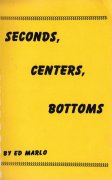
This booklet explains techniques and effects for second, center, and bottom deals. It describes Marlo's fantastic Master Grip technique, which allows for false dealing from the same grip. Apart from this, the booklet also contains weird and wild techniques for various deals, the No Touch theory, the incredibly clean The Over Deal, deals invented by Marlo's peers, and a ton of other ideas, techniques, and effects.
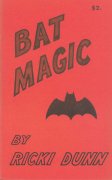
Originally released in 1966 when the TV version of Batman was popular. These ideas have received a new lease on life with the fairly recent Batman movies.
While these impressions and pieces of information about the world of conjuring were gathered before, during, and shortly after WWII, many are true today as they were almost a century ago.
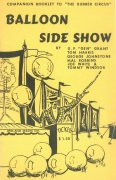
Joe White gives you the making, handling and routine for "Astraloon," a beautiful floating balloon in which the balloon seemingly floats freely in the air. Tom Harris explains his Eggs and Balloon trick which he has shown on many occasions at shows and conventions in this country and his native England. George Johnstone gives his version of this trick. Tommy Windsor has a series of fine ideas with various kinds of balloons, used during his years of professional work. And Gen Grant permits us to include his dandy "Pin Cushion Balloon," which permits you to prepare your own. (Not the same trick...
Softcover stapled and glued. The spine is damaged and cover is soiled. This is not a reprint but the first edition. For the contents, see the digital edition.
This was one of the first books on the making of balloon animals. These are the big animals, each one made from several balloons. Suitable for stage, floor shows, outdoor work, TV, and more. Teaches you how to make them quickly, right in front of the audience, and includes bits of business.
The greatest of all Floating Ball routines, developed and used by Howard Thurston during his long and illustrious career. A magnificent display of super showmanship for the stage.
Effect: With cabinet doors wide open, you see the ball materialize and float out of the cabinet to the performer standing several feet away. After a number of spectacular moves, the unique highlight comes when the performer, with the ball suspended between his hands, steps off the stage among the spectators. Standing in the aisle facing the footlights, he causes the ball to travel back to the stage over the footlights, high...
This ebook is packed with amazing card magic. Intended for advanced card workers, this is expert material for the person who wants top-notch, subtle work. It contains 45 great tricks.
These are lecture notes that provide a quick summary of effects that were presented at the lecture. While the descriptions are brief, most provide enough details for the average magician to get the idea.
Al Leech wrote this classic text on the presentation of magic in 1948, and it has been essential reading ever since. The ebook goes into depth on the application of psychology to magic, misdirection, how best to fool people, how to make them like you, and similar topics.
"The many classics on the subject that predated it were ambitious and well intended but full of air and
nonsense. But this modest thing pointed the way. Its historical importance would be reason enough to put it out. But in its modest little way, it has never been bettered. It remains fresh and valuable today." - [la=91861...
This ebook includes a nice introduction to Extra Sensory Perception (ESP) and a range of tricks from quick effects to longer routines. Note that many of the effects described require some double-face ESP cards.
20 practical illusions that you can build yourself.
Jim Sommers was a full-time professional magician who specialized in illusions. Throughout his career, he always used a few illusions in the show that he built himself. His philosophy in designing, building, and thinking about illusions is based on the presupposition that many magicians live in small apartments, drive small cars, and have to handle their props by themselves. The tricks in this ebook are designed to fit into the lifestyle of these magicians.
This is a 15-minute one-man routine with no props or gimmicks, an act that can baffle and stun your audiences because they can't have the faintest idea of how it's done. No questions are written down, nothing is said by the spectator, and yet you answer the question or problem of which he's thinking. You do it without any obvious "fishing" of any kind. And you do this not with just one person but with as many as ten, as time allows, regardless of the makeup of any particular audience.
George Anderson developed a unique "no questions written" approach to the Q&A act which he developed to...
The sequel to It Must Be Mindreading, this ebook reads like a novel - fast-paced, exciting, and with powerful effects.
Excerpt from the introduction:
And I suddenly realized that here was another book - a book with a different and daring concept of mental magic - workable mental magic.
Again, as in my first book, these are all one-man effects - but the emphasis is on audience participation. The general premise is, "You, too, can read minds," and you prove the statement. In each case, the volunteer from the audience will know how you conveyed information to him, but he...
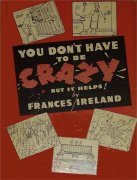
This was the house organ of Ireland Magic Co. which later became Magic Inc. It started in 1957 with a regular bimonthly publishing schedule but then became irregular. The last of 45 issues, volume 4 number 9 was published in 1988. Being a house organ there are of course lots of product advertisements but it also includes news, interesting photos, comments, trick patter and presentations, reviews, quips, tips, and other things about tricks and magicians.
In the first issue, Frances and Jay wrote:
It has been our desire, for many years, to convert the Newsletter into a small company magazine,...
This catalog has the same title, Book Catalog No. 2, the "magic ink" line of book catalogs, as this one but was issued likely a few years earlier around 1984.
Imagine a technique that is totally impromptu, can be done surrounded with borrowed materials, and no evidence of trickery can be found. Imagine having someone print any piece of information on a borrowed slip of paper, which is then folded and torn to shreds. Yet you can instantly announce just what was written on it.