Magic & Mentalism: page 457
Products
Misdirection
Alexander de Cova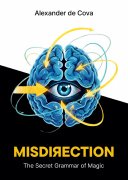
The secret grammar of magic. Theory and practice of attention control.
Misdirection is not just a trick or gimmick. It is a way of thinking.
For over a century, magicians have discussed how to direct attention. Far less often, they ask why this direction works. Rarer still, they describe it with precision. This ebook does exactly that.
Alexander de Cova does not view misdirection as a collection of tricks, but as the secret grammar of magic - a system of rules, interactions, and psychological mechanisms that shape perception, memory, and meaning. Those who understand this grammar have...
Misdirection (German)
Alexander de Cova
Die geheime Grammatik der Magie.
Das umfassendste deutschsprachige Werk über die Kunst der Aufmerksamkeitslenkung in der Zauberkunst.
Nach über zwanzig Jahren intensiver Beschäftigung mit diesem Thema hat Alexander de Cova ein Buch geschrieben, in dem er Misdirection nicht als Trick, sondern als fundamentales Werkzeug und System der Zauberkunst versteht, das eine Täuschung der Zuschauer überhaupt erst möglich macht. Misdirection ist die geheime Grammatik der Magie, die aus einem Puzzle ein unerklärliches Wunder macht.
Misdirection ist die Kunst der gezielten Lenkung der Aufmerksamkeit...
The Power of Prayer
Luke Jonas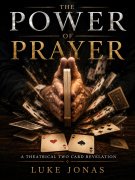
A theatrical two-card revelation.
A spectator selects a card. The card is returned to the deck. The performer begins to shuffle... and suddenly loses control. Cards spill from the hands and scatter across the table in what appears to be a genuine mistake.
Recovering, the performer invites a second spectator to also select a card. Both cards are lost in the deck. Then the tone changes.
The performer speaks quietly about moments of stillness - about the instinct people have to bring their hands together when they want to focus, reflect, or ask for something beyond themselves.
Cards...
Mucamun
Raphaël Czaja
A made-up card at a made-up number effect where the spectator does (almost) all the work.
While the performer's back is turned, a spectator cuts the deck twice to two different cards. He adds their values together, then adds 10 to obtain a random number - let's say, 23.
He deals that many cards into a pile and divides the pile into two packets. He freely chooses one of the packets, looks at its top card and remembers its value. He repeats the same procedure with the second packet, this time remembering the suit of the top card. By combining the chosen value and suit, he mentally creates...
Predictive Switch
Mark Leveridge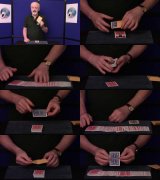
The performer offers to demonstrate an effect that is part mentalism and part magic. For the mentalism part, he slides a blue-backed prediction card from a pay envelope, displaying that the envelope is otherwise empty before returning the card and leaving the envelope in view.
A red-backed deck is shown to be well mixed, and a spectator genuinely freely (no force) touches the back of any face-down card. This selection is left reversed in the centre of the deck.
The blue-backed prediction card is now removed from the envelope and its face displayed - let's say it is the QC. When the red...
Multiple Cuts ACAAN
Miku W.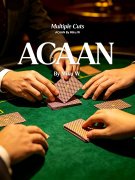
A spectator freely selects a card, freely cuts the deck to determine a number, and divides the deck into four packets. After multiple rounds of reassembling and cutting, the selection still arrives at the exact corresponding number. A self-working, fooling card routine.
Performance transcript:
- This is a completely impromptu effect.
- You can even borrow a deck from a spectator.
- No setup or stack is required to begin.
- Have the spectator cut roughly half the deck.
- Ask them to secretly count how many cards they cut.
- 22 cards.
- Since I don't have a spectator here, I have to count...
Conviction and Acting
Dustin Marks
Stop practicing moves. Start entertaining people.
You've practiced that pass for six months. You've never spent six minutes on what your face and body are doing while you execute it. Here's the uncomfortable truth most magicians never face: your moves are not what fool people. Your acting is. This eBook fixes that. No fluff, no images, no charts, just practical advice that will make your magic better.
What You'll Learn
The Two Hands Problem - the single most useful concept in close-up magic, and most magicians get it backwards. Learn why the hand doing the dirty work should be the boring...
Chameleon
Brick Tilley
Jules DeBarros was, according to Jon Racherbaumer, perhaps the finest coin worker of his, or any, era. His timing and execution were flawless and angle-proof. Here is a fine example of his approach.
1st edition 2026, video 1:14.
Magigram Index
Michael Colley
The Magigram Index covers the complete run of Magigram from September 1966 to the last issue in February 1995.
Items in the Index are listed by Author, Title, Date, Volume, Issue, Page and up to four categories. Each category is represented by a three letter abbreviation such as CARds (2097 entries), CHIldren (1152 entries), CLOse-up (391 entries), COIns (483 entries), REPorts of Societies, Conventions, Shows and other events (260 entries), BIOgraphy (377 entries), MANipulation (84 entries), etc. There are a total of 11797 entries with 456 different categories plus a listing...
Inconceivable
Luke Jonas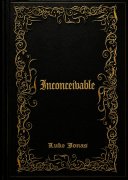
"Luke has a truly beautiful mind, and it shows through his work as a mentalist." - Morgan Strebler
"After reading this, I really am excited to see what the future holds for Luke." - Peter Turner
Inconceivable is a collection of practical, hard-hitting mentalism from Luke Jonas - material designed for real-world performance, not just the page.
Inside, you'll find a range of effects and routines built for both close-up and stage environments, using familiar objects including newspapers, playing cards, coins, and more. The material focuses on strong presentations, layered...
MK-Ultra CIA Mind Control
Richard Southall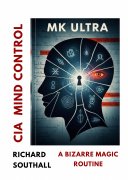
Richard Southall's latest ebook again shows his interest in bizarre magic. Like his previous book on the Okito Voodoo Doll, this book also deals with a single topic. However, this time he is examining Project MK-Ultra, the CIA's secret experiments into mind control techniques. However, unlike his previous work, which presented a number of individual effects, this ebook includes a full routine of six MK-Ultra-based tricks and a bonus trick also related to the topic.
Effects range from MK-Ultra's experiments in ESP and remote viewing to the attempt to create a Manchurian Candidate,...
Miracles in Pairs
Sam Dalal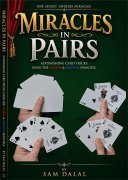
Astonishing card tricks using the rough and smooth principle.
The R&S (Rough and Smooth) principle is one of the best subterfuges of card magic, with trick decks like the Brainwave Deck by Dai Vernon (originally described in October 1938 - Issue 49 of Annemann's Jinx) being one of the classic trick decks of all times, and several dozens of other decks and packet tricks based on this principle.
Basically, cards roughed with roughing treatment cling together in pairs, to show as a single card when fanned with slight pressure, and separate when fanned lightly.
One can...
Card Tricks with Patter
Mago Marko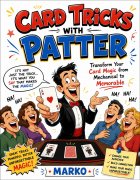
Transform your card magic from mechanical to memorable.
Most card magic books teach you the moves. But moves alone don't make magic. What separates a forgettable trick from a standing ovation is the story you tell while doing it. Card Tricks with Patter delivers ten powerful, audience-tested effects alongside something most books ignore entirely: the actual words to say.
Inside these pages, you'll find classics like "The Partagas Sell," "Five Card Plunger," and Dai Vernon's "Matching the Cards," plus original creations like "Three Wrongs Make a Right." Every trick is built on solid, manageable...
Magnetic Attraction
Mark Leveridge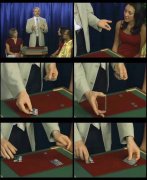
How would you like to perform a Matrix assembly without any sleight of hand and using some ungimmicked coins and two borrowed credit cards as covers? Well, Magnetic Attraction allows you to do just that.
Four small coins (US Quarters or any other small coins can be used) are placed out in a square, and when two borrowed credit cards are lowered over them, they start to instantly jump until all four are collected under one card. Very easy to do, you'll marvel at the simplicity of the method!
1st edition 2017, PDF 4 pages.
The Dice of Prognostication
Dustin Marks
The spectator shuffles the deck. The spectator rolls the dice. The spectator chooses which die to use. The spectator deals the cards. And you never touch a thing. Then comes the impossible. The card they set aside as an "offering" is revealed to match the sum of the dice - a perfect 7. And when they turn over the four packets they dealt themselves? The Four Aces. It looks like the dice predicted everything.
Why you'll love performing this:
- Spectator does all the work. They shuffle, they cut, they roll, they deal. You appear to be a bystander.
- No equivoque. No force. The spectator can...
The Path Leading to the Choice
Biagio Fasano & Roberto Tota
A card selected and then lost in a shuffled deck will inexplicably be found by the magician, following a precise path traced by the cards themselves.
The Path Leading to the Choice is a unique card magic trick in which the magician, after showing and shuffling a deck of cards, hands it to a spectator to cut and complete. At that point, he divides the deck in two and asks the spectator to choose one of the two halves, shuffling it as he pleases, while he does the same with his own half of the deck. The spectator then chooses any card from his half and lost it into his own bunch, placing...
Il Percorso che Conduce alla Scelta
Biagio Fasano & Roberto Tota
Una Carta Selezionata e poi Dispersa in un Mazzo Mescolato, verrà inspiegabilmente Ritrovata dal Mago, seguendo un Preciso Percorso tracciato dalle Carte Stesse!
Il Percorso che Conduce alla Scelta è Un effetto inedito di Cartomagia dove il mago, dopo aver mostrato e mescolato un mazzo di carte, lo consegna ad uno spettatore perché lo tagli e ricomponga. A quel punto divide in due il mazzo e fa scegliere una delle due parti allo spettatore perché lo mescoli a piacere mentre lui farà lo stesso con la propria parte del mazzo. Lo spettatore sceglierà una carta qualsiasi tra le sue e...
Quantum Equivoque
Unknown Mentalist
A special surprise gift worth $12 is included inside.
I do not know how to pronounce 'Equivoque'. But I know how to perform it, like most magicians and mentalists. Equivoque is an age old technique which can be very powerful when performed right. There are many notable works on equivoque in magic literature.
But this ebook is not exactly about equivoque. This ebook is about a few unconventional techniques which when added to equivoque make it way more powerful and way more easy. And way more elegant. You are expected to know the basic equivoque (also called magician's choice) procedure...
Joker Impossible Location
Miku W.
The spectator shuffles the deck at the start. The magician removes a prediction card, then the spectator freely selects a card and loses it back into the deck.
Next, the magician has the spectator freely cut the deck, placing Jokers at the cut points. At first, the Jokers isolate a large section containing the selection, and eventually they sandwich the exact selection itself.
The deck is split at the selection, and behind all the apparent randomness, everything leads to the final outcome. There are three packets on the table, and the bottom card of each packet perfectly matches the...
Wizard's Book of Dialogues and Helps to Magicians
W. J. Judd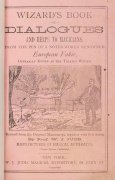
From the pen of a noted, world-renowned European Fakir, generally known as the Talking Wizard. Revised from the original manuscript, together with footnotes, by Prof. W. J. Judd, manufacturer of magical apparatus in New York.
Table of Contents
- Preface
- Opening Speech
- Short Opening Address
- Obedient Ball
- Watch Mortar
- The Inexhaustible Hat
- Tape Cutting Illusion
- Bonus Genius
- Mechanical Watch Target
- Egg Bag
- Ink
- Walking Cards
- Bell And Bushel
- A Glass Of Water
- Multiplying Coins
- Cake In Hat
- Mysterious Parasol
- Voizin's Caddy And Enchanted Vase
- The Wonderful Vase Of Bran
- A Card Speech ...
Making Magic 2
Martin Lewis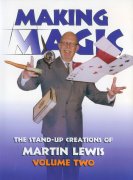
This download features six strong, audience-tested, stand-up effects plucked from his own cabaret act. Martin shows you, in a step-by-step hands-on guide, how to make the "props" on your kitchen table quickly and easily with only basic tools and materials, and needing no special skills. Then, in live performance, see how the apparatus is used to really make magic.
Includes artwork in three PDF files.
Routines:
Two Color Torn Tissue: In this version of the classic "Torn and Restored Napkin," two different colored papers are used to explain how it works ... but the audience is still...
Away With Words
Luke Jonas
Away With Words is a collection of mentalism and mind-reading effects built on the most underestimated tool a performer has: language itself.
Across these pages, Luke Jonas argues that the strongest mind reading isn't built on gimmicks or hidden technology, but on the careful use of spoken and written words - the rhythm of a sentence, the construction of a question, the choice of a single phrase that lets a spectator believe they have given away more than they have. The effects taught here are practical, tested, and intended to leave a memory rather than a trick.
Inside, you'll find...
Lightning Coin Matchbox Revised
Mark Leveridge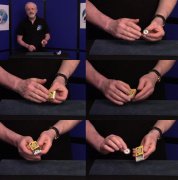
Coin into matchbox.
A coin is borrowed and a spectator's initials are written on a sticker which is stuck to the money. Holding the coin at fingertips, the magician passes his hand over the coin and instantly it transforms into a matchbox! That is already totally unexpected, but a second surprise comes when the box is pushed open to reveal the signed coin sitting inside.
video 5:51.
Four Packet Location ACAAN
Miku W.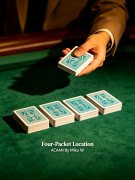
A very fooling card location and ACAAN effect.
Two spectators each cut a packet and remember the bottom card, then replace them into the deck. The performer has a spectator cut a large packet, then deals left and right on the table, eliminating the left pile each time, until only one card remains on the right. That card is spectator two's selection. Not only that, the top cards of the four dealt piles are turned over - their values add up to reveal the final position of spectator one's card.
- No force
- No gimmick
- No crimp
Performance transcript
- Next is a very fooling ACAAN...