Self-Working or Sleightless in Cards: page 12
Authors
Products
Colorful Card Creation
Raphaël Czaja
Using a small packet of cards, a spectator fairly creates a playing card which was predicted by the magician.
A packet of playing cards is on display. On one side: A mix of every value (from 2 to King) and every suit. On the other side: A mix of red and blue backs. The spectator is asked to create a random card. First, he selects which back color represents the suit and which one represents the value. Following the magician's instructions, he mixes the cards up and cuts them as many times as he wants. Then, he deals the cards on the table in six pairs. Finally, he picks one pair with a red...
R & B ACAAN
Biagio Fasano
"I love your new creation! Great illustrations. A well-structured semi-automatic card trick that could be repeated immediately at table-hopping. I like that instead of the usual counting, only the cards of a chosen color are counted this time." - Dr. Hans-Christian Solka
A new card effect, completely self-working and hands-off, in which it will be the spectator, after freely choosing the color, to find the card at the number as traditionally in any good A.C.A.A.N.
This is a new automatic and completely hands-off card magic effect, where the magician, once the deck has been introduced, shuffled and quickly...
Gemini Sisters
Biagio Fasano
A new mentalism and card magic effect, impromptu and self-working, in which the illusionist, making use of less than half a deck, will call the sister of the one chosen by the spectator and incredibly those cards will always answer the call.
An always improvisable experiment with a dash of mentalism where the magician, making use of less than twenty cards from any deck, after showing them, shuffling and having a spectator cut the deck, makes her freely choose a card. After further shuffling the remaining cards by chaotically dividing them into three separate piles, he asks the spectator...
Bammo Astro Sign
Bob Farmer
There is no more powerful effect than one that uses some personal information of the spectator that the magician could not possibly know. Here the selected card is found using either the spectator's zodiac sign or the month in which the spectator was born. Self-working. No sleights. Any deck, even a borrowed one.
1st edition 2024, PDF 6 pages.
Shuffled Not Bored
Dustin Marks
An enhancement to Aronson's Shuffle Bored.
A streamlined version of the greatest self-working card trick of all time. More spectator involvement, more predictions, and a story that makes the prediction even more amazing. The prediction appears to happen in real-time, and it can be personalized for the spectator. Give it to the spectator to take home. This is a great marketing tool. Word-Doc files are included to make your prediction personalized with the spectator's name and date, along with your name and contract information. This is strong enough to close your close-up shows.
1st edition...
Ultimate Fair Selection
Dustin Marks
The spectator shuffles their own deck, cuts it twice (similar to the cut deeper force only done by the spectator), and looks at the first face-down card. The magician knows the spectator's card without ever touching the deck. The cards are normal, and the magician can be out of the room when the spectator views their card.
The method works 100% of the time and is simple to perform.
Key Points:
- No reset
- No math
- No setup
- No sleight of hand.
- Not too procedural.
- No electronics
- Magician never touches the cards
- Four variations
1st edition 2024, PDF 6 pages.
Strangely Sympathetic
Scott F. Guinn
"Your stuff is always a fun read. I absolutely love Strangely Sympathetic. Your magic is very strong and not hard to do. It's what the doctor ordered." - John Luka
This is a feature showpiece for professional stand-up performances that you'll want to add to your show right away. Here are some features of the routine:
- It is exceptionally easy to do and requires zero sleight-of-hand.
- It "packs small, plays big."
- It is foolproof. There is nothing that can go sideways on you in the fire of real-world performance.
- The procedure looks extremely fair. There are no false moves and there...
Obscure Hands-Off ACAAN
Biagio Fasano
An always-ready Any-Card-At-Any-Number effect, with a borrowed deck of cards that will never be touched by the magician and will leave everyone amazed.
This is an Impromptu "Any Card At Any Number" card magic effect that the illusionist is always able to perform, even with an incomplete and borrowed deck, and the most incredible thing is that he will never touch the deck of cards but will simply give all the instructions to the spectator.
After freely shuffling a deck and secretly taking a small group of cards from the center, so that the magician does not even know how many cards it...
Isolation of Royal Families
Biagio Fasano
An automatic and practically impromptu card magic effect that requires an unusual deck of poker cards whose simple preparation is done in front of the audience, if not by entrusting it to a spectator.
For each of the four suits, figures (Jack, Queen, King) and Aces are drawn, stacking them neatly in four different bundles, to represent the aristocratic members of the city's four important houses, who would like to return to being well-liked by their citizenry.
For this purpose, the two Jokers are hired as "image consultants," and their first piece of advice is that each of the members...
CoinDICEnce ACAAN
Biagio Fasano
An amazing self-working "Any Card At Any Number" effect, which uses two simple decks of cards, two dice and two chips to let fate play with dice.
This is an incredibly automatic card magic and mentalism effect, of the "Any Card At Any Number" genre, which uses two simple poker decks of 52 cards, two common six-sided number dice, and two casino chips bearing the words "SUIT" and "VALUE" on them.
The illusionist will call on a female spectator to help him as he explains how often throughout history both playing cards and dice may have influenced the fates of many men.
He will then present...
Automatic Placement: a deep dive
Dustin Marks
The Automatic Placement Principle, named and popularized by Ed Marlo, is a mathematical marvel that places the spectator's card into a known position in the deck, without sleights. I've created two amazing enhancements: First, the spectator shuffles the majority of the deck after looking at his card. Unbelievably, you still know the card's position without touching the deck! Second, you're now privy to the card's identity as well as its location. Both methods are presented as a glimpse into gambling strategies. These enhancements have many potentials for your card magic.
1st edition 2024, PDF 19...
Hyper-Sensitive Mentalism
Biagio Fasano & Marco di Biase
A new Mentalism effect, as impromptu as it is inexplicable!
This is a simple Mentalism effect, incomprehensible to the audience and executable on virtually any occasion, as it uses eight simple cards that can be drawn from any deck. The Mentalist, with his back turned or blindfolded without any make-up, asks a spectator to think of any card and draw it from the deck, together with any seven other cards with which it will be shuffled by herself. She will divide the pack between her own hands, holding in each four face down cards.
At her pleasure, she will turn face up of the two bundles...
Undercover Jokers
Davide Rubat Remond
Undercover Jokers is a totally improvised and self-working card-magic effect that can be performed with a borrowed and freely shuffled deck, with the addition of the two Jokers. It tells the action of two investigative jokers acting undercover in search of a particular pair of cards, two figures representing two dangerous fugitives. The last sighting takes place inside a small, mysterious, and crowded club, the Card Club, popular with magicians and gamblers. After identifying and capturing the first criminal among the many people in the club, the two jokers, thanks to their intuition gained...
Capturing Bonnie and Clyde
Biagio Fasano
An intriguing and fooler card effect, completely impromptu and self-working.
This is a new self-working, impromptu, card effect, always performable, even with a borrowed deck: the illusionist briefly tells the story of the very famous criminal couple Bonnie & Clyde, who operated in the 1930s in the United States with their own gang. The deck of cards, shuffled by the spectator, will represent the inhabitants of the state of Louisiana, among whom hid the men and women who were part of the gang of gangsters most hunted by the police. The magician will thus form three piles of cards to represent...
The 7th Card Mystery
Biagio Fasano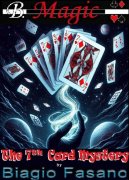
An impromptu and self-working Card Magic trick, always ready to perform with any deck.
This is an incredible impromptu and automatic card magic effect, which uses seven cards, taken at random from the deck. A spectator chooses only one of these and, by mentally answering questions posed by the magician, will shuffle the deck according to his own thoughts and will. The illusionist will then announce that, one by one, all the cards that end up at the top of the pack, returned to him by the spectator, will be eliminated at the end of each series of further shuffles that he will personally...
Remembering the Future
Stewart James
An award-winning, impromptu, self-working card miracle.
EFFECT: A borrowed deck of cards may be used. A member of the audience predicts something that two other spectators will do before they know what they will do.
Anyone in the audience calls "stop" at any time as you deal off the cards, one by one. This card is not shown but held by anyone, back to the audience, so there can be no switch. Two other persons each take a portion of the remainder of the deck, a free choice. These cards are counted. When the stopped at card is turned around, it is found that it had predicted the totals...
Binary Bucket List
Richard Southall
A binary method with a twist that makes it incomprehensible.
EFFECT: Three spectators select an item off your Bucket List. You show them four short lists and for each list, they are asked if they see their chosen item. Spectator one is asked to answer truthfully and spectator two is told they can either lie or tell the truth but they are not to tell you which they choose. Spectator three is told to only answer silently in their mind. Despite these increasingly more difficult conditions you are able to reveal all three selections.
I have been creating binary effects for a couple of years...
Twist and Shout Ritual
Biagio Fasano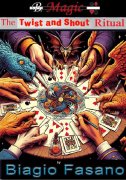
An amazing magic ritual that, performed with the audience, will invariably lead to success. Actually, a self-working, impromptu card magic effect, which uses four simple cards taken at random from the deck and results in an amazing "ritual," which can also be performed in close-up or on a stage, or remotely, even over the phone, and which will never fail to amaze the entire audience involved!
Four very common playing cards are used, taken at random from a deck of cards, and with which the illusionist, at the same time as one, dozens, or hundreds of spectators (each supplied with four different...
Double Miracle
Unnamed Magician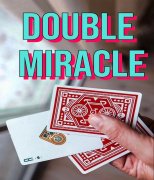
A location and divination of a selected card under test conditions. I will teach two versions, one that is meant to be performed in front of lay people and one that is meant to be performed in front of other magicians. (The effect description and conditions below are for the former version.)
Imagine:
The magician introduces a deck of cards. The spectator can thoroughly examine it, after which they can freely shuffle it for as long as they want in any way that they want.
Once they're done shuffling, the magician invites them to look through the deck and select any two cards that they...
Blackbeard's Treasure
Biagio Fasano & Laura Chips
It is an amazing automatic card magic effect that uses an ordinary deck of 54 cards (complete with the two jokers) and a pair of dice (which can also just be imagined by the spectators).
It tells the story of a pirate, the map of his island, and the magic dice he used to find his legendary treasure, in a crescendo of suspense, until the unexpected final surprise.
Completely self-working but with a surprising ending that will fool magicians too!
1st edition 2024, PDF 7 pages.
Impromptu Lie Detector
Mark Leveridge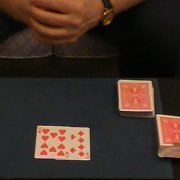
This is a straightforward version of the classic Lie Detector routine that can be performed with any deck (even a borrowed one) and with no advance setup.
A deck is shuffled by a spectator to put the cards into a genuinely random order, and the performer then extracts one card which he leaves sight unseen in view on the table. The magician then asks a spectator three questions about the tabled card, and the helper is invited to make up his answers (since he doesn't know at this stage what the tabled card actually is). Whatever answers the participant gives, the performer spells the word...
Emergency Prediction
Raphaël Czaja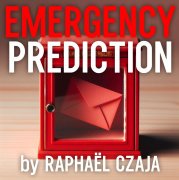
The magician can't find the spectator's card but his prediction can.
In short:
The spectator cuts to a card, removes it from the deck and remembers it. Then, the magician shuffles the deck and divides it into two halves. The spectator shuffles both parts, loses his selection between them, and shuffles even more. At the end, the magician runs through the deck and removes a card, but it is not the spectator's. Fortunately, the magician has an "emergency out", a message on a piece of paper inside a red envelope, in full view from the start. The spectator reads it out loud:
"If I was...
Move a Card: the 'Holy Grail' method for a classic plot
Unnamed Magician
"Pretty sure Moe would have been fooled by this." - Ryan Schlutz
"A clever method for a memory demonstration." - Christian Grace
Note: The effect described below makes up less than half of the entire e-book. The rest of the e-book contains several other methods for the "Move a Card" plot.
The "Move a Card" plot goes all the way back to at least the 1930s, when it was popularized by Moe Seidenstein. Over the decades, many methods have been developed. But I believe this method is the 'Holy Grail' method, simply because of its impossible conditions. Among other conditions, any borrowed deck can be...
Foxiest
Ray Grismer
For many years, Ray has worked on the problem of developing an impromptu version of the Paul Fox Miracle Gimmick. After testing and discarding several earlier handlings, he has come up with a stunning version that is a reputation-building demonstration of mass mentalism.
It can be done anytime, anywhere, totally impromptu, with a borrowed deck of cards which is first thoroughly shuffled by a spectator. The cards are handed out to several spectators - between five and twenty if you wish - and they are each asked to just think of a card. The cards are gathered and once again shuffled. You...