Cards in Magic & Mentalism: page 55
Subtopics
Self-Working or Sleightless DIY Playing Cards Moves & Techniques ACAAN Stacks Marked Gaffed Rising & Levitating Manipulation & XCM Svengali Torn and Restored Jumbo Cards LinkingAuthors
Products
True Lies
Raphaël Czaja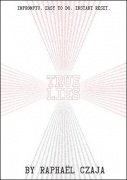
One of the cleanest procedures imaginable at the service of a very fair impromptu prediction effect.
A spectator picks four cards from a shuffled deck and rearranges their order. (Free choices.) The magician correctly predicts if one of them matches his favorite card - on the table from the start - and its position in the packet.
Impromptu. Easy to do. Instant reset.
1st edition 2019, 4 pages.
Scripted #28: Lassoing a Card
Larry Brodahl
How to lasso a chosen card. Complete methodology as well as script and performance video included. Full performance rights allowed.
It is a version that makes sense. The magician explains that as a child at summer vacation, he learned how to lasso mosquitoes, and he got so good at it, that he learned to actually snap the knot for the lasso onto the rope mid-air. And he thought he'd turn that skill into a trick.
The magician has a card selected. This card is returned to the deck and shuffled by the spectator. After some byplay, the magician drops the cards into a paper bag, puts one end...
Modernism in Pasteboard
Ralph W. Hull & Nelson C. Hahne
The inventor of the "Mental Photography Deck" and one of magic's best illustrators teamed up to provide this outstanding collection of 11 stunning card and mental effects.
The experts agree, this is one book you can't afford to pass up. Ralph W. Hull's thorough explanations guide the reader through a series of clever card routines. This guidebook introduced artist Nelson Hahne's "Magical Map" concept of using his excellent pen-and-ink drawings to thoroughly explain the subtleties of the various moves and handlings.
Not just for card workers, Hull's "Animated Chalk Marks" effect will also...
L.W. Random Conceptions with Cards
William W. Larsen & T. Page Wright
Long out of print, we're pleased to bring you this nice collection of sleight of hand card work from the team of Larsen and Wright. These clever card miracles are written in a relaxed, personal style, just as if Larsen and Wright were sharing the various moves in the back room of your local magic shop.
You'd expect to pay a king's ransom for the original, single broadside sheet manuscript. Luckily, Magic World has reissued this hard to find manuscript in a revised, easy-to-read digital format. Unlike the original, the individual effects now even have titles, making it easier than ever before...
Shades of Wow
Jon Racherbaumer
Elucidations of a classic card trick: The Biddle Trick
The basic plot is fairly straightforward: A card is selected and in the process of determining its identity it is winnowed down to five possibilities. Then, in a surprising act of differentiation, the selection disappears from this five–card packet and reappears elsewhere. In most cases, the selection ends up face up in the middle of a spread deck. This trick has been variously named but ultimately it was christened "The Biddle Trick", named after Elmer Biddle who published the trick in Genii magazine in 1947. It marks the first appearance of the well-known...
Aces Up
Lynn J. Searles
An exceptionally clever version of the 4-Ace Trick - no trick aces - use a borrowed deck.
In effect the 4 aces are dealt singly on to the table, face down. Twelve indifferent cards are then shown and dealt on to them, making four packets, one of which is chosen by a spectator. No force of any kind, believe it or not, he takes any of the four packets. The remaining three are turned over to show all indifferent cards. The four Aces are in the packet chosen. It's the most convincing of all Four Ace Tricks, and we know it will fool the best of card men. A couple of easy-to-do moves and the special...
The Smallest Card Through Window
Ralf (Fairmagic) Rudolph
A corner of a spectator selected and signed card (no force, no exchange of the card or corner) penetrates the glass of a wrist-watch.
The effect and the method of this trick are incredible. Normally you would think that an effect like this would involve a forced card, or a secret exchange of the torn corner. But this effect uses neither. You start with a completely fair and free selection of a card. The card can be signed and marked all the way into the corner that will be torn off. Then the magician tears off a corner of the card. And that corner will penetrate the watch glass. The corner...
Calling all Cards
Ken de Courcy
A deck of cards is shuffled and put in trouser pockets, any card called for produced, then any non-playing card (birthday card, membership card, postcard, ...) called for, with gags and card castle finale.
This manuscript has not been available for a long time. This comedy and mysterious act, which has not been seen for a number of years, contains all the ingredients for hit entertainment today.
THE EFFECT
The performer comes on to a stage which bears only a table. He introduces a pack of cards and hands them out for shuffling, then has them cut into two halves and, after rapidly glancing...
A Lesson in Card Magic
Jack Shepherd
You apparently teach four card tricks to a member of the audience, but the explanation leave the spectators more and more bewildered ... with a strong climax.
Here's a routine that has withstood the acid test of time. Jack Shepherd's great comedy routine performance to the paying public has been very valuable to the originator. It can be as valuable to you too! You get a member of the audience to help and offer to teach him how to do four card tricks. False explanations of the various effects as performed lead up to a brilliant climax where the spectator reaches into his own pocket and removes...
Early Vernon
Dai Vernon & Faucett Ross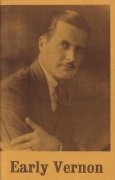
The Professor brought up-to-date in this ebook of the original Twenty Dollar Manuscript, Three Dollar Manuscript, and ten new Vernon variations. Illustrated by Vernon, edited by Faucet Ross, with nostalgic photos of the great man's life.
- Three Faces Of Vernon
- How It Began
- The Manuscript Story
- The Prospectus
- The Twenty Dollar Manuscript
- Vernon Five Card Mental Force
- Vernon Miracle Card Location
- Club Version
- Vernon Super Count Down
- Vernon Super Card Prediction
- Vernon Poker Demonstration
- Vernon Automatic Second Deal
- Slow Motion Card Vanish
- The Vernon Card Puzzle
- The Vernon Four...
The Hotel Mystery
Allan Ackerman
A lovely story trick involving two queens, four kings and two hotel rooms. Both the faces and the numbers of cards in two piles magically change.
length 5:29
The 3 Greatest Ace Assemblies
Wesley James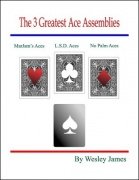
Almost every close-up magician and with near certainty every magician that uses cards in their performances includes assemblies. Some are good, some fall short of what we desire, but few have considered which of the wide variety of assemblies are the greatest. Such an assessment must, perforce, be subjective to some degree. Drawing from broad and extensive experience performing for real-world lay audiences, objective criteria can be applied and Wesley James, based on more than fifty years of first-hand performance experience, has done so. In this monograph he has distilled the subject to the...
Formula One Close-Up
Randy Wakeman
From the Foreword by Ed Marlo:
The effects have been constructed with the audience's conditions in mind. By this I mean that practically every close-up, at-the-table worker in a restaurant has to work under the audience's conditions and not the performer's. Thus, angly moves, risky sleights, lapping, etc. have been eliminated from Randy's lay audience routines. Therefore, you can be assured of the practicality of his magic.
As for my section of effects, it is obvious that much of it will not be used if one works under the spectator's conditions. Which also means that I work under my conditions....
Even Stephen
Ken de Courcy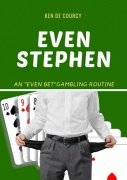
An "even bet" gambling routine in ten stages with no preparation and no sleight of hand.
A gambling routine which is completely different to anything that has gone before, because it doesn't deal with the usual card games such as Poker, Blackjack, Bridge and so on. Even Stephen is a routine, you don't play for money, instead play for matches ... and yet you win. Even with poor luck, you "scoop the pool". It's all so easy to do, the main skill being in presentation. 'The last Bet' is the only one needing a little handling and even that shouldn't place a great strain on your ability. Altogether...
Mental Photography Deck
Brick Tilley
A short, to-the-point routine for the mental photography, or nudist, deck that does not require the use of a table. An ideal effect for opening a close-up performance. It requires little skill beyond a few straight cuts of the deck, which means you can focus on the presentation. Full patter is included. Albert Goshman included this effect among his wonders for good reason.
All you will get here is the routine, the patter. You will have to supply your own nudist deck.
1st edition 2019, 4 pages.
Twisting Version 50
Peter Pellikaan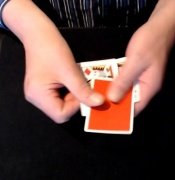
This is the classic twisting effect on steroids with multiple changes and a climax that hits you between the eyes. First you show four cards that have the same face and back designs, for example four kings of diamond with black backs. When you turn one king face up, they magically all are face up. Suddenly one of them turns upside down but it has a different colored back. Then two more different backs appear. Then all revert to the original backs. The climax is that all kings change to four different aces that have each a different back and each card is shown and tabled individually.
...
Queens
Peter Pellikaan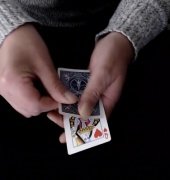
You show four Queens of heart with a red back. Suddenly the backs become blue and then all four backs change again into four completely different back designs.
You will need four Queens of Heart with four different back designs. One double backer (one back matching one of the Queen's back) and one blank face card where the back matches the other back of the double backer.
1st edition 2019, length 2min 50s
Three To Consider
Ian Baxter
This ebook continues where Ian stopped with his Five Kinks series. His tinkering with classic routines continues.
Too Easy Ace Cutting sees Ian reducing sleights to an absolute minimum for this timeless favorite, adding a surprise ending.
Distinctive Side Steal describes a handling for this sleight which resolves the one fundamental problem with the move, making it far easier to acquire.
Brown's Wandering Card: Ian describes his own version here and includes a subtlety which significantly enhances the deceptiveness of Brown's routine.
1st edition 2019, 17 pages.
Scripted #27: Triumph
Larry Brodahl
Two complete scripts and very simple handling for the Triumph effect, which not only fools people, but entertains them immensely. No difficult sleights, no gaffs, no problems.
Many versions of Triumph are either complicated and hard to follow, or gaffed, or even a knuckle buster.
Well, the author of How To Write A Script shows how he used his methodology to write 2 different scripts that explains and entertains with the Triumph effect, while technically putting it well within the reach of every magician. This ebook gives you every line, joke, piece of timing, setup and nuance of the routine.
The ebook...
Your Deck, Your Card
Senor Torino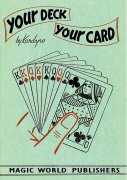
Night club performer Tony Kardyro (Senor Torino) reveals his favorite card mysteries in this clever collection. Drawing heavily from eighteen years' experience in the night club and banquet field, Kardyro created these effects to fill modern day demands for magic, as well as professional demands of the performer. Some of the effects depend on well-known sleights that are within the capacity of any adept magician. These proven, audience-pleasing effects will prove that you're a master of mystery.
Two of the ten effects, Strange, Very Strange and Two Ace Change were called out by Walter B. Gibson as being...
3 Collected Works
(Jerry) J. K. Hartman
A compilation of three manuscripts Super Dupes, Odd Lifts, and Secret Subtractions.
- SUPER DUPES
- I. Informal Formulations
- Four Sleights
- Forgatherers
- Foreshortenings
- Foursomes
- Fortuities
- Forethoughts
- Fore-and-afts
- II. Guiles and Deals
- Part One: ALL HANDS ON DECK
- Part Two: CHEATS' FEATS
- Part Three: MIXED TRICKS
- ODD LIFTS
- I. Pull-Up Lifts
- II. Push Back Lifts
- III. The Green Lift
- IV. Undercover Lift
- V. Artificial Double Lift
- VI. Miscellaneous
- SECRET SUBTRACTION
- I. Preliminaries
- II. The Flourish Count Technique
- III. Secret Subtraction
- IV. Applications
- Final Notes ...
More Wild Cards
Peter Pellikaan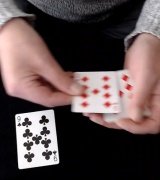
You will need four cards with same face but different back. And two cards with same face and same back.
1st edition 2019, length 2min 22s.
Five Card Stunner
Ken de Courcy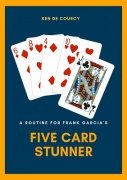
A very easy to do routine in which a black card repeatedly flies from hand to pocket leaving spectators amazed again and again, despite the performer trying to simplify things. All can be examined.
Imagine deliberately counting five cards....four of which are red with only one black. Each and every card is called and shown - without a single false move four cards are tossed to the table and the black card is seen to have vanished. It is reproduced from the pocket. Now Imagine that you can do it again and again each time eliminating one red card to make it easier for the public to follow the...
Tosheroonique
Jon Racherbaumer
From the Foreword:
"Tosheroon" is an odd but memorable name. It sounds amusing and somewhat incantatory - especially for a card trick. Bob Driebeck, who dubbed it, knew that the word was Cockney slang for a half-crown, which is also the type of coin he used to perform this offbeat card trick.
The basic effect is a transformation done with an impediment in place - the impediment or obstruction in this case is a coin, which is placed onto the face of the card that eventually changes.
Effect: A card is selected and lost in the deck. Then a borrowed coin is marked and placed onto the face...