Cards in Magic & Mentalism





Subtopics
Self-Working or Sleightless DIY Playing Cards Moves & Techniques ACAAN Stacks Marked Gaffed Rising & Levitating Manipulation & XCM Svengali Torn and Restored Jumbo Cards LinkingAuthors
Products
By Your Own Hand
Luke Jonas
A hands-off cheating demonstration.
The traditional card-cheating demonstration ends with the audience admiring the performer's hands. This one ends somewhere else entirely.
The spectator shuffles a borrowed deck. They cut as many times as they like. They deal five poker hands, face down, in front of them. Before a single card is turned, you commit aloud: the winning hand will be a full house, sitting in the third seat from my left.
It is.
The cheating happened somewhere they cannot point to. They shuffled, they cut, they dealt - by their own hand. And the outcome arrived exactly...
Leadership Invisible
Miku W.
A variation on the classic Invisible Palm plot. A powerful visual effect performed with just a few playing cards.
1st edition 2026, video 10:37.
Seven Revised Classics
Ian Baxter
A compendium of mysteries from 20th century experts.
Here is a rare opportunity to purchase seven separate manuscripts at a heavily discounted price. All seven have been written by Ian Baxter and feature careful revisions of exceptional mysteries stemming from these brilliant magicians:
- John Scarne
- Stewart James
- Dai Vernon
- Ed Marlo
- Paul Curry
- Jean Hugard
- Walter B. Gibson
This exceptional assortment of card magic from lybrary.com is now on sale for almost half the price. A bargain indeed! Do yourself a favour and secure your purchase now. This special offer of Seven Revised...
The Power of Prayer
Luke Jonas
A theatrical two-card revelation.
A spectator selects a card. The card is returned to the deck. The performer begins to shuffle... and suddenly loses control. Cards spill from the hands and scatter across the table in what appears to be a genuine mistake.
Recovering, the performer invites a second spectator to also select a card. Both cards are lost in the deck. Then the tone changes.
The performer speaks quietly about moments of stillness - about the instinct people have to bring their hands together when they want to focus, reflect, or ask for something beyond themselves.
Cards...
Card Tricks with Patter
Mago Marko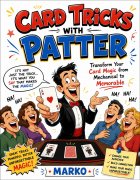
Transform your card magic from mechanical to memorable.
Most card magic books teach you the moves. But moves alone don't make magic. What separates a forgettable trick from a standing ovation is the story you tell while doing it. Card Tricks with Patter delivers ten powerful, audience-tested effects alongside something most books ignore entirely: the actual words to say.
Inside these pages, you'll find classics like "The Partagas Sell," "Five Card Plunger," and Dai Vernon's "Matching the Cards," plus original creations like "Three Wrongs Make a Right." Every trick is built on solid, manageable...
Joker Impossible Location
Miku W.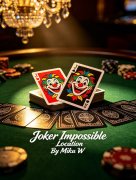
The spectator shuffles the deck at the start. The magician removes a prediction card, then the spectator freely selects a card and loses it back into the deck.
Next, the magician has the spectator freely cut the deck, placing Jokers at the cut points. At first, the Jokers isolate a large section containing the selection, and eventually they sandwich the exact selection itself.
The deck is split at the selection, and behind all the apparent randomness, everything leads to the final outcome. There are three packets on the table, and the bottom card of each packet perfectly matches the...
Cyclic Location
Miku W.
A fooling routine: the spectator cuts off a packet and notes the bottom card, then shuffles freely, replaces it anywhere in the deck, and shuffles again. The performer still locates the selection. Furthermore, the spectator decides how the shuffle is done; the deck is then mixed into three packets, and the bottom cards of all three packets match the value of the selection.
1st edition 2026, video 8:28.
Thanks to Carlyle
Ian Baxter
An everyday calling card, shown to be blank on both sides, suddenly develops printing details, caused by the magician's fingertips!
Here is an up-to-date revision of a classic idea from that remarkable 20th-century magician Francis Carlyle. It was none other than Bruce Elliott who first raved about this in his magazine The Phoenix, where this gem was first published.
No innovative developments have appeared in print since, until now. Ian Baxter has come up with this clever extension of Carlyle's original - totally impromptu, easy to perform and even more eye-popping than the...
Face Value
Mark Leveridge
A spectator selects at random a card from an invisible pack - let's imagine the spectator says it is the 5H. This invisible card is apparently placed onto the spectator's hand.
Next a blank faced deck is freely displayed and shuffled before one card is selected. This blank faced card to placed momentarily onto the invisible card, and then when it is turned over, the blank face is now printed with the 5H card face.
video 14:08.
Card Creations
Martin Lewis
Wonderful card routines by one of the finest creators of magic entertainment. For example, he won the Academy of Magical Arts "Parlor Magician of the Year" for 2000. None of the routines requires particularly difficult sleight-of-hand. With an emphasis on offbeat effects, Martin delivers his original ideas with clear and insightful explanations. And, there's a non-card effect included, too, Martin's Chop-Cup Routine. It will teach you how you can make your own chop cup from items you likely have thrown away in the past.
This is material designed for the working magician, with each effect...
My Sympathetic Number Trick
Miku W.
Adapted from a classic routine by Johann Nepomuk Hofzinser. The spectator deals the cards into three piles on the table. In the end, the magician is left holding ten cards, while the tabled piles reveal four Tens. Finally, the bottom card is turned over to reveal four Kings.
1st edition 2026, video
Slop Trick
Miku W.
The spectator selects four cards. The magician then performs a face-up/face-down Slop Shuffle, thoroughly mixing the deck. Despite the chaotic condition, the deck instantly rights itself - returning to face-down - except for the four selections, which remain face-up at four different positions in the deck.
1st edition 2026, video 7:32.
Ace on the Move
Ian Baxter
Although transpositions involving cards are commonplace, not too many are genuine eye-poppers. This one fits that description to a tee, a totally baffling flight of a card from one place to another, in the usual tight-knit setting of close-up magic at the table.
Four aces are removed from a deck with spectator being offered the choice of reds or blacks, the chosen aces being slipped into an envelope and dropped to the table. The two remaining aces, black for example, are lost in the deck which is then placed aside. On command, the red ace chosen by spectator instantly vanishes from the...
A Different Ace Production
Dustin Marks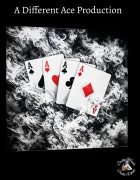
Effect: The spectator names their favorite ace. The magician hands them the remaining three aces, which the spectator freely inserts into different parts of the deck. The deck is spread face down across the table, and the magician instantly removes the three inserted aces by pulling them out with his fingers.
The spectator then deals cards face down from the deck, stopping at any point. The card they stop on is turned face up - it's not an ace, but an indicator card. Using the value of that card, the spectator counts down to a new position in the deck, where they discover the named...
Touchy
Mark Leveridge
This is an experiment to see whether the performer can identify a spectator's fingerprints. A spectator selects 5 cards from a deck, the faces of which are shown to be a random selection. The cards are dealt face down onto the table and the performer turns his back.
The helper now mixes the tabled cards by moving them around on the surface and then turns any one face up and presses his fingertips onto the card face. The card is then turned face down again and the cards mixed on the table again.
Turning back, the performer picks up the cards one at a time and amazingly manages to identify...
Matrix Walking Prediction
Miku W.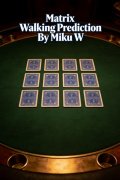
A completely open prediction effect. The spectator freely selects a card from 12 cards, then moves the same number of spaces in any direction according to the card's value. The final card matches the value of the original prediction.
Next, the spectator again moves freely according to that value and selects another card with a completely different value - also matching the magician's original prediction.
1st edition 2026, video 9:54.
Exchange Transfer
Miku W.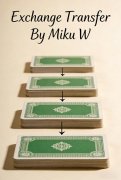
This is my Ace Assembly sequence: four Aces vanish from three packets and assemble together. In the finale, the Aces are redistributed into four piles. But it doesn't end there - if the performer can truly transpose cards at will, the four Aces can even switch places with the four Aces from another deck.
1st edition 2026, video 11:27.
Straightforward Zig Zag
Ian Baxter
This is nothing short of extraordinary. Here is an impromptu card mystery that has it all - A startling transposition of two cards merely thought of!
Based on an original idea from George G. Kaplan, author of that wonderful text The Fine Art Of Magic, this 21st-century revision from Ian Baxter will stop audiences in their tracks. Kaplan's original necessitated a set of duplicate cards, but this new handling does not. No gimmicks, accessories, fake cards, strangers or extras of any kind. This baffling crowd pleaser is totally off the cuff and can be performed at a...
Shooting Card
Daryl Hurst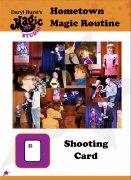
The story of Annie Oakley's legendary trick shooting in the Old West lays the foundation for a magical challenge with a selected card secured in the middle of a deck. With the audience providing the sound effects, the challenge is met when the helper's finger gun makes the chosen card fly out, complete with a burn hole from the imaginary bullet. Another legend is born!
Shooting Card was one of my pet routines and I loved every chance I had to perform it. I could create pure wonder by having a young volunteer 'shoot' their selected card out of the deck in my hand. The flying card is memorable...
Dual-Sided Tracking
Miku W.
The spectator freely rolls four dice. The performer deals the corresponding number of cards for each roll, forming four piles. The performer then explains that the top faces give one set of numbers and the bottom faces give another, and has the spectator turn the dice over 180 degrees. The dealing continues according to these new numbers. When all the cards are dealt, the face cards of the four piles are all Kings. The performer asks why we look at both the top and bottom of the dice - because the four piles must also be read both ways. The bottom cards are turned over to reveal four Aces. ...
Captured Twice
Ian Baxter
Themed card mysteries are certainly not new. Many of them are tired, worn out, horribly dated, and probably best left forgotten. Even in their day, these forced presentations, spiked with corny patter, invariably put audiences to sleep. Who wants to be supposedly entertained by a magician who is a crashing bore?
Here is an up-to-the-minute card mystery from Ian Baxter that will leave them scratching their heads. This is top drawer material - easy to perform, within range of the most basic card handler, yet fast, mystifying and amusing.
The basic 'Cops and Robbers' theme evidenced here...
Pastiche II
Jon Racherbaumer
Pastiche II, loosely speaking, is more info. Its value depends on you - how your thinking is affected and, more importantly, if you can use anything in a meaningful way. Otherwise, it's glut soup, idle message units to fill the white space loathed by men who would be Erdnase.
I hope there are differences that make a difference.
- Hull-Scam
- Dry-Dock Divination
- Nominal Nexus
- Dunbury Lie Speller
- Eighteen-Card Version
- Guardian Angel
- How Big and Where?
- Blank-Wave II
- Hummer's Dream Scheme
- Lighter-Side
- Dueling Card Tricks
- Biddle Thought
- Initial Shock
1st edition 1993,...
Concert for Cards
Aldo Colombini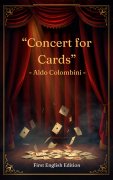
An amazing routine of three linked effects with cards cut in half
Effect:
A deck of cards (giant or normal) cut in half is shuffled and divided into two piles. One of these is chosen by a spectator, who cuts it and sets it aside. From the other pile, a spectator touches any card, which is left face up in its original position among the others. The two piles are distributed by taking the respective cards from the top and distributing them simultaneously to the bottom. The card that corresponds to the one turned over in the other pile is set aside with it. No pair of cards forms a whole...
Invisible Reverse Encore
Mark Leveridge
A genuinely freely selected card (which can be signed if desired) is shuffled back into a deck. The performer then mimes the removal of that card invisibly and hands it to the spectator to hold for a moment. The cards are then spread face up to show that the chosen card is no longer in the pack.
Squaring the deck, the spectator is invited to push the invisible card he holds face up into the now face down pack. Immediately, the cards are ribbon spread face down again across the table to reveal the selection face up in the centre! Just a regular deck required, straightforward handling,...