Cards in Magic & Mentalism





Products
Anytime ... with a deck of cards
Aldo Colombini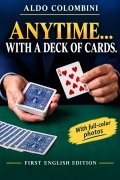
A five-phase card routine.
What if someone hands you an ordinary deck of cards and says, "Show me something"? No special cards. No elaborate setup. Just a deck, a few spectators, and five increasingly impossible effects.
Anytime... with a Deck of Cards is a practical, entertaining routine by Aldo Colombini, designed for those situations when you want to perform strong card magic without any prior setup. The routine consists of five effects that can be performed in sequence or used individually. The spectators do much of the work themselves - shuffling, cutting, dealing and making decisions...
Subwich Change
Miku W.
A fooling sandwich routine with a simple, fast effect.
The magician takes out two Jokers and places them on the table, then has the spectator select a card and place it into the middle of the deck, outjogged. The magician then transfers the selection between the two Jokers. But here's the question: if the selection has traveled between the Jokers, what is the outjogged card in the middle of the deck? The magician turns over the card in the middle of the deck, revealing the other card of the same value and suit as the selection. At the same time, the two Jokers instantly change into the other...
Total Prediction
Raphaël Czaja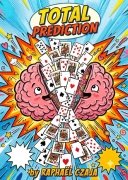
In an escalating sequence, the performer reveals predictions of matching colors, numbers, and ultimately a playing card.
EFFECT:
Twelve cards are removed from a regular deck. Four are used as prediction cards. The spectator cuts the remaining eight, mixes them three times, and divides them into two equal piles.
He places the top card of each pile in front of the first prediction and repeats the procedure, placing each pair in front of the next prediction. The pairs are turned face up. Only two of them match in color—one is a red pair and the other a black pair. (The mismatched pairs,...
Hidden Agenda
Peter Duffie
Note that Peter Duffie released two entirely different publications with the title "Hidden Agenda". The first one was released in 1992. This is the one offered here. Then in 2001 he released an ebook with the same title but entirely different content. We have changed the title of this later ebook to Hidden Agenda 2.
Table of Contents
- Two Packs But With A Single Thought
- Alternative Update
- Divisory Capacity
- Return Journey
- Quick - Serve Aces
- The Graveyard Shift
- No Chance
- It Is Written
- Rooms For Manoeuvre
- The Beast With Five Fingers
- Straight From The Bottom
- Straight From...
Razor Blade
Brick Tilley
A selected card is returned to the deck; the deck is boxed. A razor blade is inserted into the box. After shaking the box in an attempt to locate the selected card, the box is opened. The cards are poured onto the table. Surprise. The cards are all cut into pieces except for the selected card. A perfect finish for any card sequence.
1st edition 2026, video 3:54.
Inside Tracks
Jon Racherbaumer
Excerpt from the introduction:
The original title for this lecture was RECYCLE. The effects in this collection have been previously published in various books and magazines. This is a common practice nowadays as anthologies and theme-trick books are more frequently published. Magicians continually recycle ideas, fixing this and that, adding touches and finesses... This is a collection of favorites. New students and readers will discover new things. Veterans will be reminded of old things. My goal is to provide something for everyone.
Table of Contents
- Paris Slant
- Crux Deluxe
- Freeze! ...
Five Vernon Gems
Ian Baxter
A fresh look at five card classics from Dai Vernon.
Straight from the pages of Lewis Ganson's sensational four-part series, Dai Vernon's Inner Secrets of Card Magic, five brand new entries, carefully revised variations highlighting the genius of 'The Professor' himself.
These renovated approaches are from Ian Baxter, Australian card man and author.
Colour Separation, Pinch Colour Change, Out Of Sight - Out Of Mind, Switching A Card In An Envelope and A Spectator Finds His Own Card are all carefully examined, with twists and turns that give each of them a totally fresh...
The Magic 12
Miku W.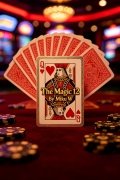
A very special way to locate a card—guaranteed to fool you.
The spectator freely cuts the deck and remembers the bottom card. The magician then claims that the trick has something to do with the number 12, and counts twelve indifferent cards from the top to the bottom twice. The magician then deals through the cards, attempting to locate the spectator's selection, but ultimately deals to a Queen. Counting twelve cards down from the top reveals the spectator's selection. Not only that, but the spectator's random cut position and the two packets of twelve cards also come into play. Turn...
The Next Effect
Dustin Marks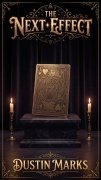
- A full-circle mentalism plot: a card apparently reserved for a later trick becomes an impossible foretelling in the current effect.
- The spectator searches a packet, shuffles both packets, participates in reassembling the deck, cuts the deck, and makes the final choice.
- The final choice is genuinely clean: no equivoque.
- The prediction is apparently placed aside before the spectator begins the shuffling and decision-making.
- The written message creates a two-stage climax: first, the unexpected prophecy; then, the spectator’s impossible card revelation.
- The final card remains face down...
Think Ace 3
Edward Marlo & Jon Racherbaumer
A retrospective.
Table of Contents
- Introduction
- BEGINNINGS
- Touch Turn
- Named Reverse
- Think Ace
- Gaffed Think Ace
- TRIBUTARIES
- Swindle Think Ace
- Technicolor Think Ace
- Four-Card Technicolor Thought - Number One
- Four-Card Technicolor Thought - Number Two
- More Four-Card Technicolor Thoughts
- Cased-In Technicolor Thought
- Tabled Think Ace
- Spread Think Ace
- Contingency Aces / Robert Walker & Jon Racherbaumer
- Pumping B'Wave / Jon Racherbaumer
3rd edition 2002, PDF 28 pages.
Most Impressive Card Discovery
Ian Baxter
Title tells all! Make room for an astonishing card mystery that will jolt them. Author Ian Baxter has been using this stunner for many years and is still using it today. It is an absolute gem and never fails to impress onlookers.
Cards are thoroughly shuffled by a spectator, a card chosen then lost. Deck is now cut exactly where spectator instructs then the performer starts a slow deal of cards to the table, face down and one at a time.
On impulse, the performer suddenly stops at one. Turning the card face up, it is the selection! Nothing new here? Well, not exactly. The very stringent...
Invisible Transfer Collector
Miku W.
A simple but very direct Collector routine.
The magician displays four Aces and has the spectator freely select a card and shuffle it into the deck. The selection is then transferred to the middle of the four Aces. Remove the selection, and three additional cards matching its value appear between the four Aces.
Performance transcript:
- For the next effect, we'll need the four Aces.
- Next, have a spectator freely select a card.
- The spectator selects the Nine of Hearts.
- Place the selected card into the center of the deck.
- Imagine that at this moment the selection travels to the center...
Subtle Secrets 2
Thibault Ternon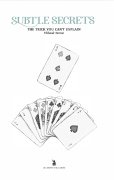
What if we told you that you could use luck to perform real miracles? Would you believe us?
- Borrow a shuffled deck of cards, and be ready for any impromptu situation
- A 100% reliable method
- Endless possibilities with this unique method
Table of Contents
- Introduction
- It all starts with a mixed deck: The predicted card
- A value rather than a card
- Let's tweak this a bit
- Conclusion
1st edition 2025, PDF 27 pages.
Russian Roulette 2: pull the pin
Vincent Gagnieux
Did you enjoy Russian roulette with a revolver? What if you tried it with grenades?
4 defused grenades, 1 armed. 4 red spot cards, 1 Queen of Spades.
The objective is simple: pull the pins on 4 grenades without blowing yourself up.
A spectator shuffles the cards and hands them to you at random, one at a time. You delicately take each card between two fingers and gently shake it, turning your head to the side as if listening carefully. You are able to determine by sound whether the grenade is armed or not. If the grenade is armed, you place the card face down on the table. Otherwise,...
Gun Card Location
Miku W.
A completely impromptu card routine.
The magician takes out the Ace of Spades, framing it as a bullet, then assembles the deck into the shape of a gun. The spectator freely inserts the Ace of Spades anywhere in the "gun," representing the bullet being loaded into the chamber.
The magician then has the spectator freely cut the deck and remember a card. Finally, the deck is reassembled into the gun and bullet. The spectator's selection shoots out of the deck like a fired bullet.
Performance transcript:
- This trick requires a little imagination
- Here I have the Ace of Spades —...
Subtle Secrets 1
Thibault Ternon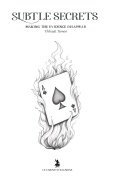
The first book in the Subtle Secrets series, which details a completely new concept in magic: the disappearance of evidence...
- A completely innovative and original principle
- Numerous avenues to explore
- A totally crazy concept
Table of Contents
- Introduction
- Getting rid of compromising evidence for good
- Effect #1: The Reconstituted Torn Card
- Effect #2: The "truly" Bitten Card
- Effect #3: Origami
- Last sweet trail
1st edition 2025, PDF 21 pages.
Different Paths, Same Destination
Miku W.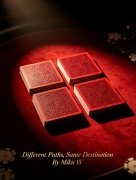
A foolproof card routine for fooling your magician friends.
The magician has the spectator cut a packet into three piles, just as he does, and remembers the cards they cut to. The magician turns his cut-to card face up and exchanges it with the spectator's card, placing them at their freely chosen cut positions. The spectator then shuffles the cards. The magician splits the deck into two packets and deals from both simultaneously. When he stops at the face-up card, the corresponding card in the other packet is the spectator's selection. Not only that, the cards stop at exactly the positions...
The Converter
Miku W.
A new handling of a classic plot.
A spectator freely selects a card. The magician claims he will cut to the other three cards of the same value. He cuts three cards and leaves each face up in the deck. At the end, they are revealed to be the wrong value. But when the deck is spread, the three face-up cards have impossibly changed into the other three mates of the spectator's selection.
Performance transcript:
- First, shuffle the deck.
- Have the spectator freely select a card.
- Let's say they select this card.
- Remember your card.
- As a magician,
- I'll try to cut to the other three...
Recycle
Jon Racherbaumer
Fugitive notes 1975 - 1995
Table of Contents
- Counting On Triumph
- Aces Becoming Courtly
- Popped Departure
- Cased-In Vision
- Marlo's Color-Changing Deck
- Crux Deluxe
- Fisting The Aces
- Three Roads To Dunbury
- Dunbury Lie Speller
- Eighteen-Card Version
- Guardian Angel
- Ghostly Autograph
- Jack-In-The-Box
- Parallexis
- Imaginary Card On Ceiling
- Well-Done Deal
- Psychic Poker
- Carribean Assembly
- Rule-Breaking Aces
- Challenging Triumph
- Lady Spell
- Stabbing Myth
- Biddled Thought
- Into This World
- Zippy Zig-Zag
- Post-Graduate Twenty-One Card Trick
- Blank-Wave II
- Dry-Dock Divination
- Thy Name Is...
Final Reckoning
Raphaël Czaja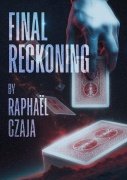
The performer reveals the spectator's chosen card and its exact position in the deck - twice in a row.
Phase #1:
The spectator selects one card in a deck as follows:
Once the cards have been dealt into two piles, the spectator simultaneously cuts off a packet from each pile and swaps them; he may perform this cutting and swapping as many times as desired. (This alters both the order of the cards and the size of each pile.) He selects one pile and repeats the same procedure twice more.
The spectator, now left with a small packet, remembers the top card - let's assume the Jack of Diamonds...
Val Evans' Stop Trick of Tomorrow
Lee Jacobs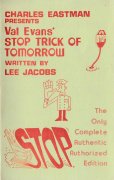
Excerpt from the introduction by Charles Eastman:
Here is an effect from the ever fertile brain of Mr. Val Evans (Valcarte) that was made and sold by me as far back as 1930.
By the way, this effect can be performed entirely surrounded by spectators without prepared cards. Nothing is needed but the holder, the cards, and the ribbon. And the effect is recommended for all types of performers. Also, you can still probably fool the smart boys at your next magic club meeting with this effect.
- Preface by Lee Jacobs
- Introduction By Charles Eastman
- Effect
- Secret
- Construction...
Shuffle Location and Prediction
Miku W.
A shuffle principle designed to fool magicians.
The magician begins by removing a prediction card. The spectator freely selects a card and returns it to the deck. The magician performs a riffle shuffle, which mysteriously stops halfway through. The shuffle stops exactly at the spectator's selection. The three resulting packets are then turned over, and their values match the prediction card from the beginning.
Two different handling methods are included.
Riffle Location and Prediction: An almost self-working card trick that relies on a simple gimmick to achieve the final effect.
...
Exclusion Instructions
Miku W.
An almost self-working card location effect with an ACAAN feel.
Fool your magician friends. A powerful routine that can be performed with a single deck.
The spectator selects a card, returns it to the center of the deck, and cuts the cards. The magician then has the spectator cut off another packet. Using that packet, cards are dealt one to the table and one to the bottom of the packet repeatedly until only a single card remains. That final card reveals the exact location of the selection. As a bonus, the spectator also discovers the other three cards matching the selection's value. ...
Matching the Cards with Ease
Ian Baxter
An absolute hot favourite with Dai Vernon, Nate Leipzig, Faucett Ross, Al Koran, Jean Hugard, Cy Endfield and a host of others, Matching The Cards is right up at the top of the ladder for sheer popularity and always has been. This is not some careless overstatement: Matching The Cards is one of the most highly prized card mysteries - ever!
Lewis Ganson wrote a best-selling booklet devoted to just this one effect, Matching the Cards Teach-In. MTC has been making the rounds for years and you will most likely recognize it. The effect...
Jozsi's Book
Jozsef Kovacs
You will find more than 50 ideas and effects, some old that have been released before, and some brand new that Jozsef has never shared before.
"A lovely collection of mostly close-up card magic that had me reaching for cards almost immediately!" - Paul Hallas
"József, you have the 'knack' to create direct effects with simple methods, which is, in my opinion, the essence of commercial magic." - Aldo Colombini
Table of Contents
- PREFACE
- PERFECT
- BES-TEST
- ESP BUNDLE
- FIVE CARD BRAINWAVE
- MATCHING PAIRS
- ESJ (ELMSLEY–SIVA–JORDAN) PREDICTION
- CENTRIFUGAL TRIUMPH ...
I Won't Play Cards With Him
William W. Larsen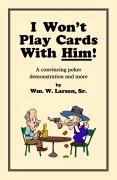
A convincing poker demonstration and more.
A routine of poker deals that can be performed without long practice or great skill, plus it can be done anywhere and with absolutely any pack!
The performer deals two-handed stud, five-handed stud, four and five-handed draw poker, and finally gives an exhibition of "cold deck" work.
The magician has absolute control of the cards at all times and yet no resort is made to bottom dealing, second dealing, shuffle stacking or other difficult methods. This routine is a boon to the performer who is requested, after he has performed a few card effects,...
Power Gemini Twins
Miku W.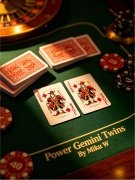
Using the classic Gemini Twins principle, these are two expanded routines with much stronger climaxes. The spectator may call stop at any time, and face-up cards are placed at those stopping points, leading to effects far beyond the original plot.
Performed with a regular deck. Easy handling, powerful impact.
Triple-Path Gemini Twins:
A spectator freely selects a card. The performer then deals three piles, and the spectator calls stop three times at any moment during the deal. A face-up card is placed on top of each pile at the stopping points. The cards are squared, and the deck...
At Sixes and Sevens
Ian Baxter
A card mystery that focuses on chaos? Now, who among close-up workers wouldn't like to check out something as novel as that?
The term "At Sixes and Sevens" is a term from the distant past and means simply being in a state of confusion or disorder. This manuscript offers something off the beaten path - carefully paired off cards that instantly end up in a jumbled state.
The Sixes and Sevens, reds and blacks, eight in all, are openly sorted and paired off by colour, then with a wave of the hand, disorder occurs. Two pairs now consist of a red Six and a black Seven - yet the other pairs...
The Sign of the Five
Aldo Colombini
A complete act with a deck of cards, totally impromptu and with minimum skill.
This is undoubtedly one of Aldo Colombini's most successful works. Originally published only in Italian, now available for the first time in English.
A small treasure that allows you to perform five seemingly impossible effects without difficult sleights. In a few words, the artist finds several chosen cards in incredible ways, despite the cards being repeatedly shuffled by the spectators themselves. And the good news is that the routine is fully impromptu and almost automatic.
In Aldo's own words:
"This...